




News
|
Agenda
|
Guide of events
|
Processions
|
Pasos
|
Brotherhoods
|
History
|
Cieza
|
|
Music
|
Contact
News
|
Agenda
|
Guide of events
|
Processions
|
Pasos
|
Brotherhoods
|
History
|
Cieza
|
|
Music
|
Contact
Procession of the Childrens of Mary (1976)
Holy Thursday night
Holy Thursday night
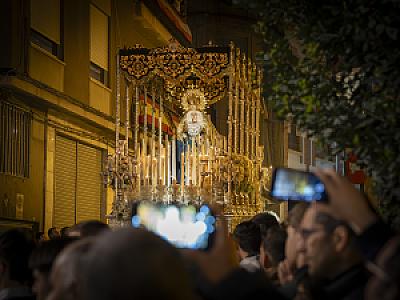
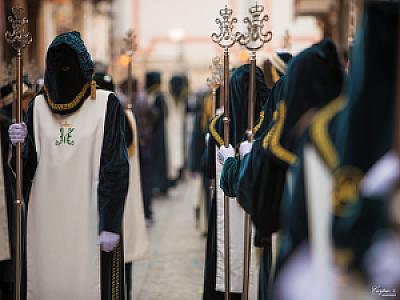
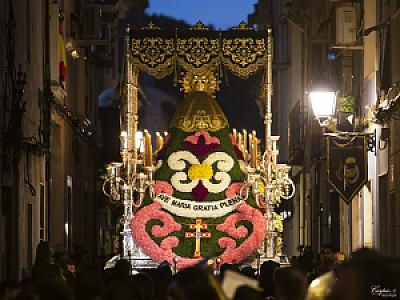
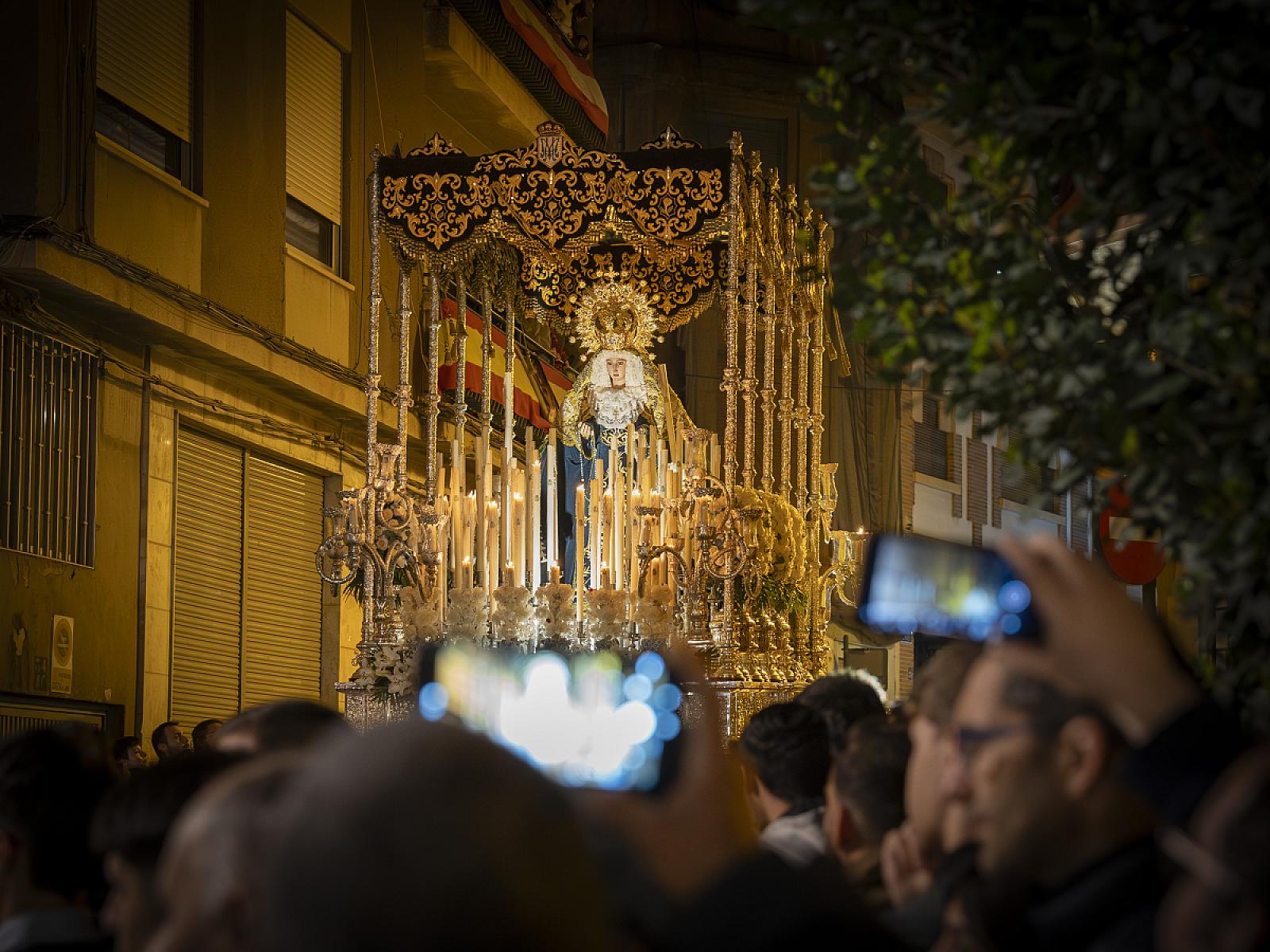
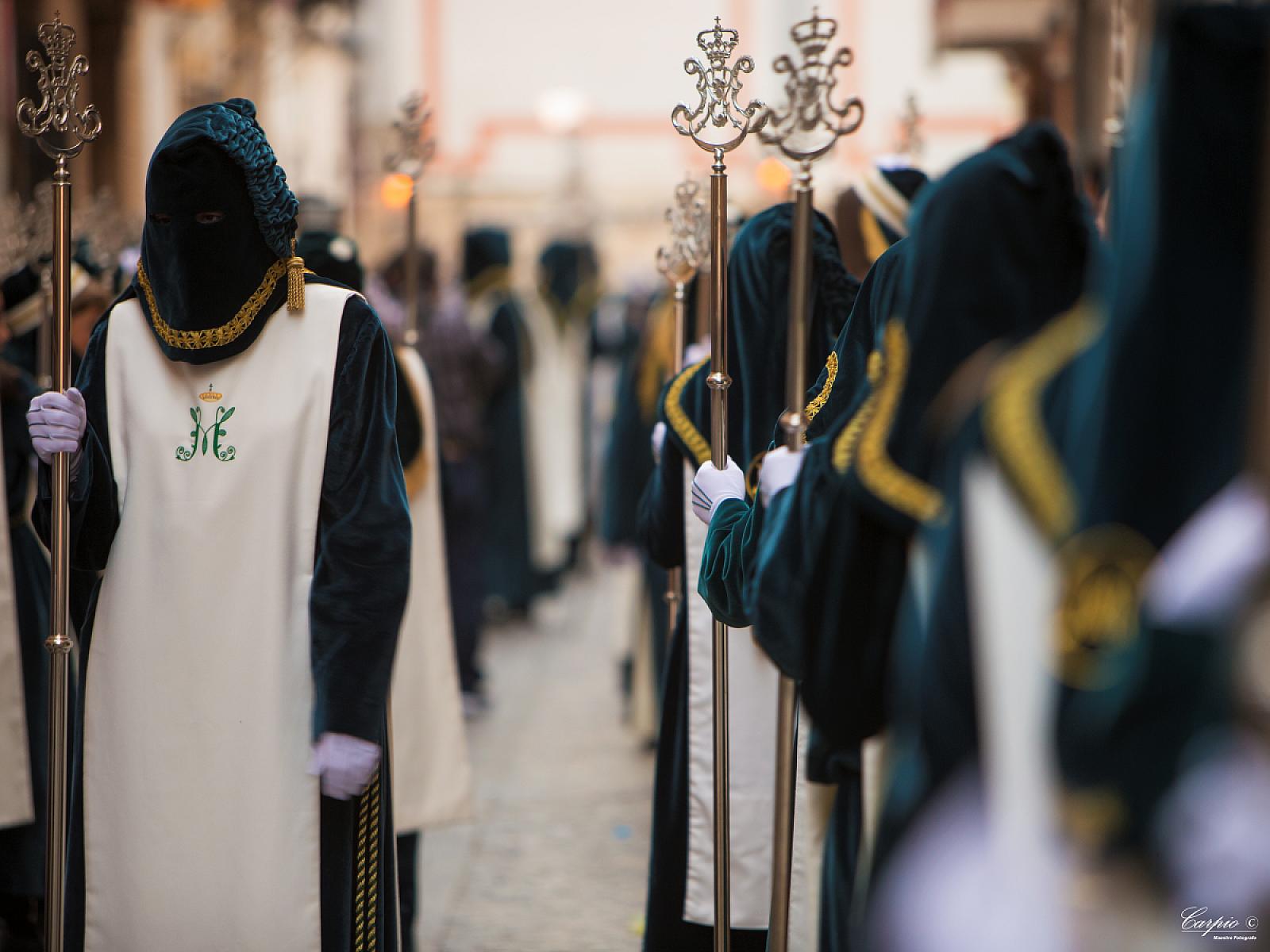
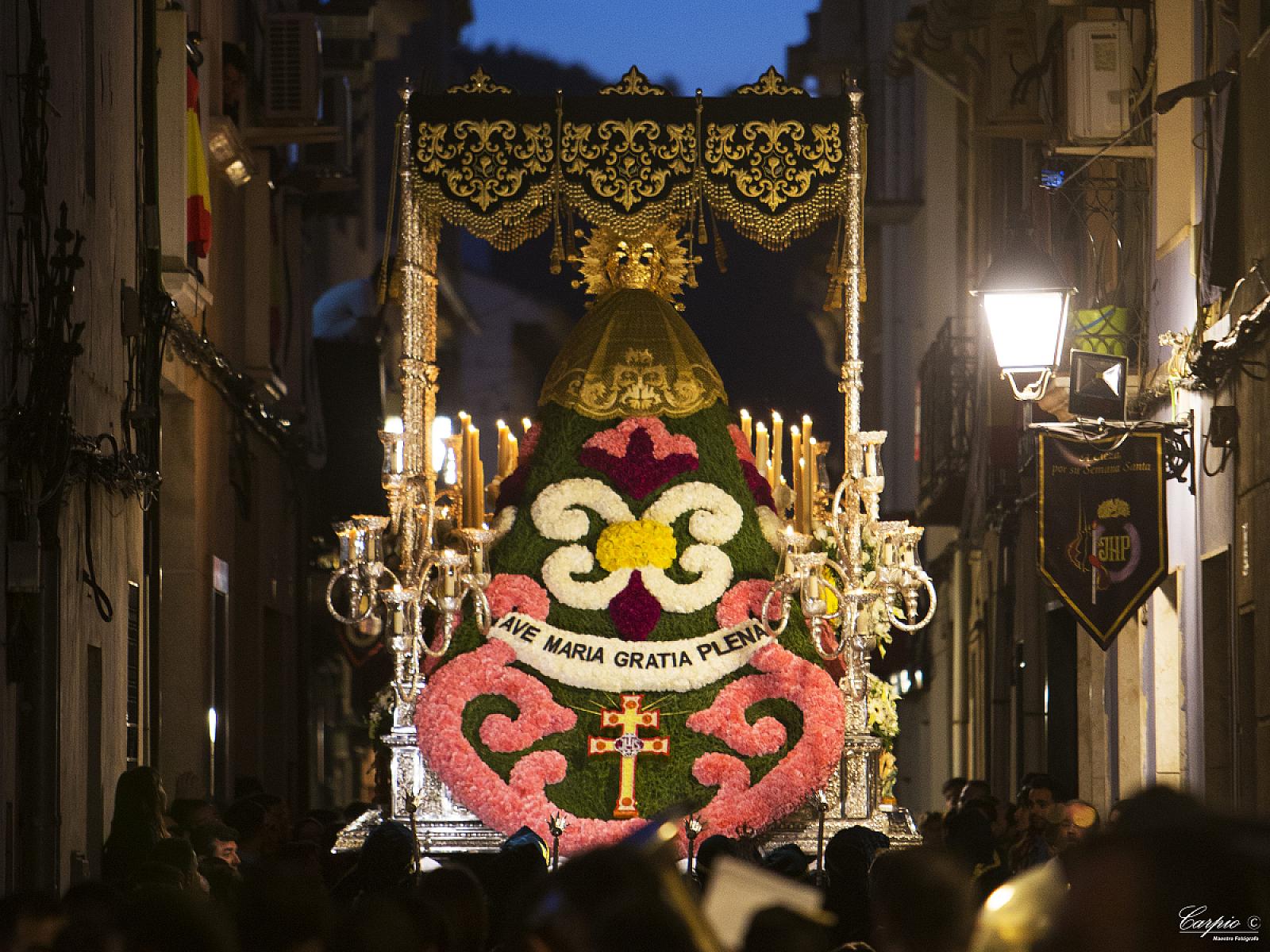
The only procession conceived for the absolute prominence of the Virgin Mary, within the framework of a solemn parade in which, along with the brotherhood's penitents, a third of "Manolos" and "Manolas" participate, dressed in traditional Spanish mourning attire. It is essential to mention the mantle of the image of Our Lady of Grace and Hope, made exclusively of natural flowers and plants according to a design created each year with a wide variety of aesthetic ideas, following the model offered by the results of the 'Solidarity Mantle' competition. The entire Procession of the Children of Mary is characterized by its long and highly participatory cortege, by the silence and solemnity that the brotherhood imposes as it passes through the streets packed with spectators, and by the very presence of Our Lady of Grace and Hope, greatly revered by the people of Cieza. The only image that parades under a canopy during Holy Week in Cieza, with a captivating majesty that makes the evening of Holy Thursday an indispensable event that frames the impeccable solemnity of the procession with a popular following as massive as it is respectful, emphasizing the edifying nature of this regal procession.
Departure time: 8:30 pm (House-Museum of the Royal Brotherhood of Our Lady of Grace and Hope).
Arrival time: approximately 11:30 pm (House-Museum of the Royal Brotherhood of Our Lady of Grace and Hope).
Route: "Plaza Mayor", "Cid", "La Parra", "Rincón de los Pinos", "Pinos", "Larga", "Buitragos", "San Sebastián", Corner of the Convent, "Mesones", "Cadenas", "Barco" and "Diego Tortosa".
Arrival time: approximately 11:30 pm (House-Museum of the Royal Brotherhood of Our Lady of Grace and Hope).
Route: "Plaza Mayor", "Cid", "La Parra", "Rincón de los Pinos", "Pinos", "Larga", "Buitragos", "San Sebastián", Corner of the Convent, "Mesones", "Cadenas", "Barco" and "Diego Tortosa".
Order of Procession: banner of the Board of Passionate Brotherhoods, musical group, Royal Brotherhood of Our Lady of Grace and Hope, group of "Manolas" and "Manolos", Our Lady of Grace and Hope, clergy, presiding officers and marching band.
Unique features and suggestions: On the afternoon of Holy Thursday, a very particular atmosphere pervades the entire town. It is the first holiday of the season and therefore the first opportunity for many Cieza residents who have moved away to reunite with their beloved processions and old friends and neighbors. This, combined with the tradition of wearing one's finest clothes on Holy Thursday to attend services and visit the Eucharistic Monuments displayed in all the churches, makes the Marian procession one of the most popular, drawing large crowds to the sidewalks. This is further enhanced by the interest always generated by the group of men and women dressed in traditional attire known as "Manolos" and "Manolas" who accompany the Virgin. In this regard, it is highly recommended that any visitor wait for the procession at the Corner of the Convent, where hundreds of people will gather in the spacious area, enjoying the atmosphere of this grand event. But perhaps the most emotional moment is at the Monastery of the Poor Clares, on "Mesones" Street, when the Virgin passes by the door of what is her home, so that she can be contemplated by the cloistered sisters, who guard and worship her throughout the year.
On the other hand, it is interesting to note that the image of Our Lady of Grace and Hope, which enjoys widespread devotion, is the oldest sculptural creation of Cieza's Holy Week processions, having been carved in the town itself. Created by Manuel Carrillo García, it is the only surviving work of the head of a family of artists whose name will forever honor the people of Cieza. Finally, it is worth highlighting, within the context of the canopy that unmistakably distinguishes this procession from all others in Cieza's Holy Week calendar, the design of the Virgin's mantle beneath it. Composed exclusively of floral and vegetal motifs, it is crafted from the early hours of the morning by the members of the brotherhood, leaving a trail of unmistakable fragrance that has become an integral part of the traditional Holy Thursday scene.
Photographs by Manuel Carpio and Enrique Centeno.
© Board of Passionate Brotherhoods of Cieza
© Board of Passionate Brotherhoods of Cieza
Gallery
Outstanding news
 Popular news
Rules of the XXXIX Poster Competition 'Holy Week in Cieza'
Pablo Espinosa will be in charge of creating the poster for "The Arrest" 2027
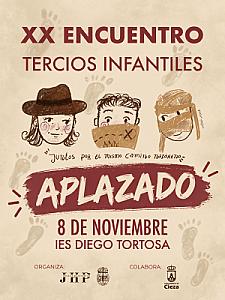
Official statement: Postponement of the 20th Children's Section Gathering
ACTIVITY FOR HOLY WEEK 2020
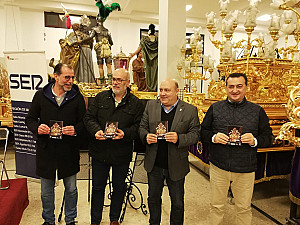
The Guide to Acts and Activities of Holy Week 2019 is presented at the Casa Museo de Cieza
The brotherhoods of Cieza visit the brotherhood houses of the Holy Week in Lorca.
Upcoming events
24 October - 10:00
XIII National Gathering of Youth from Brotherhoods and Confraternities
24 October - 20:00
Holy Mass
25 October - 07:00
Rosary of Dawn
25 October - 10:00
XIII National Gathering of Youth from Brotherhoods and Confraternities
30 October - 19:00
Triduum
30 October - 19:00
Food collection
Calendar