





News
|
Agenda
|
Guide of events
|
Processions
|
Pasos
|
Brotherhoods
|
History
|
Cieza
|
|
Music
|
Contact
News
|
Agenda
|
Guide of events
|
Processions
|
Pasos
|
Brotherhoods
|
History
|
Cieza
|
|
Music
|
Contact
Processional Way of the Cross of Christ of the Blood
Holy Monday night
Holy Monday night
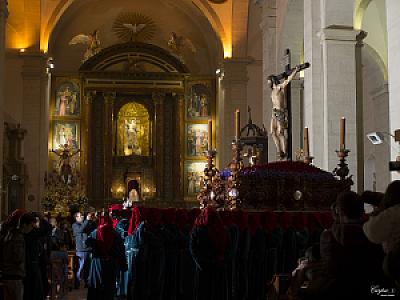
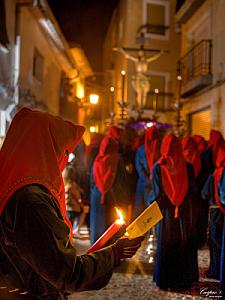
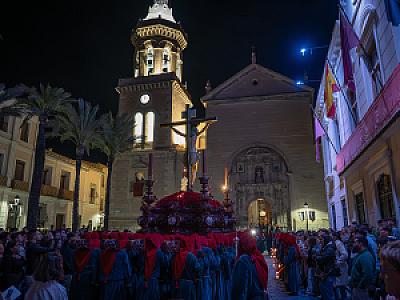
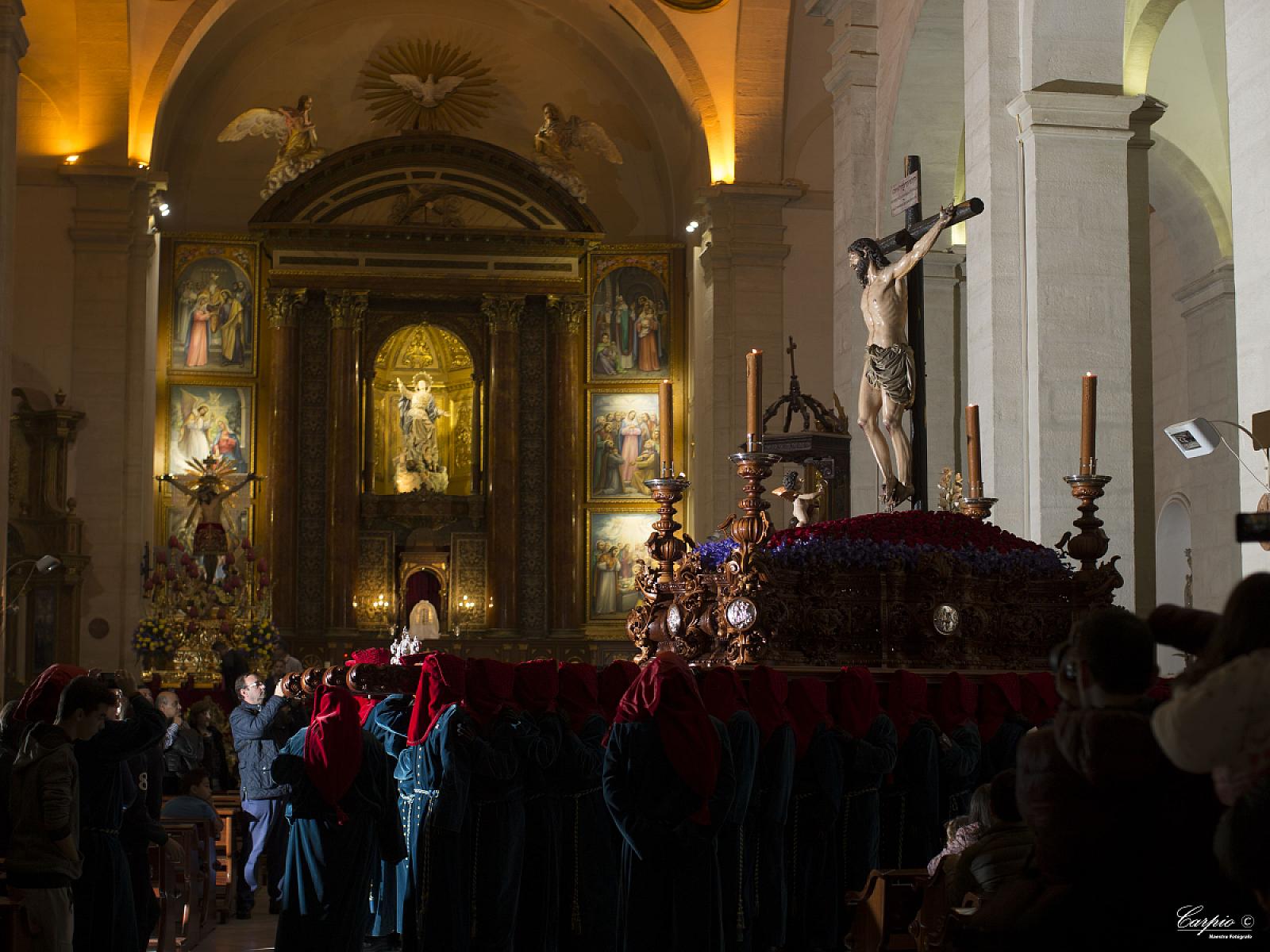
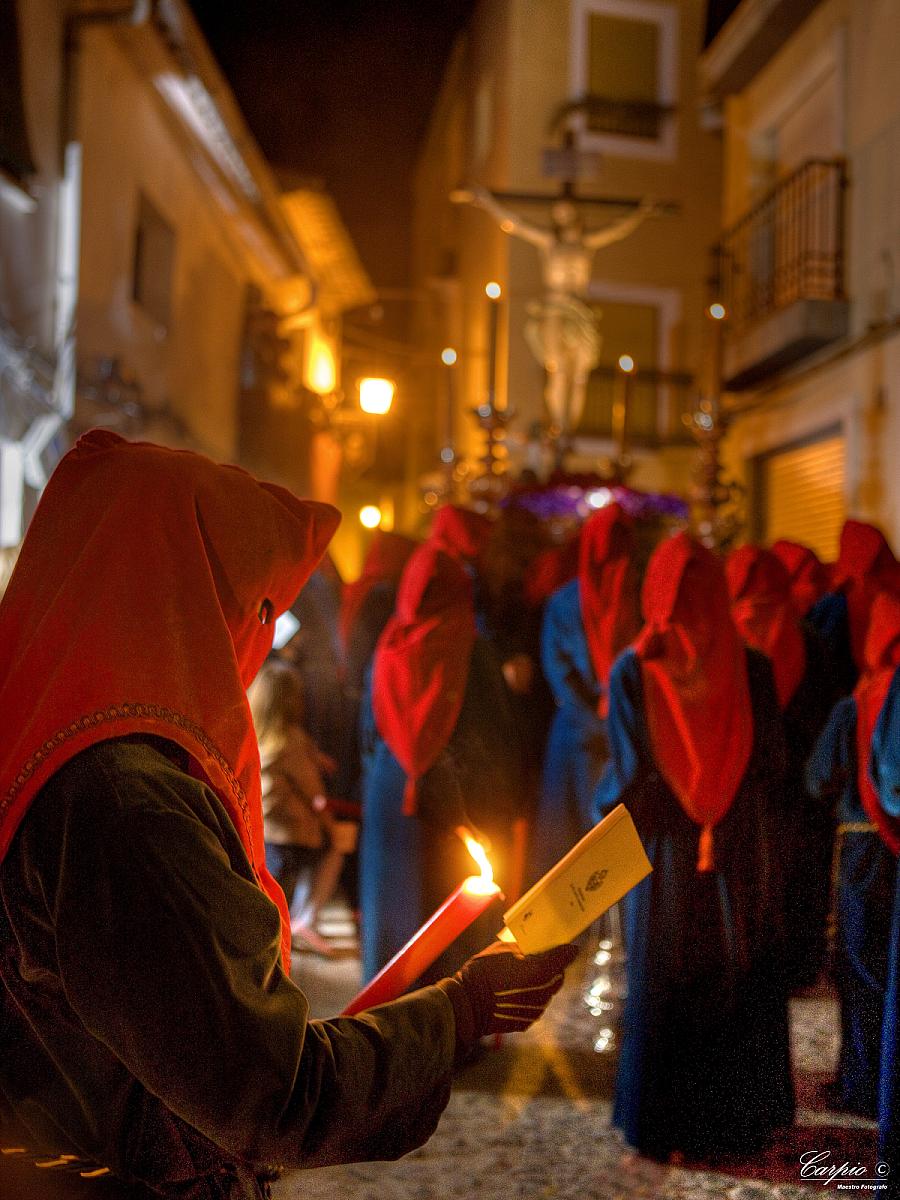
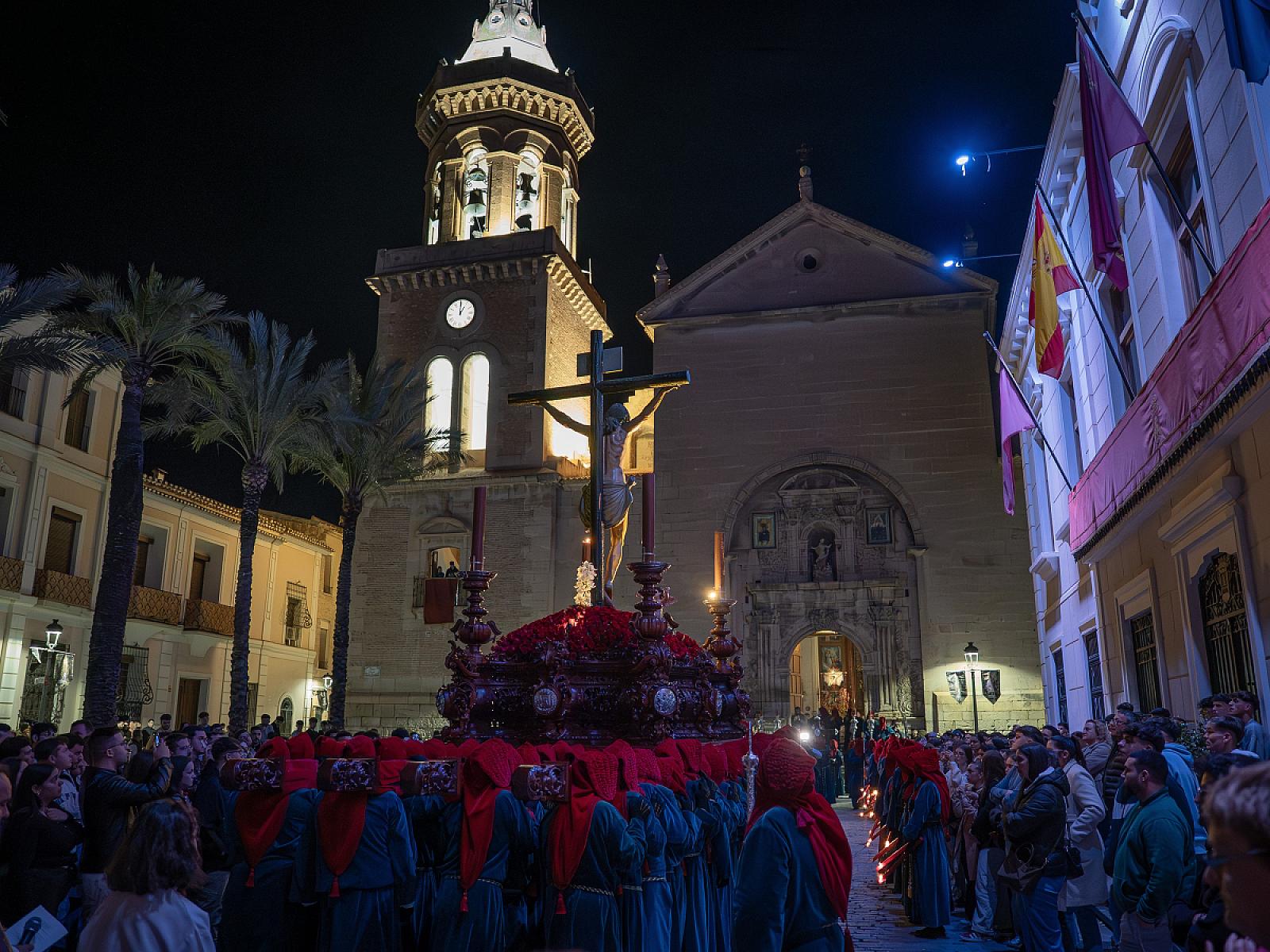
The concepts of procession and liturgical act intertwine in a unique and solemn spectacle. Preceded by a group of drummers, a processional cross and candle bearers, the penitents of the Brotherhood of Saint Mary Magdalene march, carrying candles and preceding the float of the Holy Christ of the Blood. Accompanied by the crowd, the float proceeds to the music played by the band. At each of the designated stations (where the cross and raised candles await), the music stops and the prayers for that station begin. After the prayers, the procession resumes, majestically making its way along the 'route' until it reaches the "Plaza Mayor" once more, well into the early hours of the morning.
Departure time: 9:30 pm (Basilica of Our Lady of the Assumption).
Arrival time: approximately 1:00 a.m. (Basilica of Our Lady of the Assumption).
Route: "Plaza Mayor", "Cid", "La Parra", "Rincón de los Pinos", "Pinos", "Larga", "Buitragos", "San Sebastián", Corner of the Convent, "Mesones", "Cadenas", "Barco", "La Hoz" and "Plaza Mayor".
Order of Procession: banner of the Board of Passion Brotherhoods, group of drummers, Brotherhood of Saint Mary Magdalene, Holy Christ of the Blood, clergy, band, and the general public.
Arrival time: approximately 1:00 a.m. (Basilica of Our Lady of the Assumption).
Route: "Plaza Mayor", "Cid", "La Parra", "Rincón de los Pinos", "Pinos", "Larga", "Buitragos", "San Sebastián", Corner of the Convent, "Mesones", "Cadenas", "Barco", "La Hoz" and "Plaza Mayor".
Order of Procession: banner of the Board of Passion Brotherhoods, group of drummers, Brotherhood of Saint Mary Magdalene, Holy Christ of the Blood, clergy, band, and the general public.
Unique features and suggestions: The very nature of the Magdalene procession offers two distinct ways to experience the evening. On the one hand, one can join the large group of faithful from the beginning, following Christ in the complete Stations of the Cross. The meditation for this Stations of the Cross, prepared annually by the parish priest, is printed and distributed to the public. On the other hand, one can observe the grand procession at certain points to contemplate the procession itself, presided over by the magnificent throne, a splendid wooden work by Ibáñez Valles, and above all by one of the masterpieces of the sculptor Álvarez Duarte, the Holy Christ of the Blood (both works created in Seville). This devotional image, in the truest sense, possesses an extraordinary communicative power in the streets. Although the timing of the procession allows the spectator to glimpse many different points of the 'route' (each with its own attractions), the solemnity of the parade and the remarkable dimensions of the float make it particularly edifying to contemplate it in the "Plaza del Comisario", where it arrives shortly after its departure; and also at its return, already in the early hours of the morning, where the "Plaza Mayor" witnesses the skill of the bearers turning the throne around for its entrance into the Basilica of Our Lady of the Assumption, a maneuver carried out with a solemnity that exemplifies the best symbiosis between the processional music and the traditional Cieza float.
Photographs by Manuel Carpio and Enrique Centeno.
© Board of Passionate Brotherhoods of Cieza
© Board of Passionate Brotherhoods of Cieza
Gallery
Outstanding news
 Popular news
V Easter Proclamation
"It all began with a meeting. And today it ends... with a new life"
Tickets for the Car of the Arrest
ACTIVITY FOR HOLY WEEK 2020
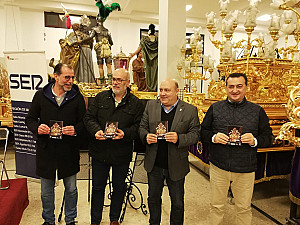
The Guide to Acts and Activities of Holy Week 2019 is presented at the Casa Museo de Cieza
The brotherhoods of Cieza visit the brotherhood houses of the Holy Week in Lorca.
Upcoming events
18 April - 11:00
Solidarity walk
24 April - 19:30
Ninth
25 April - 19:30
Ninth
26 April - 19:30
Ninth
27 April - 19:30
Ninth
28 April - 19:30
Ninth
Calendar