




News
|
Agenda
|
Guide of events
|
Processions
|
Pasos
|
Brotherhoods
|
History
|
Cieza
|
|
Music
|
Contact
News
|
Agenda
|
Guide of events
|
Processions
|
Pasos
|
Brotherhoods
|
History
|
Cieza
|
|
Music
|
Contact
Act and Procession of the Arrest (18th century)
Holy Tuesday night
Holy Tuesday night
Although the representation of the Arrest in Cieza has its roots in the 18th century, and has a central axis (the dialogue of "Whom are you looking for?") that has remained unchanged for at least a century, it is from 1996 onwards that the Act of the Arrest became one of the crucial moments of our Holy Week, by uniting the strict core of the Act with the Holy Tuesday procession, which until then had not had its own thematic content, resulting in a spectacle where the interplay of lighting and music allows a representation in which the narrators give voice to the images of the different floats that appear in the square: a bold approach whose originality has been worthy of successive television broadcasts, such as those made by TVE and by the Regional Television.
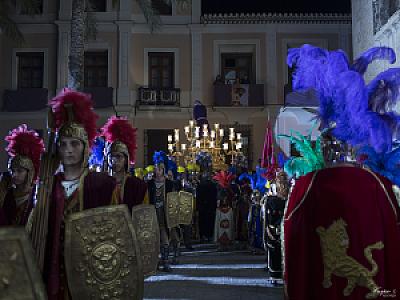
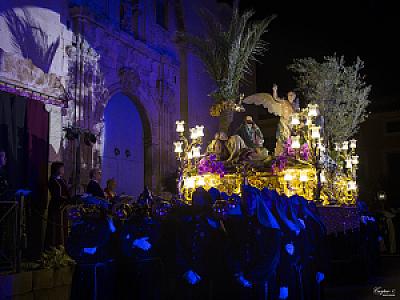
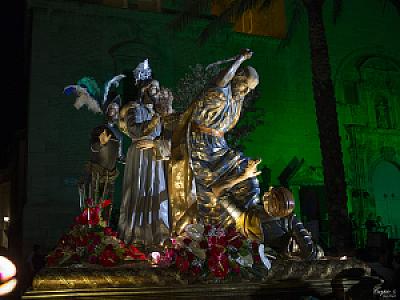
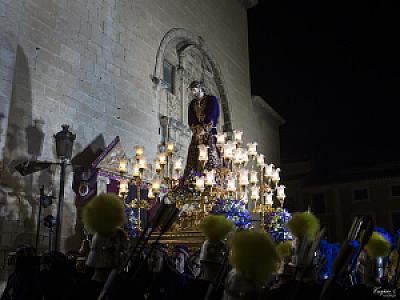
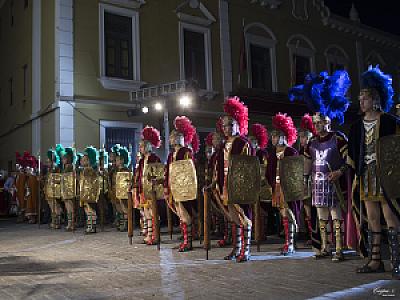
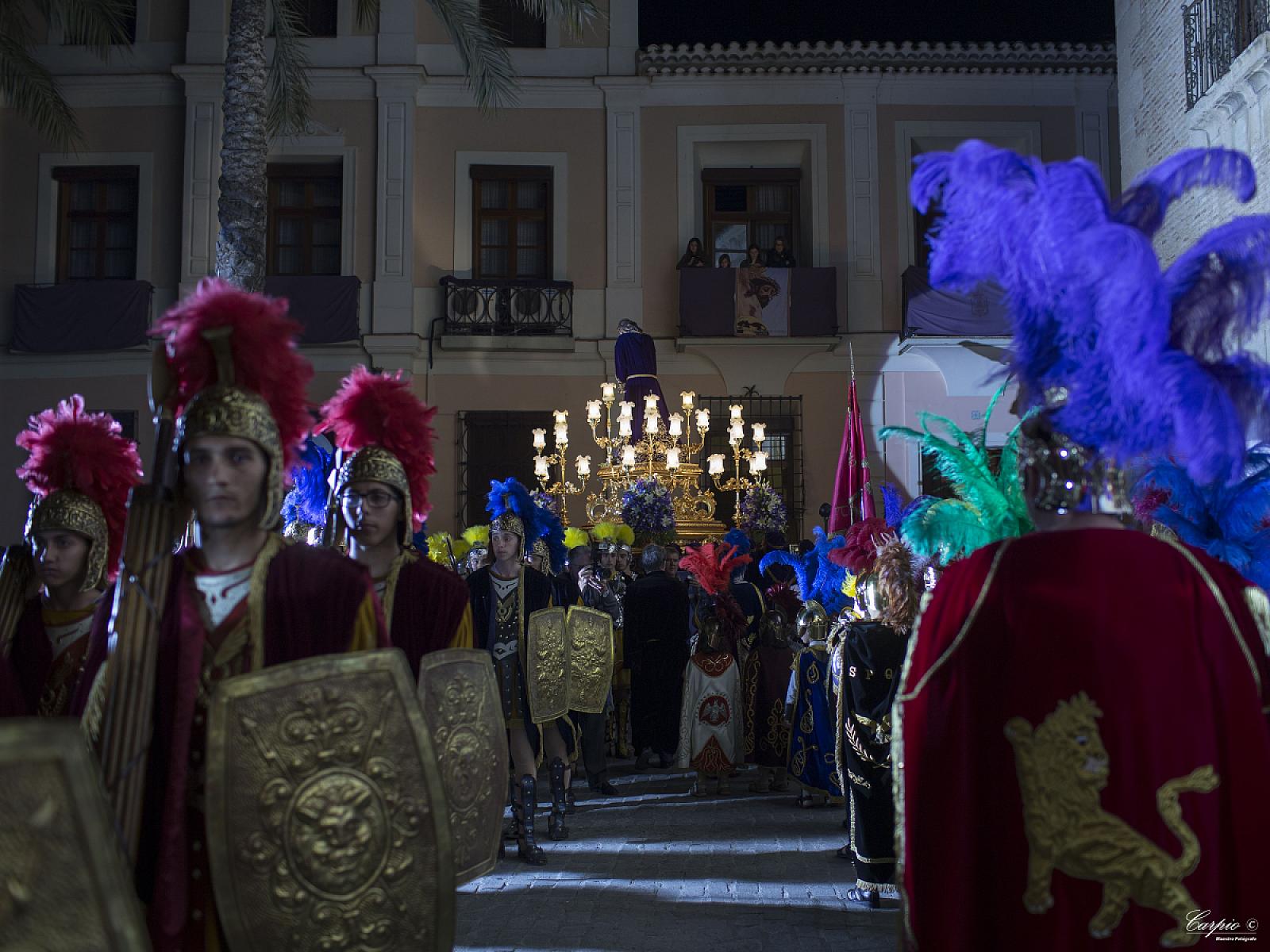
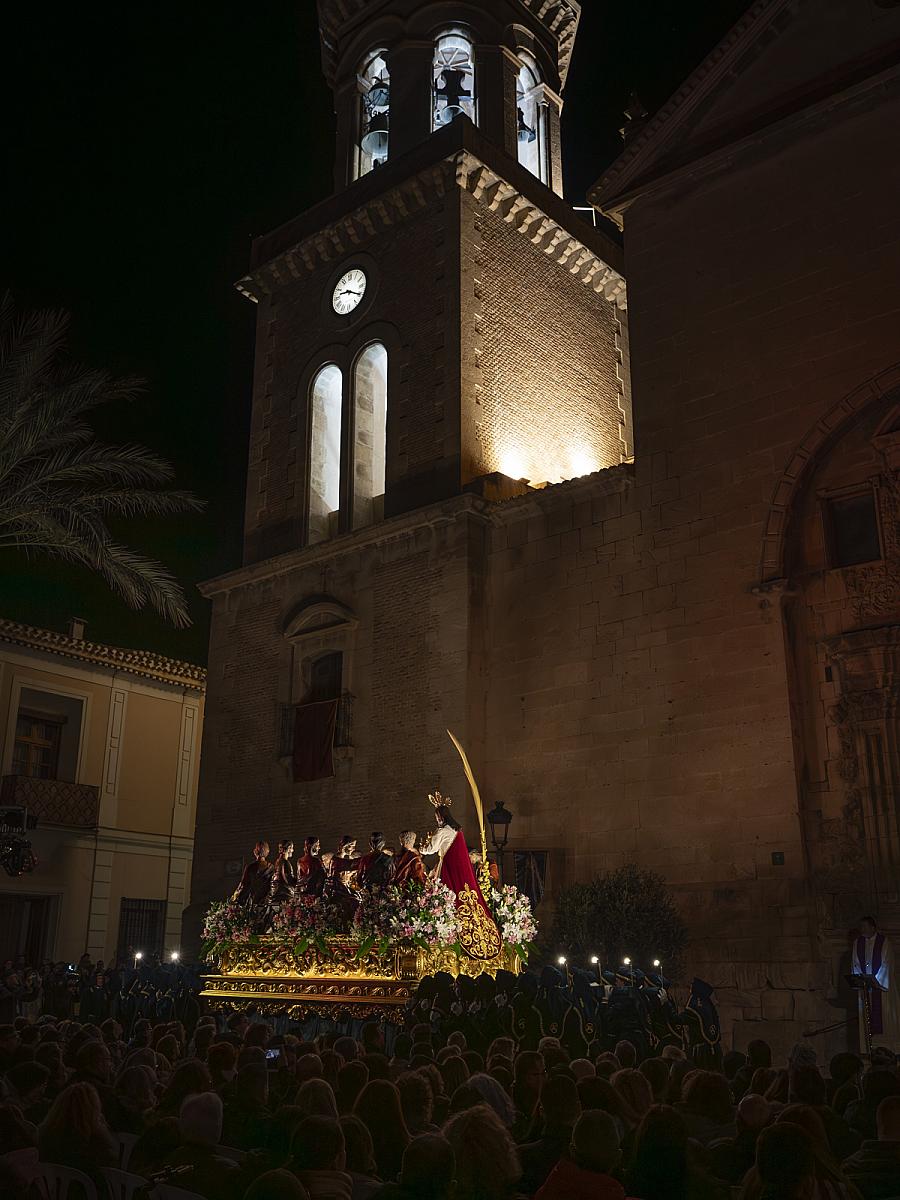
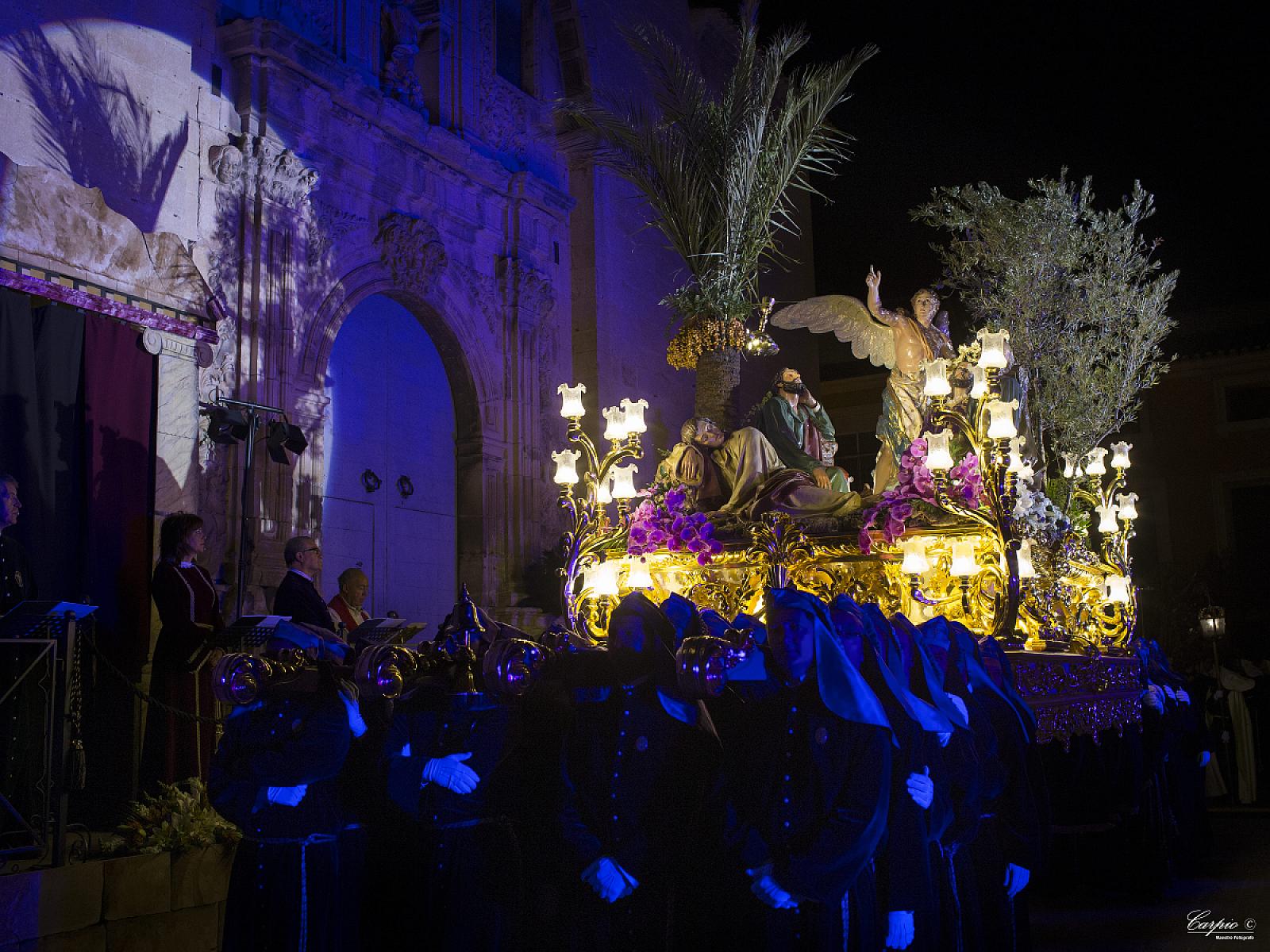
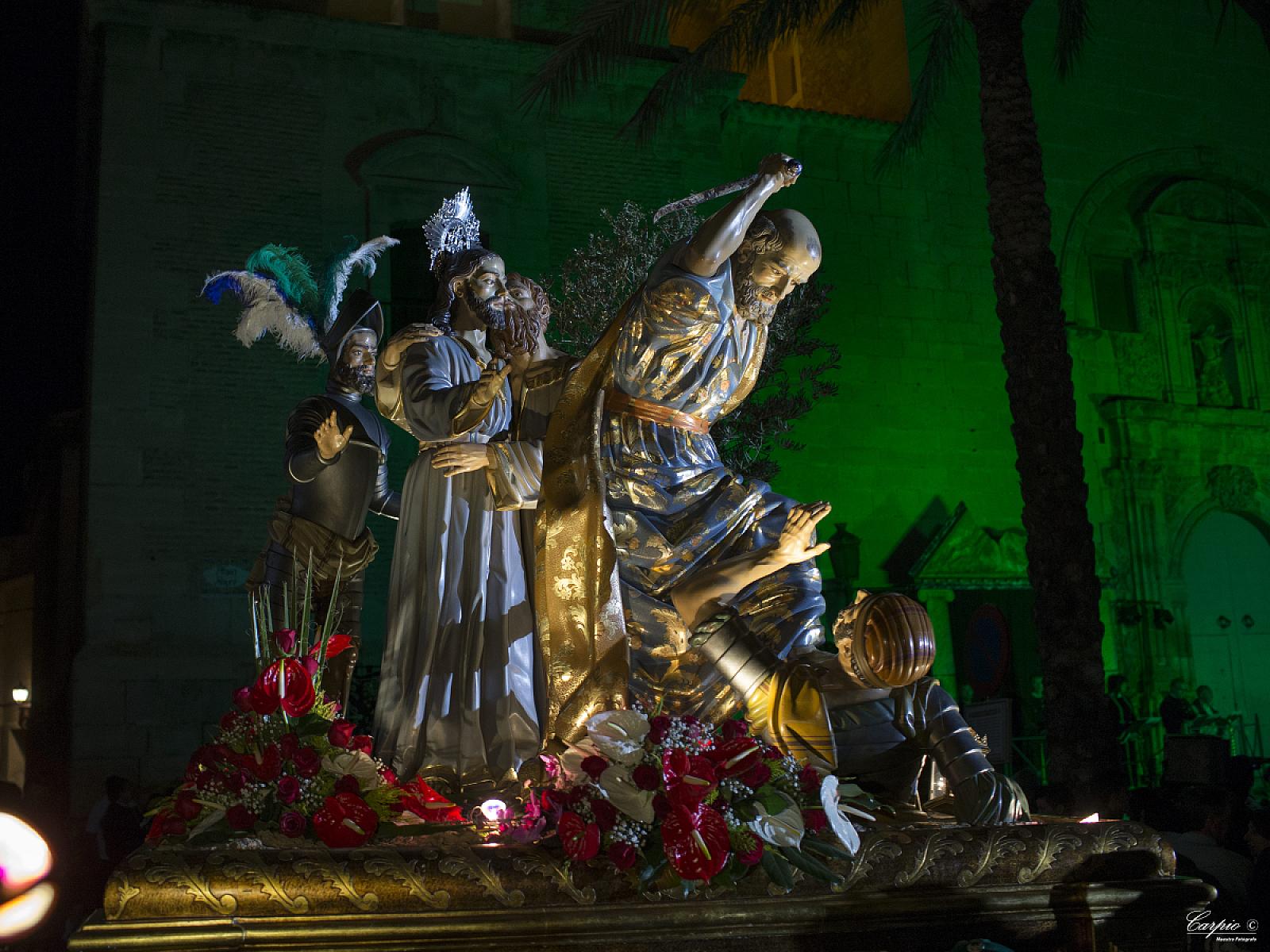
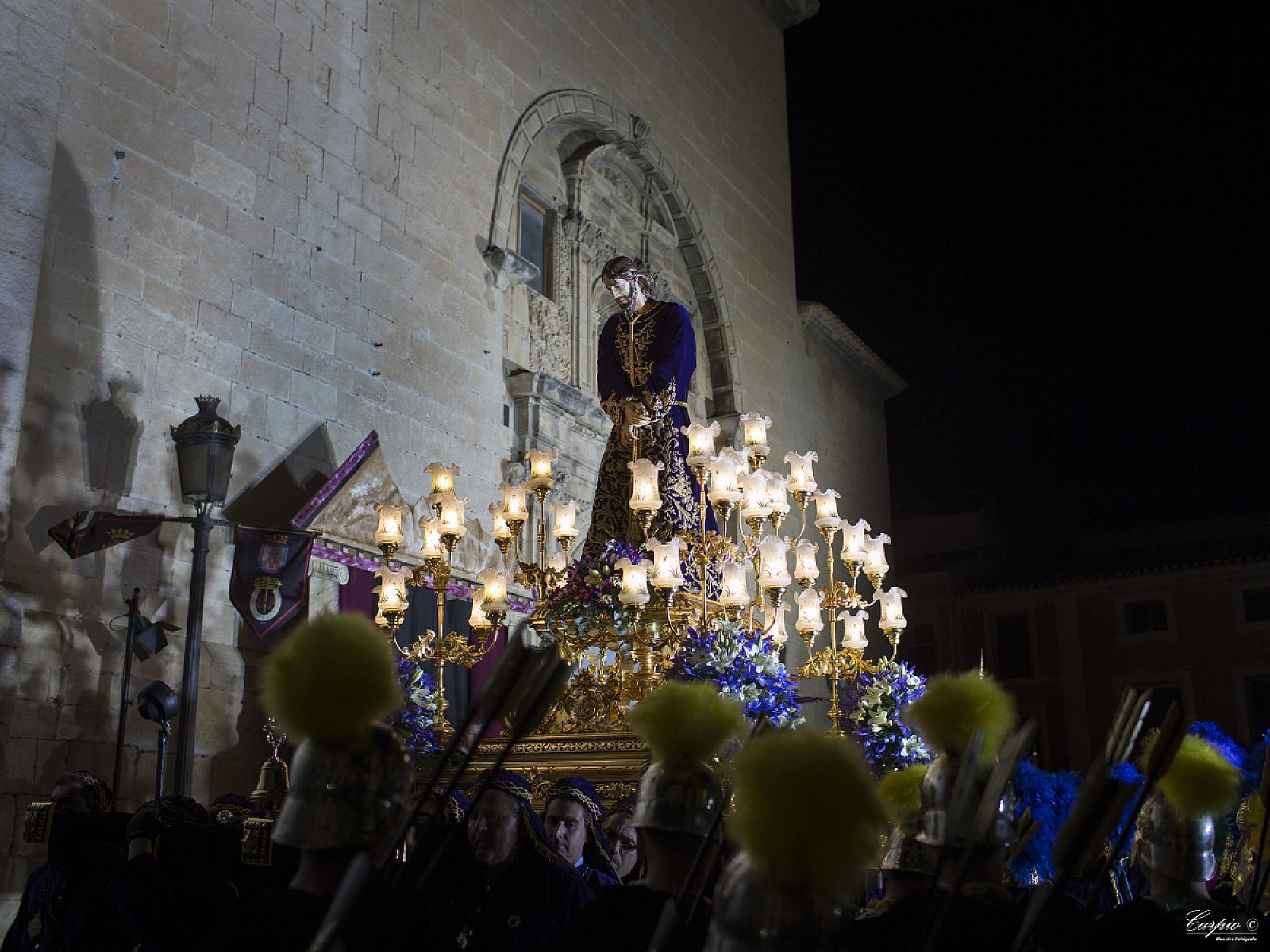
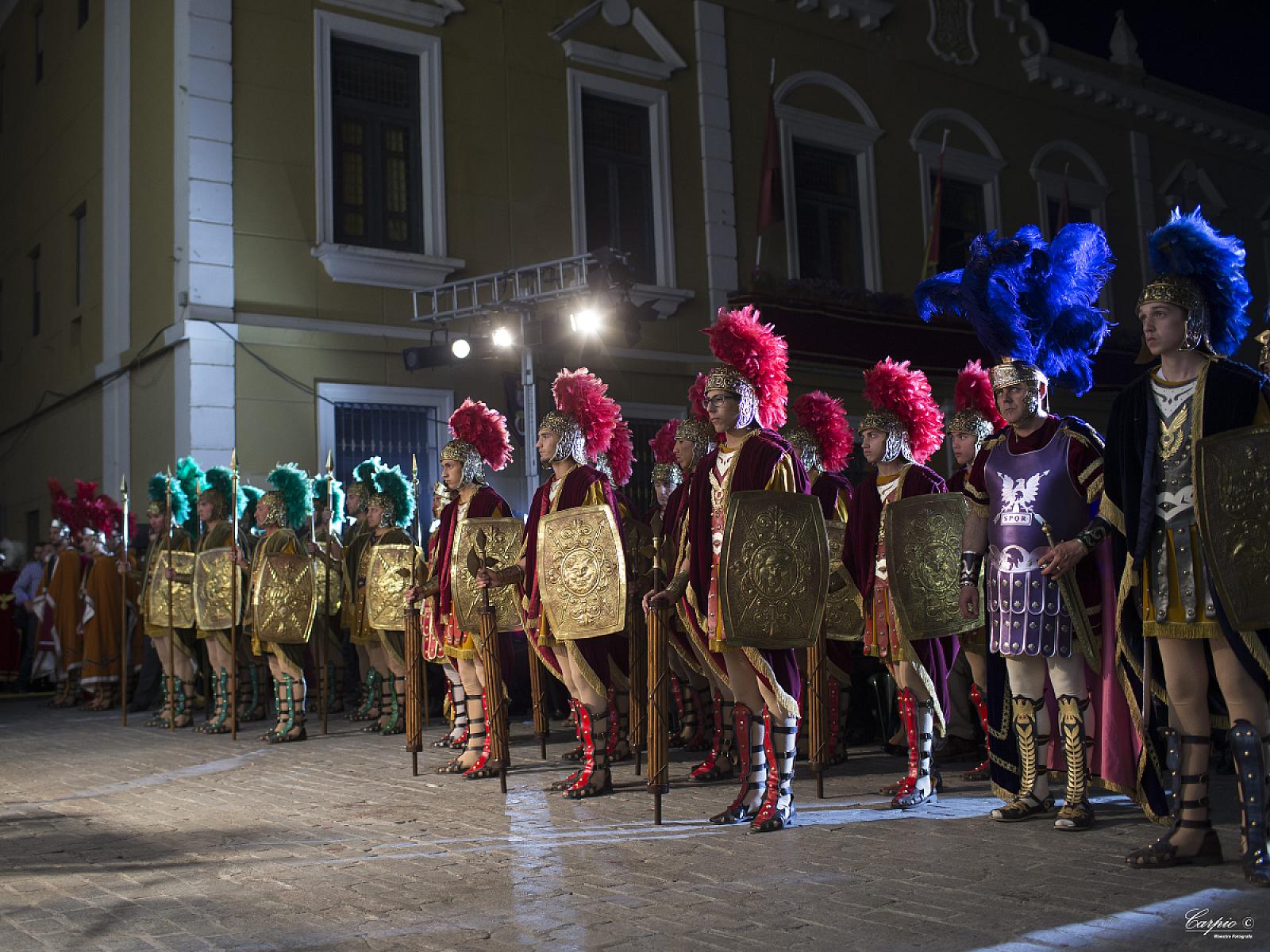
The floats that will form the basis of the procession appear one after another, in different episodes, each with its corresponding lighting and sound effects. They arrive at the square (which awaits in complete darkness) via "Cartas" Street and stop before the basilica door. The voices of the narrators are heard as a spotlight illuminates each float. At the end of each episode, the corresponding float leaves the square, accompanied by music, and joins the procession. Thus, the floats follow one another: the Last Supper, the Agony in the Garden and the Arrest. After a brief sermon by the priest (one of the oldest elements of the performance), the central moment of the evening arrives: the Arrest of Jesus. The cohorts of the Roman Third burst into the square, startling the onlookers with the thunder of their drums, and the torchlight reflects off the metal of swords, lances, and shields, magnifying the shadows of those who arrive en masse to arrest the Nazarene. Then takes place the sacred dialogue that has been repeated in Cieza for centuries: "Whom do you seek?", "Jesus the Nazarene!" And at that very moment, the basilica opens its doors, and Our Father Jesus the Nazarene appears on the threshold, before whom the "Armaos" fall to the ground. The dialogue is repeated three times, and the Nazarene leaves the square at a regular pace, escorted by the Third, to join the procession, as the cortege is simultaneously being organized and set out from the end of "Cid" Street.
Departure time of the Arrest: 9:00 pm (the ceremony itself lasts approximately 50 minutes in the "Plaza Mayor", after which the Procession follows the planned route).
Arrival time: approximately 1:00 am (Holy Week Museum, Dormis Museum or Basilica of Our Lady of the Assumption, depending on the Brotherhood).
Route: "Plaza Mayor", "Cid", "La Parra", "Rincón de los Pinos", "Pinos", "Larga", "Buitragos", "San Sebastián", Corner of the Convent, "Mesones", "Cadenas", "Cánovas del Castillo", "San Pedro"/"La Hoz" and "Plaza Mayor".
Order of Procession: banner of the Board of Passionate Brotherhoods and the following floats: Holy Supper (Royal Brotherhood of Our Lady of Grace and Hope), The Prayer in the Garden (Brotherhood of The Prayer in the Garden and The Holy Sepulchre), The Arrest (Brotherhood of the Descent of Christ and Kiss of Judas), Our Father Jesus Nazarene (Royal Brotherhood of Jesus -Nazarene-) and the "Armaos" (Brotherhood of the Roman Third of the Holy Sepulchre), all parading within their respective Brotherhoods -with their usual structure- and with bands or musical groups.
Arrival time: approximately 1:00 am (Holy Week Museum, Dormis Museum or Basilica of Our Lady of the Assumption, depending on the Brotherhood).
Route: "Plaza Mayor", "Cid", "La Parra", "Rincón de los Pinos", "Pinos", "Larga", "Buitragos", "San Sebastián", Corner of the Convent, "Mesones", "Cadenas", "Cánovas del Castillo", "San Pedro"/"La Hoz" and "Plaza Mayor".
Order of Procession: banner of the Board of Passionate Brotherhoods and the following floats: Holy Supper (Royal Brotherhood of Our Lady of Grace and Hope), The Prayer in the Garden (Brotherhood of The Prayer in the Garden and The Holy Sepulchre), The Arrest (Brotherhood of the Descent of Christ and Kiss of Judas), Our Father Jesus Nazarene (Royal Brotherhood of Jesus -Nazarene-) and the "Armaos" (Brotherhood of the Roman Third of the Holy Sepulchre), all parading within their respective Brotherhoods -with their usual structure- and with bands or musical groups.
Unique features and suggestions: Witnessing the Arrest of Jesus in the "Plaza Mayor" is a must, as it is one of the crucial moments of Holy Week in Cieza. For this purpose, the Board of Passionate Brotherhoods sets up chairs that fill the entire plaza. The Arrest of Jesus is a reenactment of extraordinary originality, a sensory spectacle that includes the theatrical performance by the narrators, the splendor of the religious imagery, the succession of different atmospheres created with the music, and the complex lighting system on the basilica's facade, which subtly enhances the ambiance for each scene, filling the facade with mysterious shadows cast by the images themselves, captivating everyone's attention.
The event culminates with the spectacular arrival of the Roman Third, the "Armaos", in the "Plaza Mayor", amidst torches and trumpets, to arrest Jesus after the historic dialogue of "Whom are you looking for?" The appearance of the float of Our Father Jesus of Nazareth at the basilica's threshold and its subsequent swift departure from the square, now a prisoner of the Third Order, is one of the most unique and incomparable moments -literally-of Holy Week in Cieza.
Afterward, it is striking to leave the square and see any of the streets where the full procession is already underway (only the floats have passed through the square, without the accompaniment of their brotherhoods), with all their Third orders and musical accompaniment, narrating the events of the night Christ was arrested. The magnificent effigy of Our Father Jesus deserves special mention, the most important of the works created by Ignacio Pinazo, as mentioned in another section. The other floats in the evening are three large sculptural groups whose bearers, precisely because of the considerable size of the platforms, make the most of the slower, more solemn aspect of the Cieza procession.
Photographs by Manuel Carpio and Enrique Centeno.
© Board of Passionate Brotherhoods of Cieza
© Board of Passionate Brotherhoods of Cieza
Gallery
Outstanding news
 Popular news
Rules of the XXXIX Poster Competition 'Holy Week in Cieza'
Pablo Espinosa will be in charge of creating the poster for "The Arrest" 2027
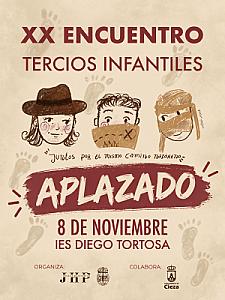
Official statement: Postponement of the 20th Children's Section Gathering
ACTIVITY FOR HOLY WEEK 2020
The Guide to Acts and Activities of Holy Week 2019 is presented at the Casa Museo de Cieza
The brotherhoods of Cieza visit the brotherhood houses of the Holy Week in Lorca.
Upcoming events
24 October - 10:00
XIII National Gathering of Youth from Brotherhoods and Confraternities
24 October - 20:00
Holy Mass
25 October - 07:00
Rosary of Dawn
25 October - 10:00
XIII National Gathering of Youth from Brotherhoods and Confraternities
30 October - 19:00
Triduum
30 October - 19:00
Food collection
Calendar