





News
|
Agenda
|
Guide of events
|
Processions
|
Pasos
|
Brotherhoods
|
History
|
Cieza
|
|
Music
|
Contact
News
|
Agenda
|
Guide of events
|
Processions
|
Pasos
|
Brotherhoods
|
History
|
Cieza
|
|
Music
|
Contact
General Procession (19th century)
Holy Wednesday night
Holy Wednesday night
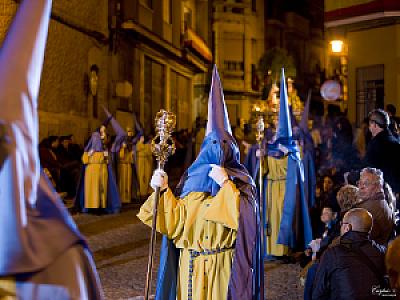
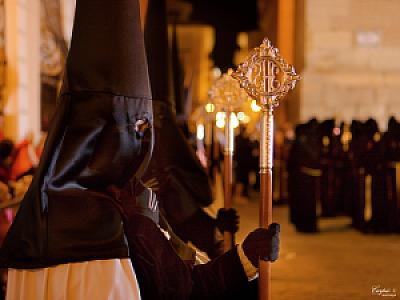
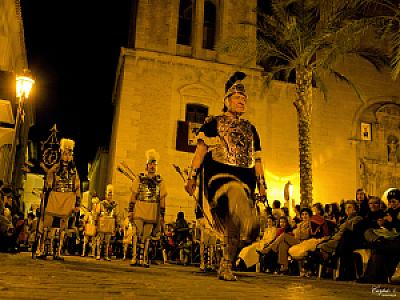
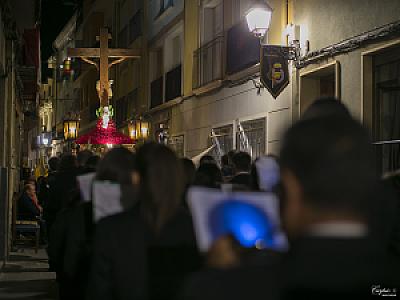
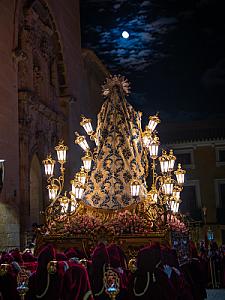
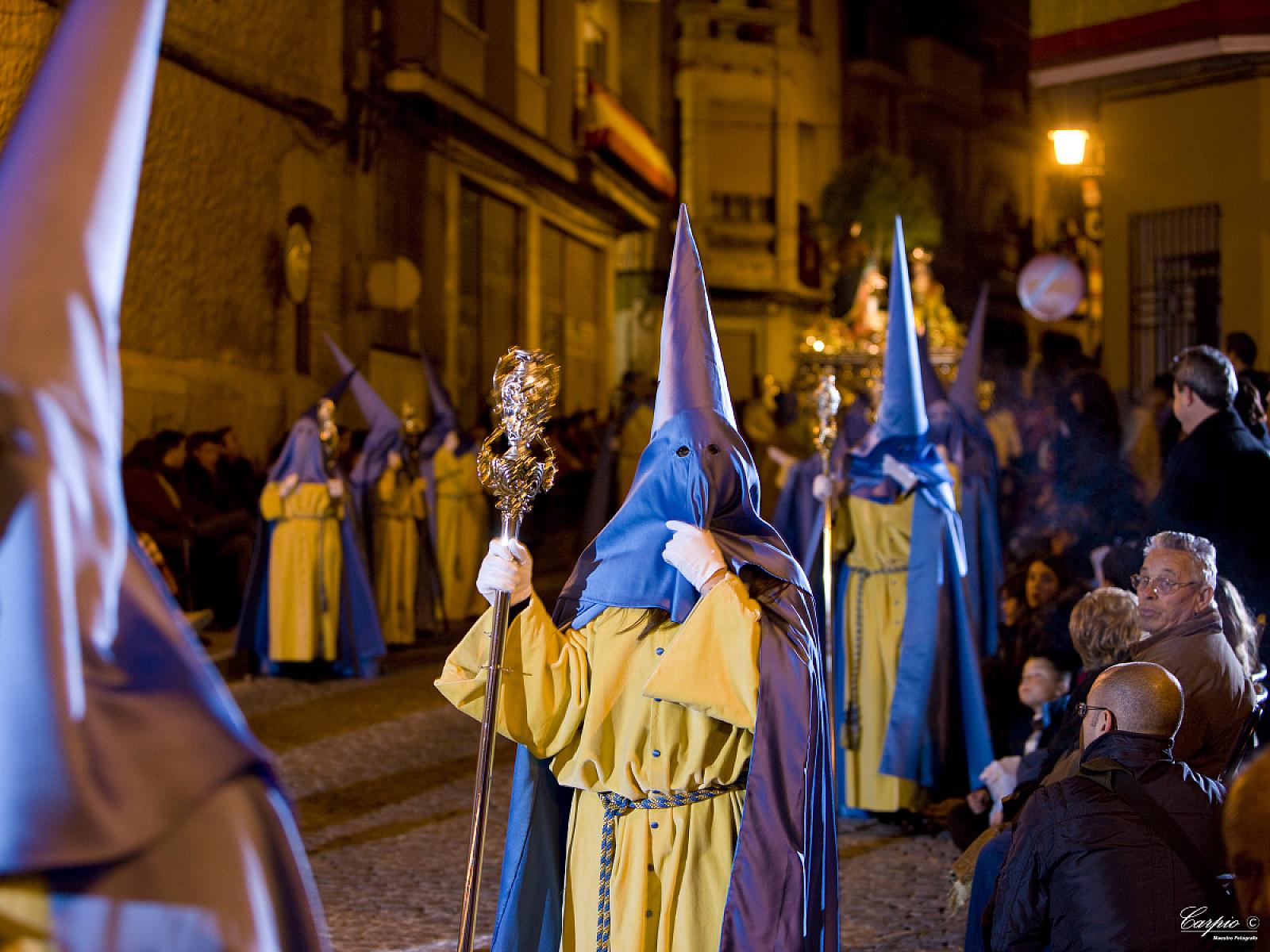
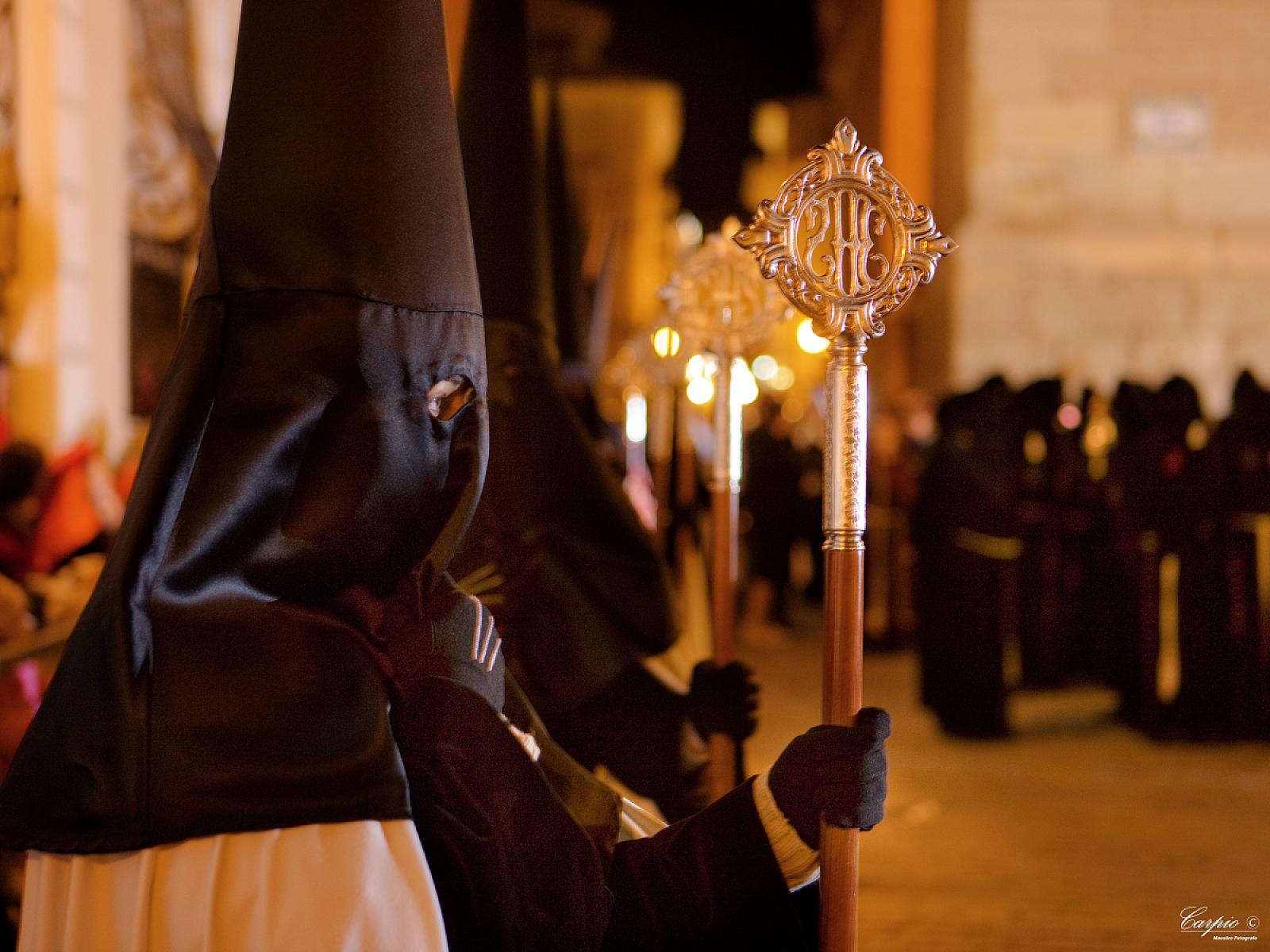
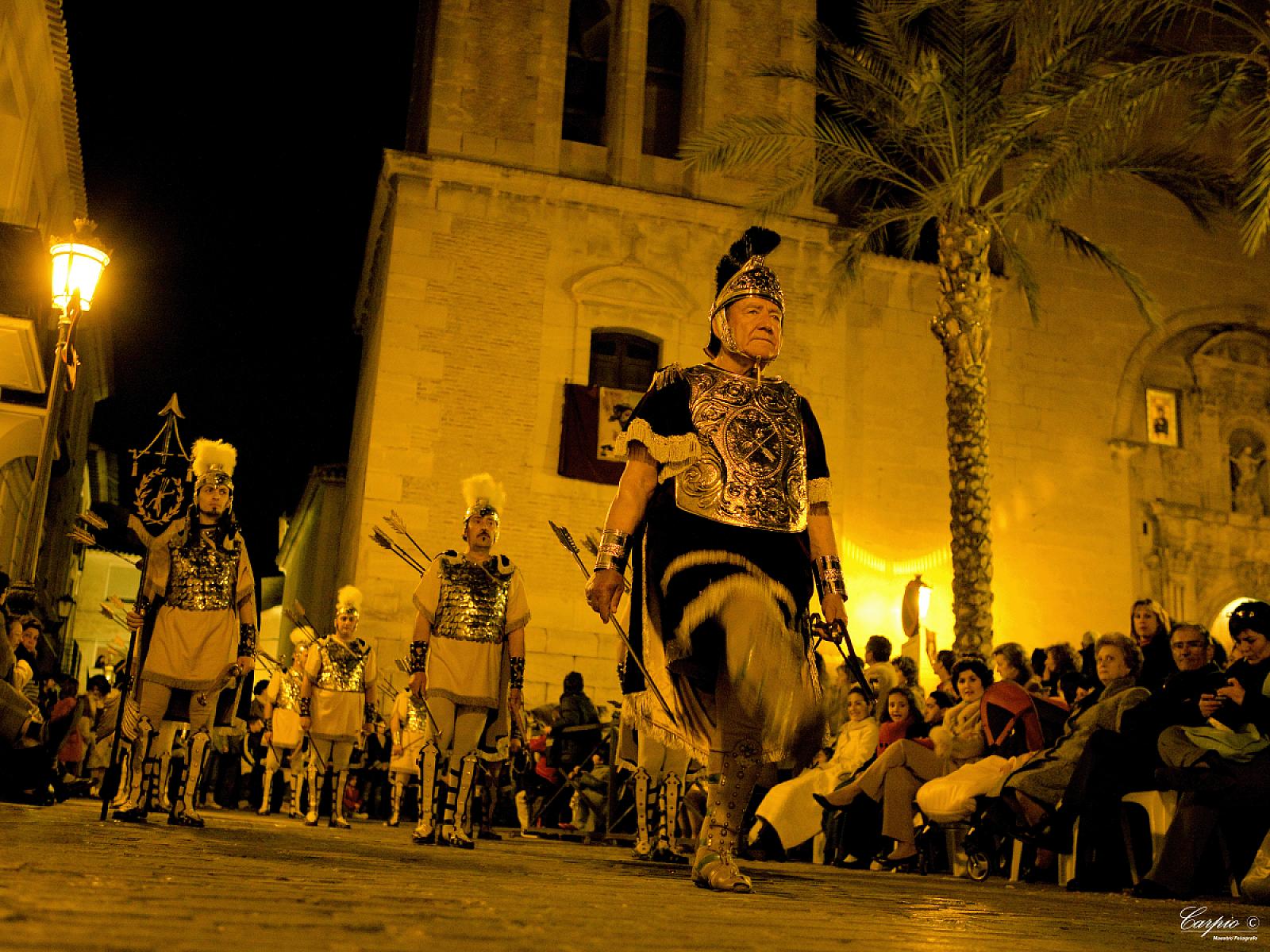
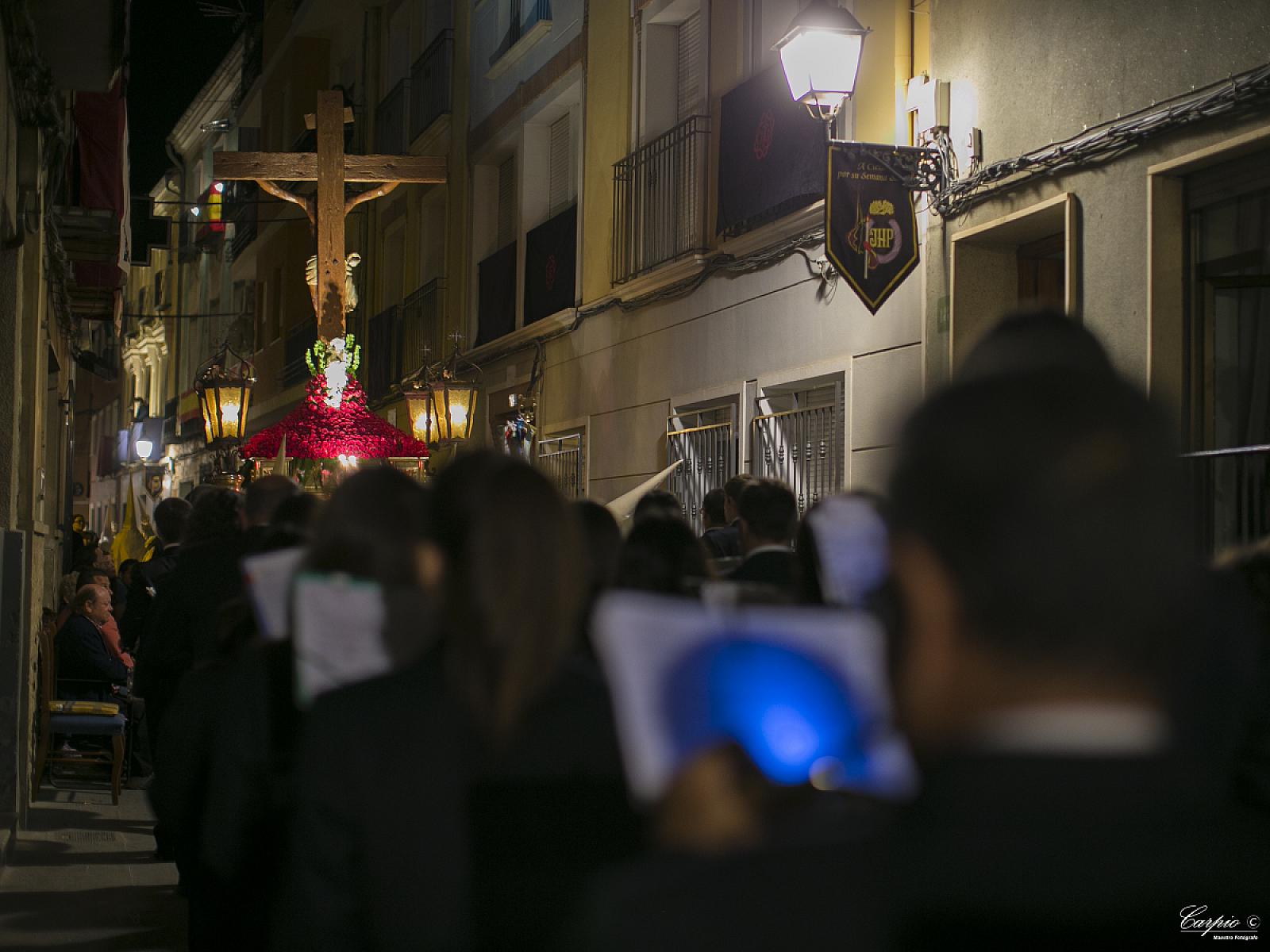
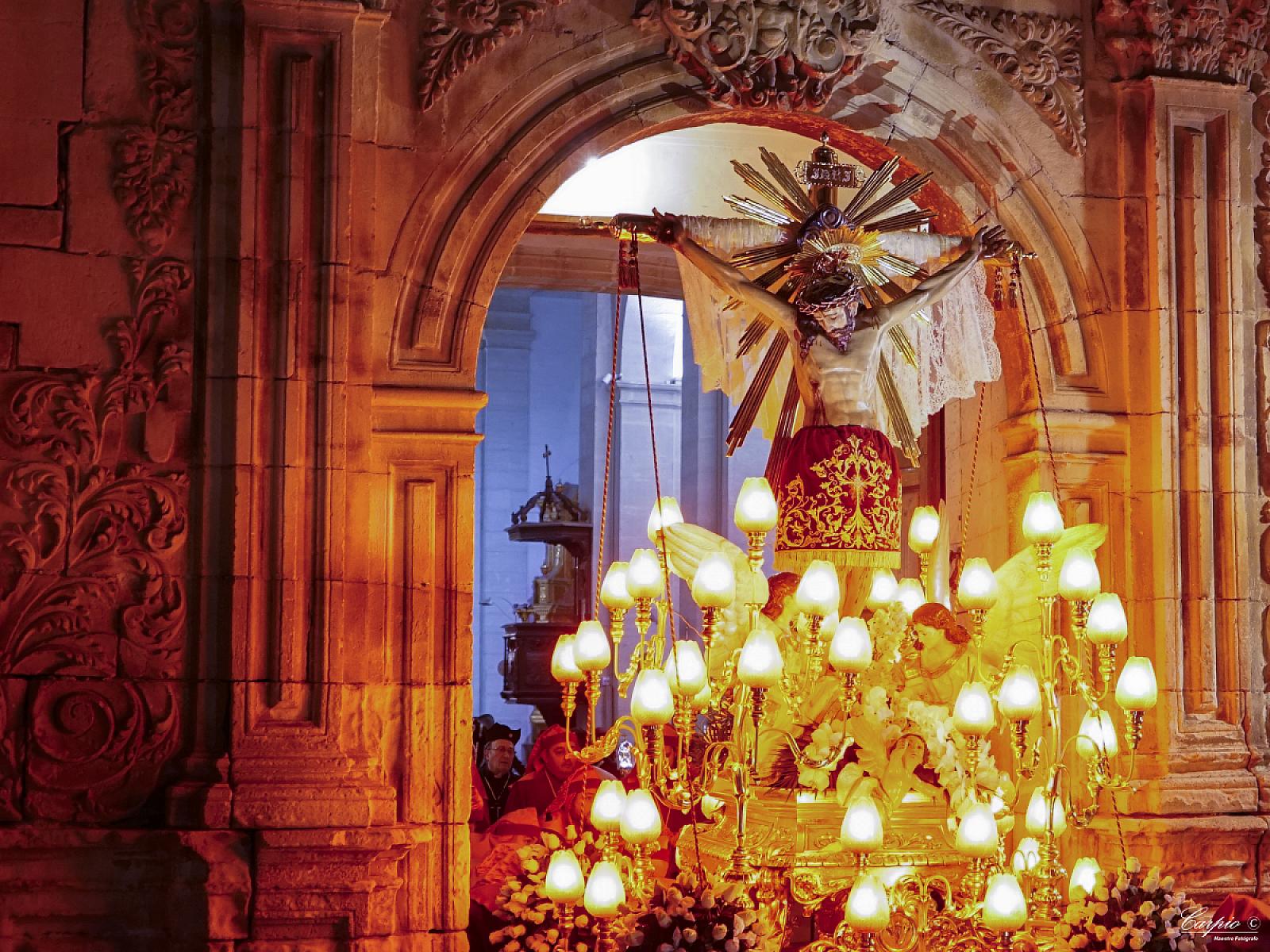
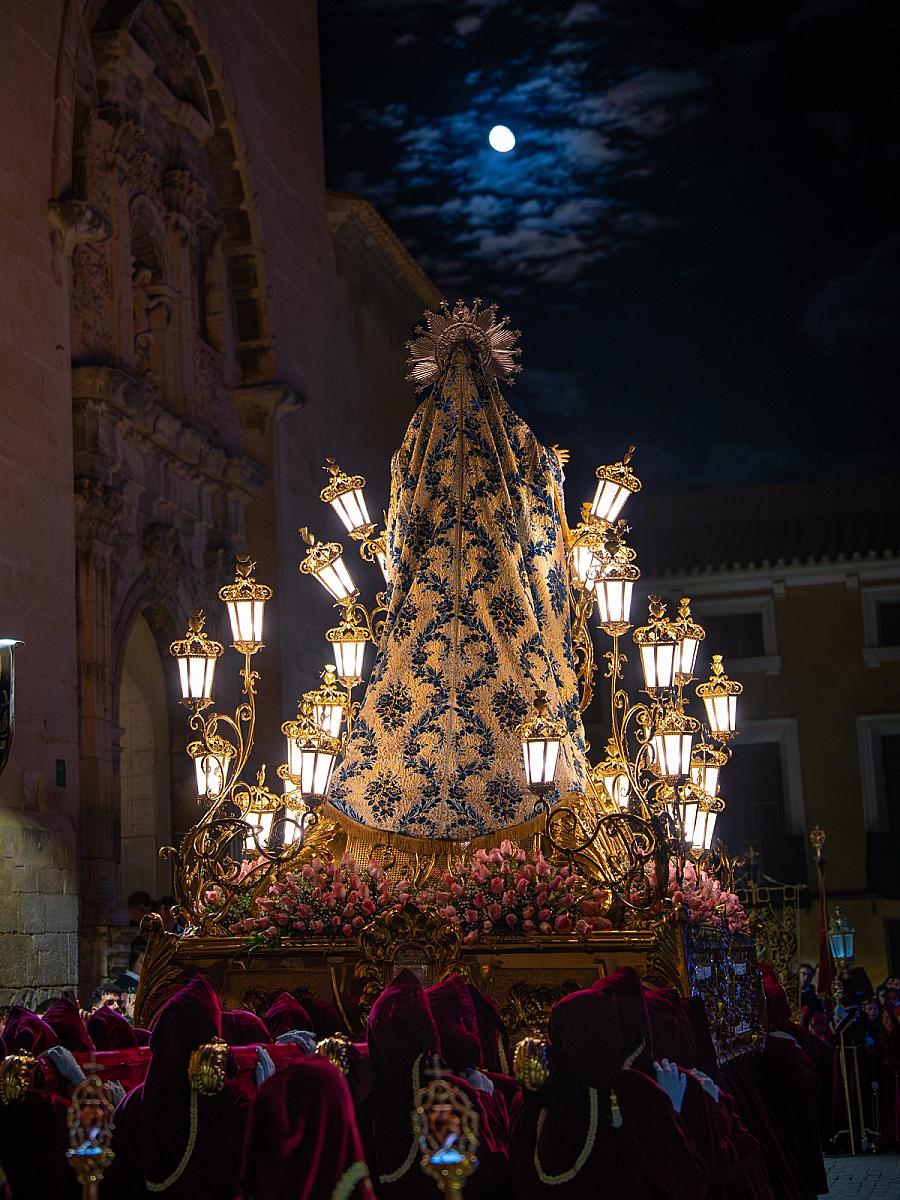
The first of the three major Passion plays in Cieza's Holy Week processions is remarkable for the number of brotherhoods involved -thirteen- and the thousands of members who participate. They offer a narrative overview of the main events of Christ's Passion and Death, as well as those preceding them. Many brotherhoods are parading tonight for the first time during Holy Week, marking their debut, eagerly anticipated since last spring. The procession's structure is repeated in each brotherhood, following the sequence of processions: banner, children's section, standard and lanterns, penitents, bearers with their respective floats, arranged according to the Gospel accounts of the Passion, and a marching band (or musical group), except for the Roman Third, which will perform its traditional "Caracola" at various points along the 'route'.
Departure time: 9:00 pm (Holy Week Museum, Dormis Museum or Basilica of Our Lady of the Assumption, depending on the Brotherhood).
Arrival time: approximately 3:00 am (Holy Week Museum, Dormis Museum or Basilica of Our Lady of the Assumption, depending on the Brotherhood).
Route: "Plaza Mayor", "Cid", "La Parra", "Rincón de los Pinos", "Pinos", "Larga", "Buitragos", "San Sebastián", Corner of the Convent, "Mesones", "Cadenas" and/or "Cánovas del Castillo" and/or "Diego Tortosa", "San Pedro" and "Plaza Mayor".
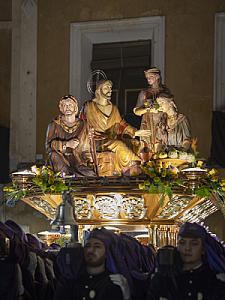
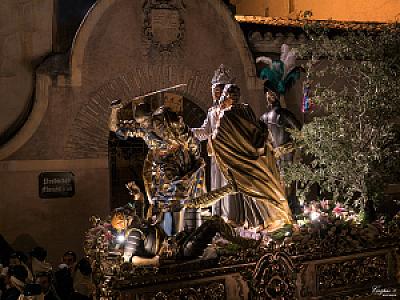
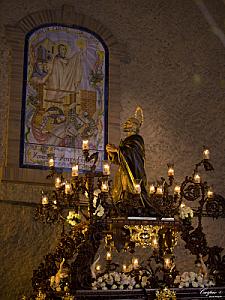
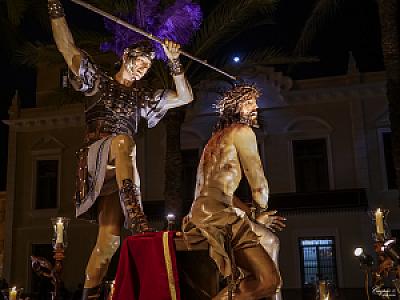
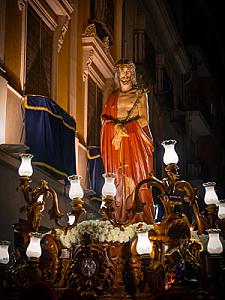
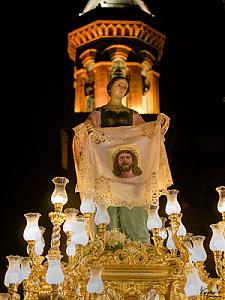
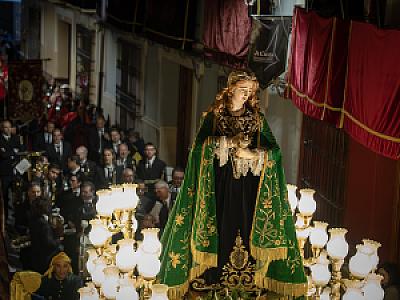
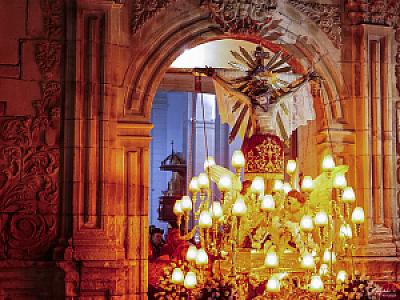
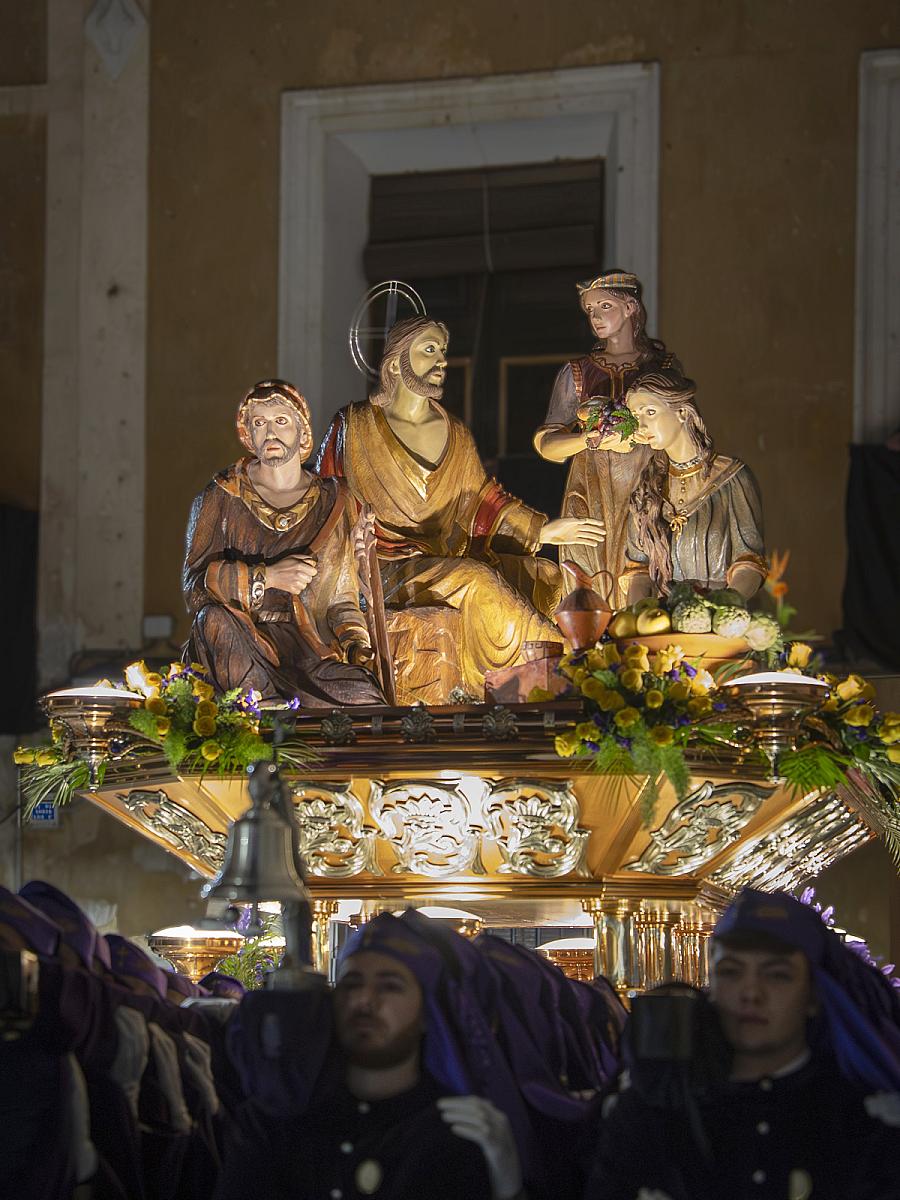
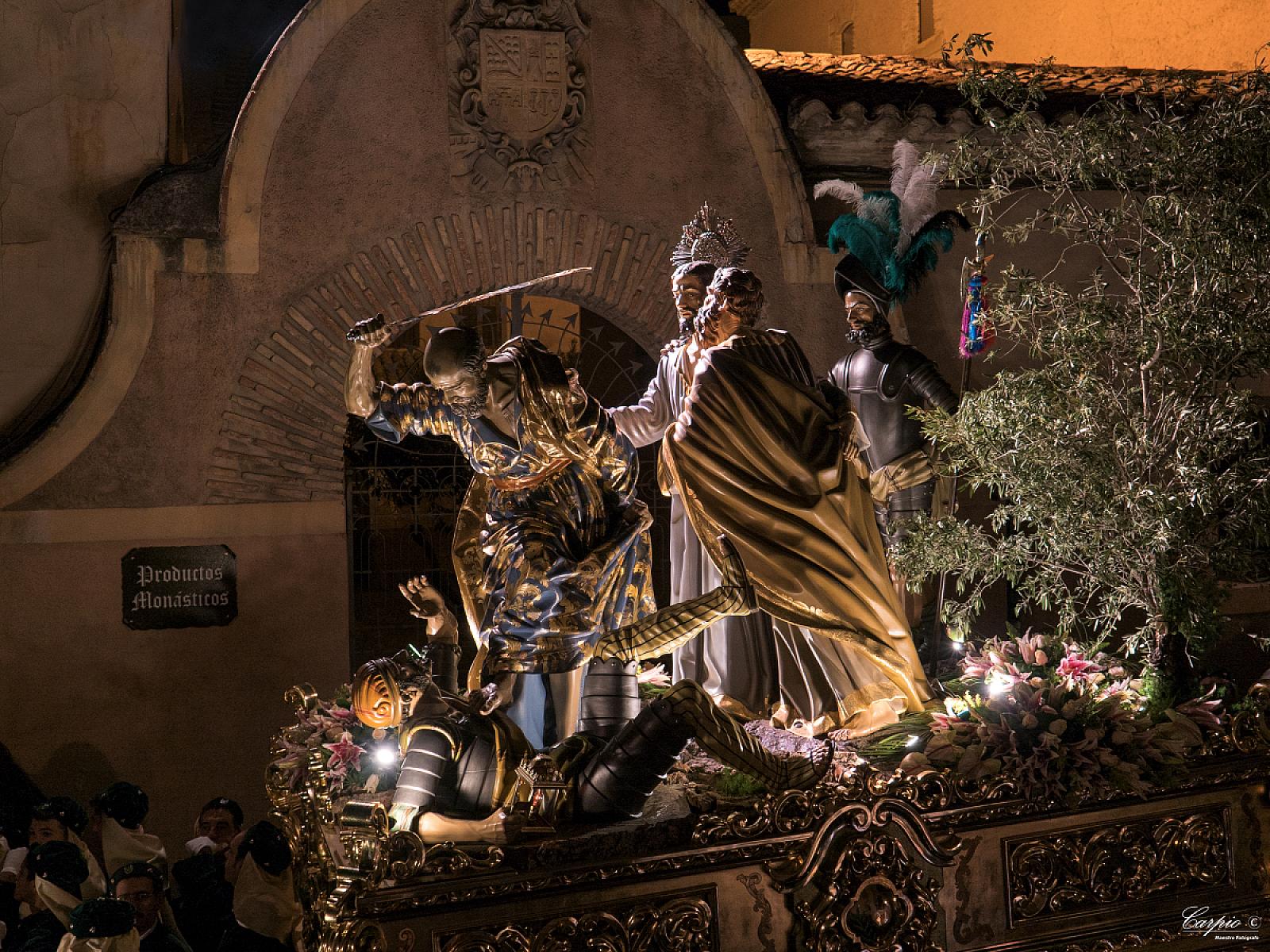
Order of Procession: banner of the Board of Passionate Brotherhoods and the following floats: The Samaritan Woman (Brotherhood of The Samaritan Woman), The Anointing of Jesus in Bethany (Brotherhood of The Prayer in the Garden and The Holy Sepulchre), The Arrest (Brotherhood of the Descent from the Cross and the Kiss of Judas), Saint Peter (Brotherhood of Saint Peter the Apostle), The Flagellation (Brotherhood of the Most Holy Christ of the Agony), The Crowning with Thorns (Royal Brotherhood of Jesus -Nazarene-), Roman Third of the Holy Sepulchre, Ecce Homo (Brotherhood of Saint John the Evangelist), Saint Veronica (Brotherhood of Saint Veronica), Most Holy Christ of Forgiveness (Brotherhood of the Most Holy Christ of Forgiveness and the Most Holy Virgin of Beautiful Love), Saint Mary Magdalene (Brotherhood of Saint Mary Magdalene), Most Holy Christ of Consolation (Brotherhood of the Most Holy Christ of Consolation) and Most Holy Virgin of Sorrows (Brotherhood of the Blessed Virgin of Sorrows), all parading with their respective Brotherhoods -with their usual structure- and marching bands or musical groups.
Arrival time: approximately 3:00 am (Holy Week Museum, Dormis Museum or Basilica of Our Lady of the Assumption, depending on the Brotherhood).
Route: "Plaza Mayor", "Cid", "La Parra", "Rincón de los Pinos", "Pinos", "Larga", "Buitragos", "San Sebastián", Corner of the Convent, "Mesones", "Cadenas" and/or "Cánovas del Castillo" and/or "Diego Tortosa", "San Pedro" and "Plaza Mayor".
Order of Procession: banner of the Board of Passionate Brotherhoods and the following floats: The Samaritan Woman (Brotherhood of The Samaritan Woman), The Anointing of Jesus in Bethany (Brotherhood of The Prayer in the Garden and The Holy Sepulchre), The Arrest (Brotherhood of the Descent from the Cross and the Kiss of Judas), Saint Peter (Brotherhood of Saint Peter the Apostle), The Flagellation (Brotherhood of the Most Holy Christ of the Agony), The Crowning with Thorns (Royal Brotherhood of Jesus -Nazarene-), Roman Third of the Holy Sepulchre, Ecce Homo (Brotherhood of Saint John the Evangelist), Saint Veronica (Brotherhood of Saint Veronica), Most Holy Christ of Forgiveness (Brotherhood of the Most Holy Christ of Forgiveness and the Most Holy Virgin of Beautiful Love), Saint Mary Magdalene (Brotherhood of Saint Mary Magdalene), Most Holy Christ of Consolation (Brotherhood of the Most Holy Christ of Consolation) and Most Holy Virgin of Sorrows (Brotherhood of the Blessed Virgin of Sorrows), all parading with their respective Brotherhoods -with their usual structure- and marching bands or musical groups.
Unique features and suggestions: For any local resident who participates in the procession and for any visitor, a visit to the town's historic center that afternoon is a must to experience the unmistakable atmosphere of a grand celebration, the excitement building as the procession draws near. Both inside the Basilica of Our Lady of the Assumption and in the neighboring house-museums, a flurry of preparations takes place, including the dressing of robes, floral arrangements, distribution of supplies, and so on. It should be noted that these spaces are open to all visitors, allowing them to enter and participate in this unique and lively atmosphere, whose festive and popular tone is amplified by the aforementioned pasodoble music. Even the air has a brotherhood flavor and vibrates with the Nazarene pulse pumping through the narrow streets, adorned with flags and banners, where a constant flow of robes circulates, some being worn and others hanging on their hangers, while a joyful anticipation grows with the imminence of the evening procession.
The General Procession, for its part, is a visual summary of the Passion of Christ in a solemn parade where each brotherhood contributes the vibrant colors of its robes, its heritage, and its unique character within a grand narrative with a distinctly epic feel. For this reason, rather than simply wandering around the various corners of the route, it is advisable for the spectator to position themselves at a specific point along the procession, for example, on "San Sebastián" Street. This will allow them to follow the chronological narrative of the events recounted by the procession. However, even after the last brotherhood has passed, it is still possible to approach and watch the final floats being returned to their places, scenes that are less crowded but always attract the most devoted Holy Week enthusiasts.
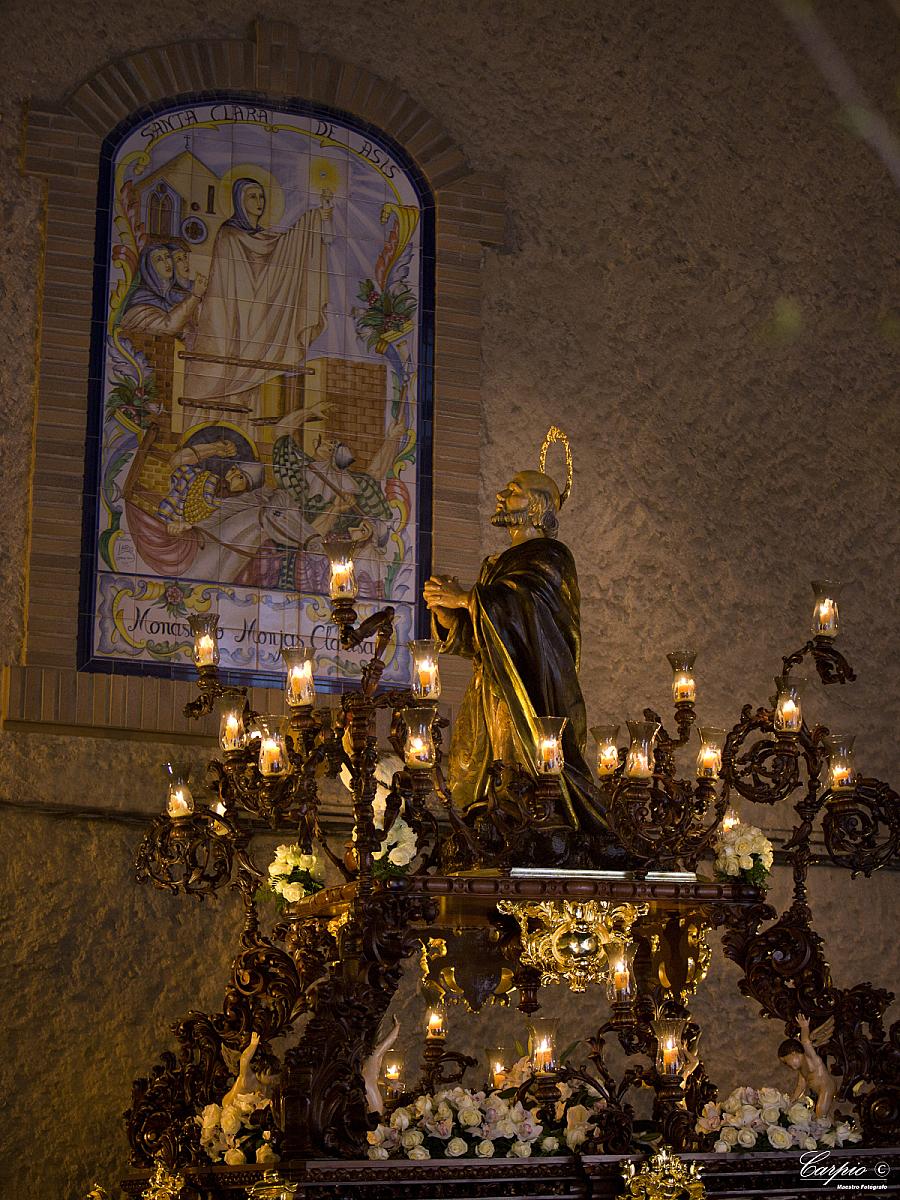
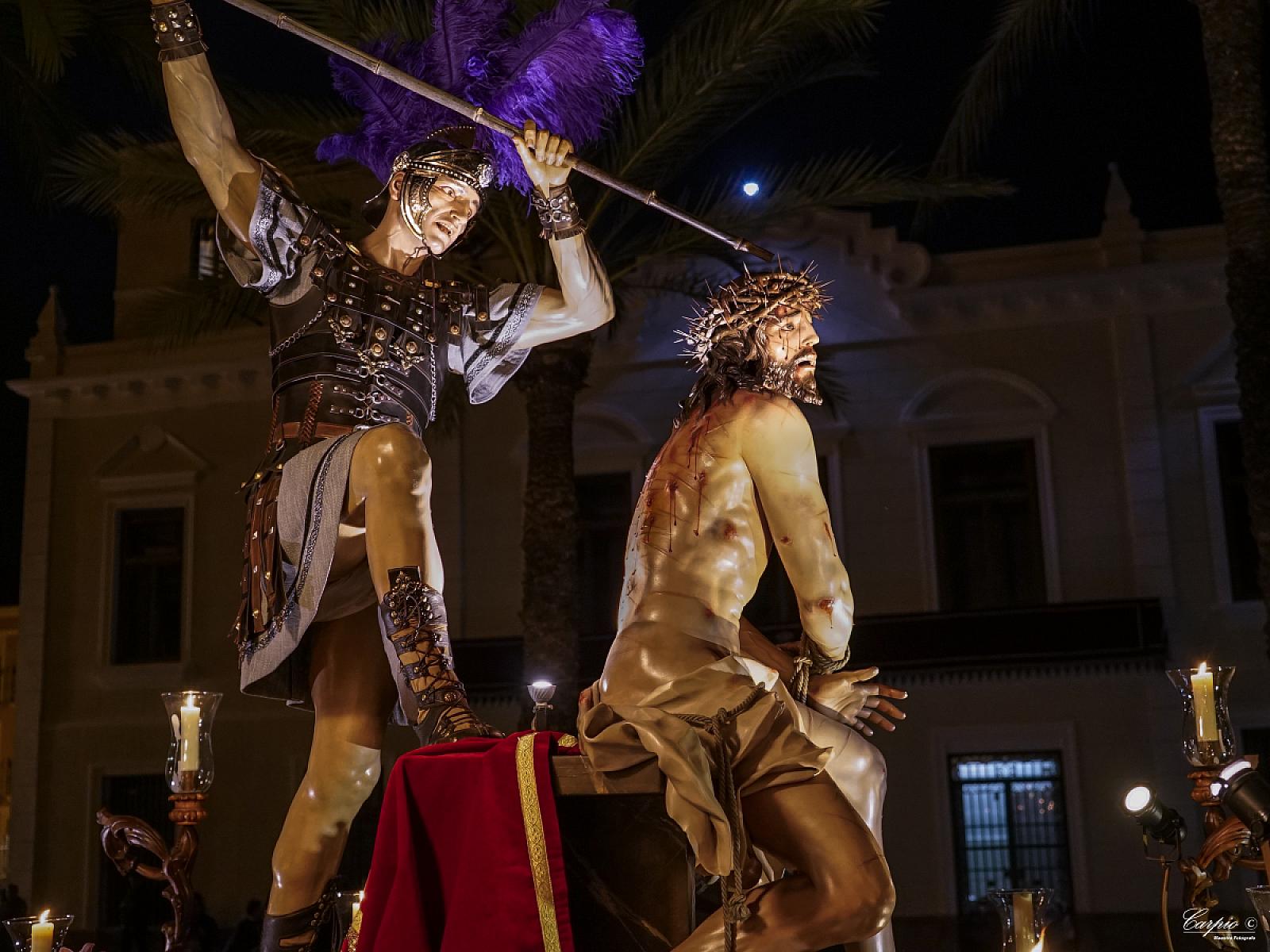
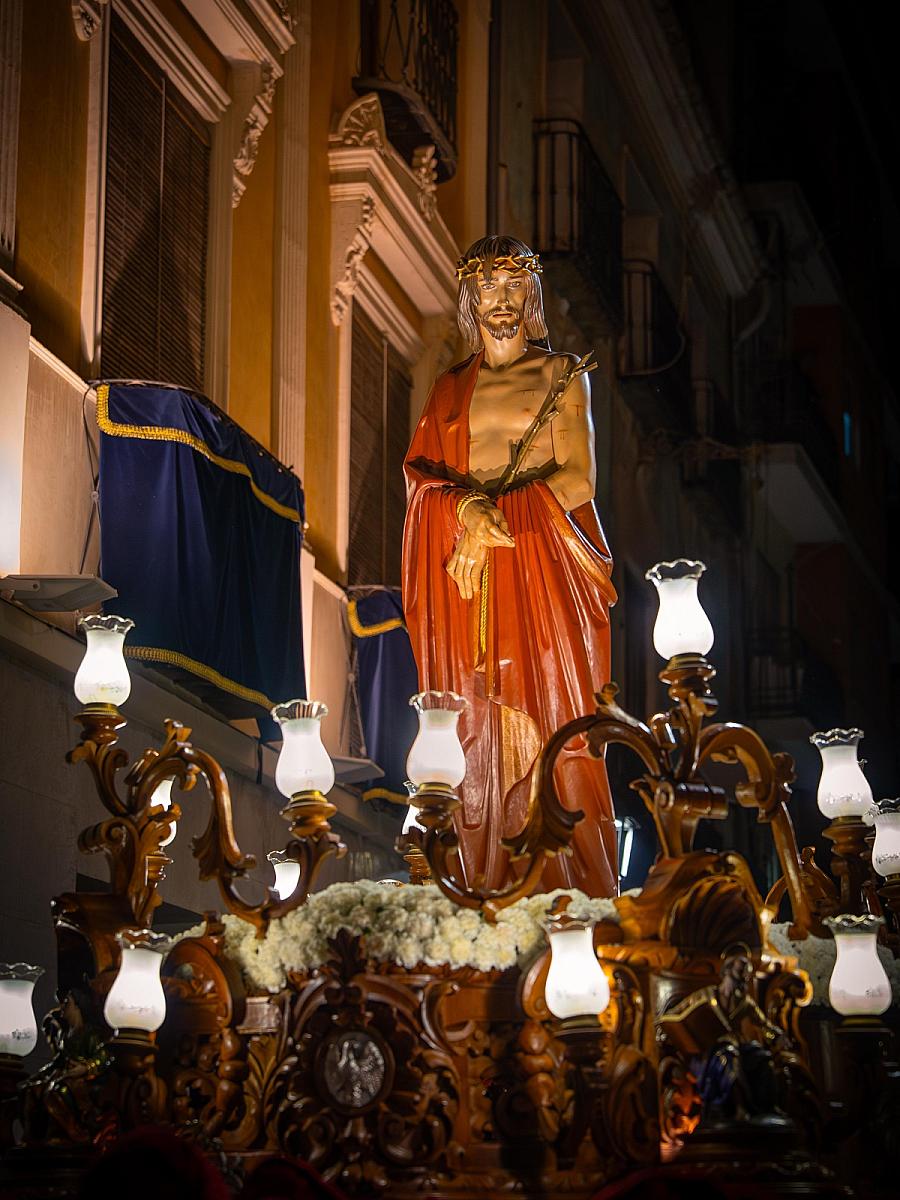
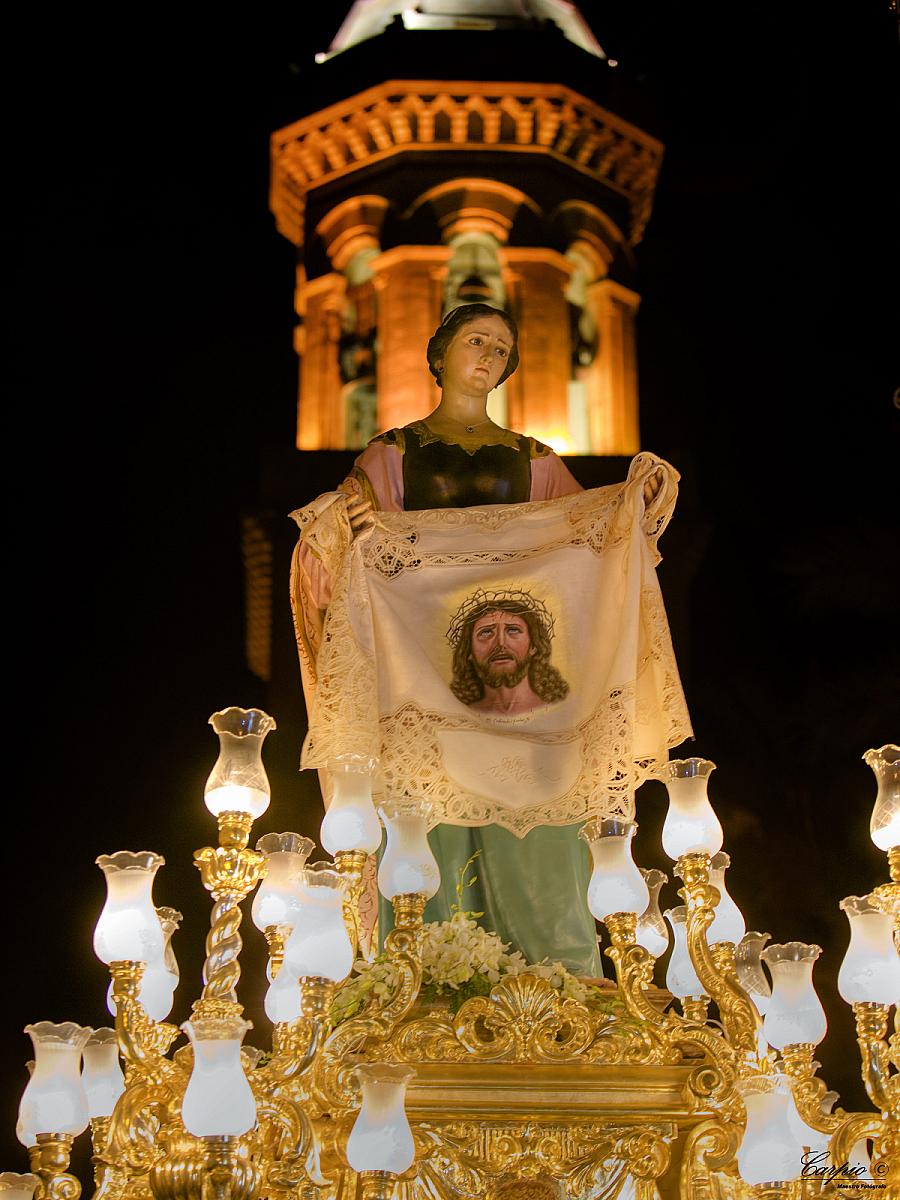
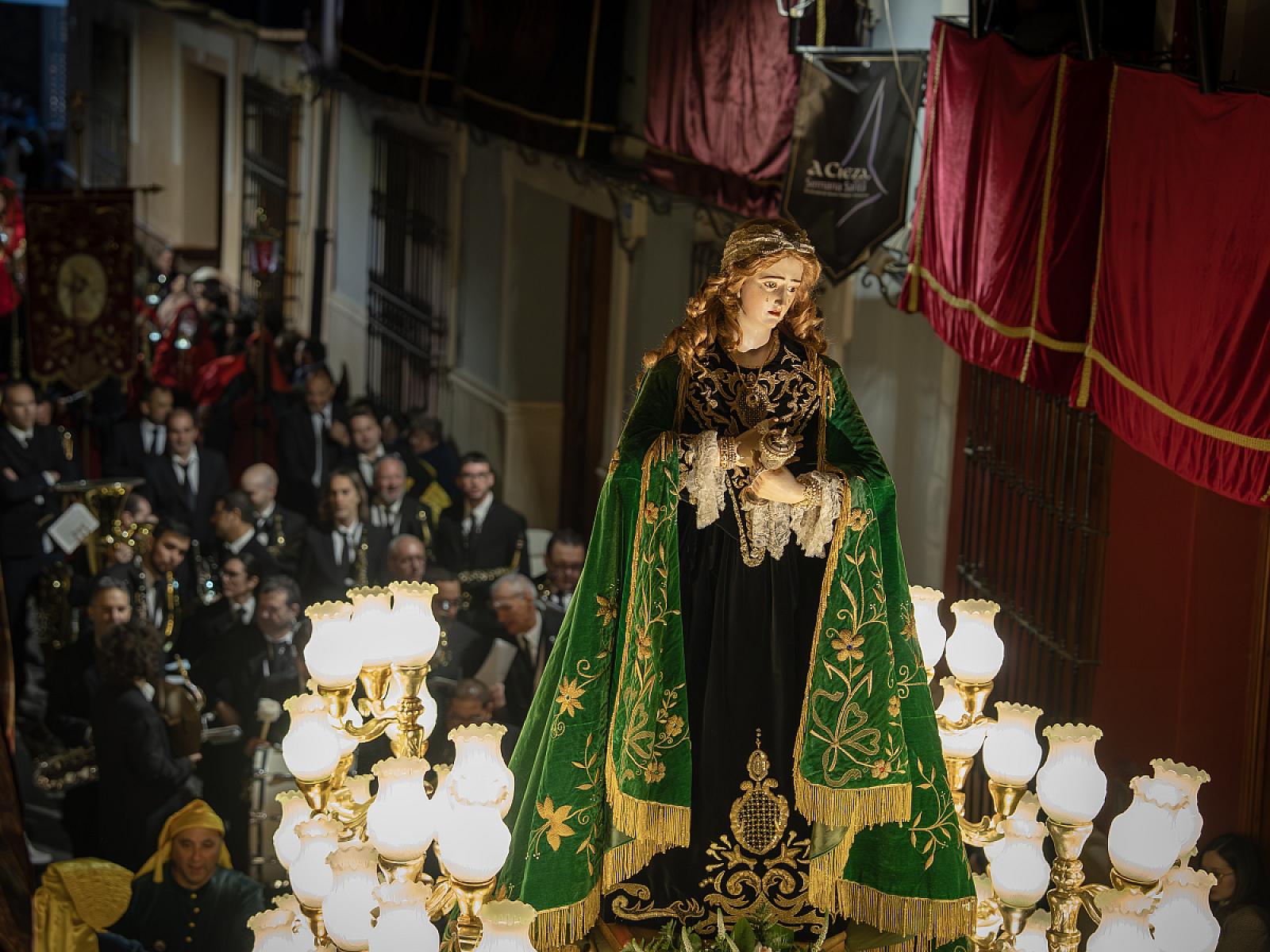
Among the important religious imagery displayed that night, it is impossible to overlook the significance of the statue of Saint Peter, by the great sculptor Palma Burgos, and the throne on which it is carried, crafted by Rubio Valverde; the sculptural group of The Flagellation, featuring the Christ by González Moreno; the exquisite sculpture of The Crowning with Thorns, by Romero Zafra from Córdoba; and the image of Ecce Homo, the last and most magnificent processional work carved by González Moreno, not forgetting the beautiful 19th-century images of Saint Veronica and Saint Mary Magdalene. All of these, along with the aforementioned images of the Holy Christ of Forgiveness and the Blessed Virgin of Sorrows, and the ancient and revered image of the Holy Christ of Consolation, are among the most important works of religious imagery in Cieza's Holy Week.
Photographs by Manuel Carpio and Enrique Centeno.
© Board of Passionate Brotherhoods of Cieza
© Board of Passionate Brotherhoods of Cieza
Gallery
Outstanding news

 Popular news
Rules of the XXXIX Poster Competition 'Holy Week in Cieza'
Pablo Espinosa will be in charge of creating the poster for "The Arrest" 2027
Official statement: Postponement of the 20th Children's Section Gathering
ACTIVITY FOR HOLY WEEK 2020
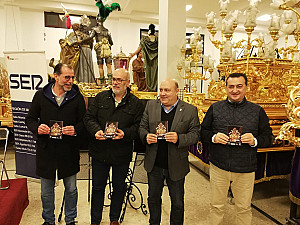
The Guide to Acts and Activities of Holy Week 2019 is presented at the Casa Museo de Cieza
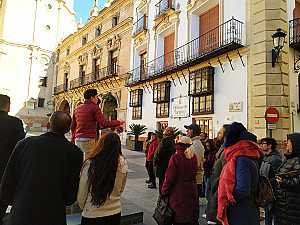
The brotherhoods of Cieza visit the brotherhood houses of the Holy Week in Lorca.
Upcoming events
24 October - 10:00
XIII National Gathering of Youth from Brotherhoods and Confraternities
24 October - 20:00
Holy Mass
25 October - 07:00
Rosary of Dawn
25 October - 10:00
XIII National Gathering of Youth from Brotherhoods and Confraternities
30 October - 19:00
Triduum
30 October - 19:00
Food collection
Calendar