





News
|
Agenda
|
Guide of events
|
Processions
|
Pasos
|
Brotherhoods
|
History
|
Cieza
|
|
Music
|
Contact
News
|
Agenda
|
Guide of events
|
Processions
|
Pasos
|
Brotherhoods
|
History
|
Cieza
|
|
Music
|
Contact
Procession of Silence (1931)
Early morning of Holy Thursday
Early morning of Holy Thursday
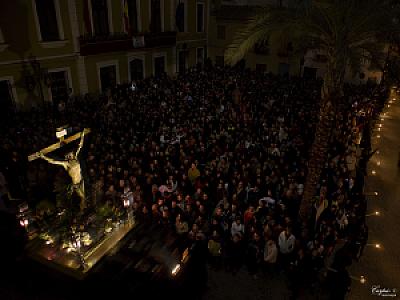
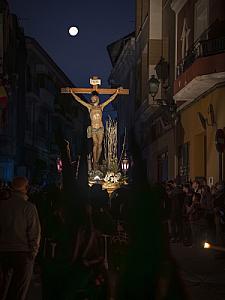
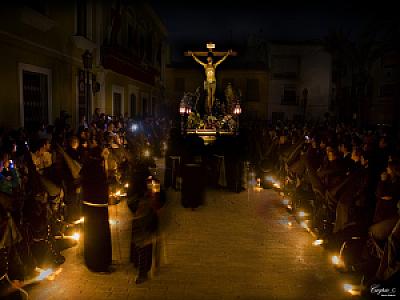
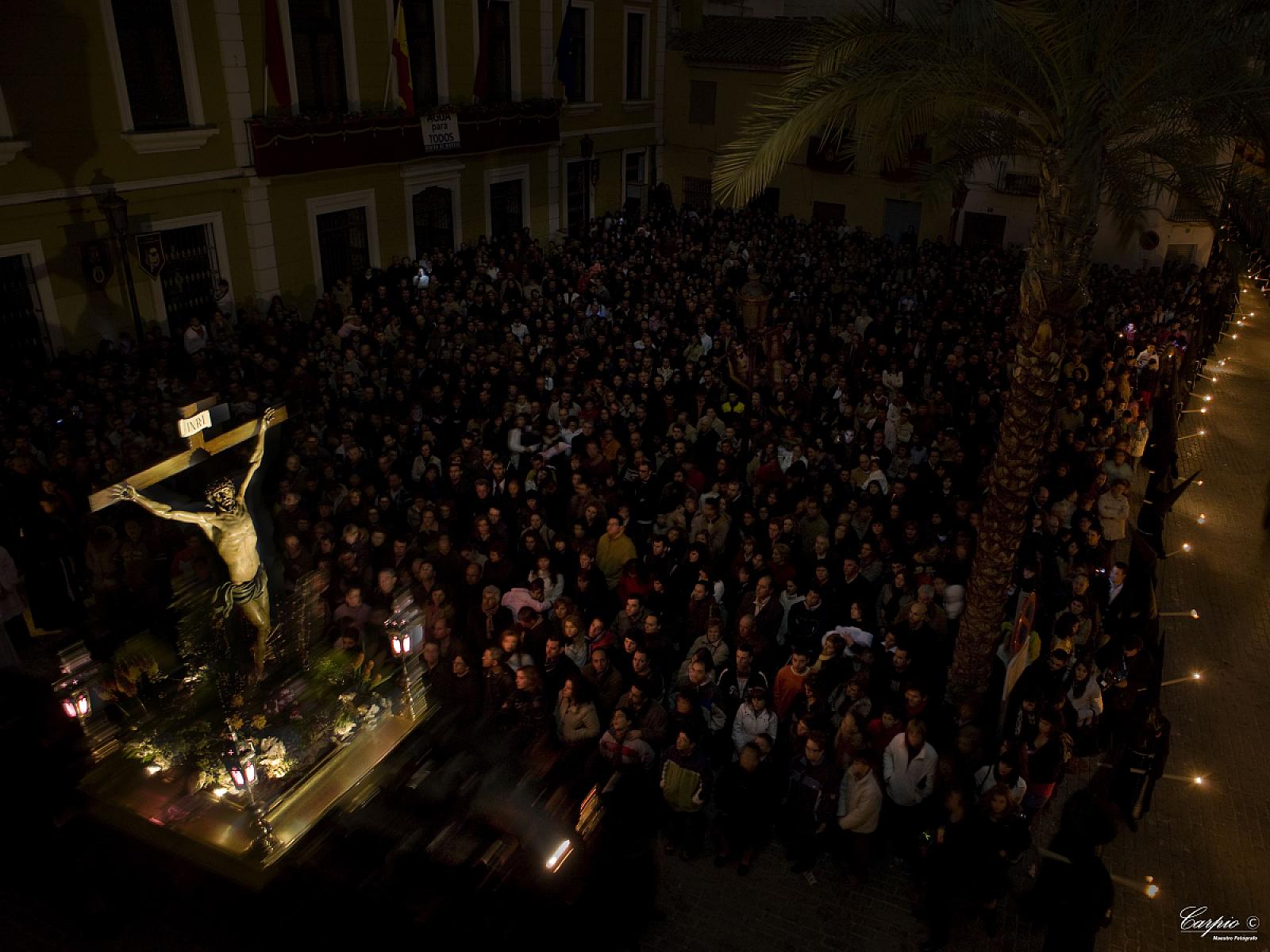
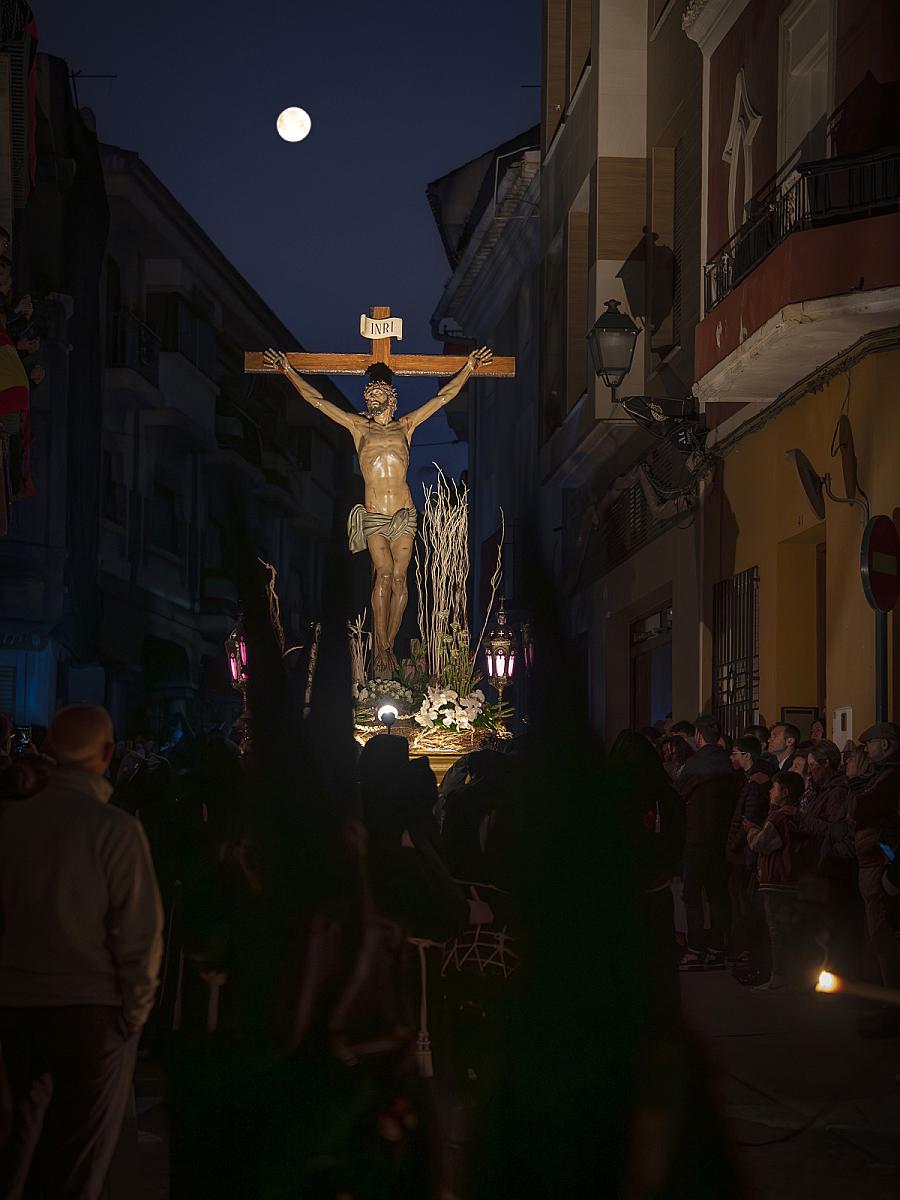
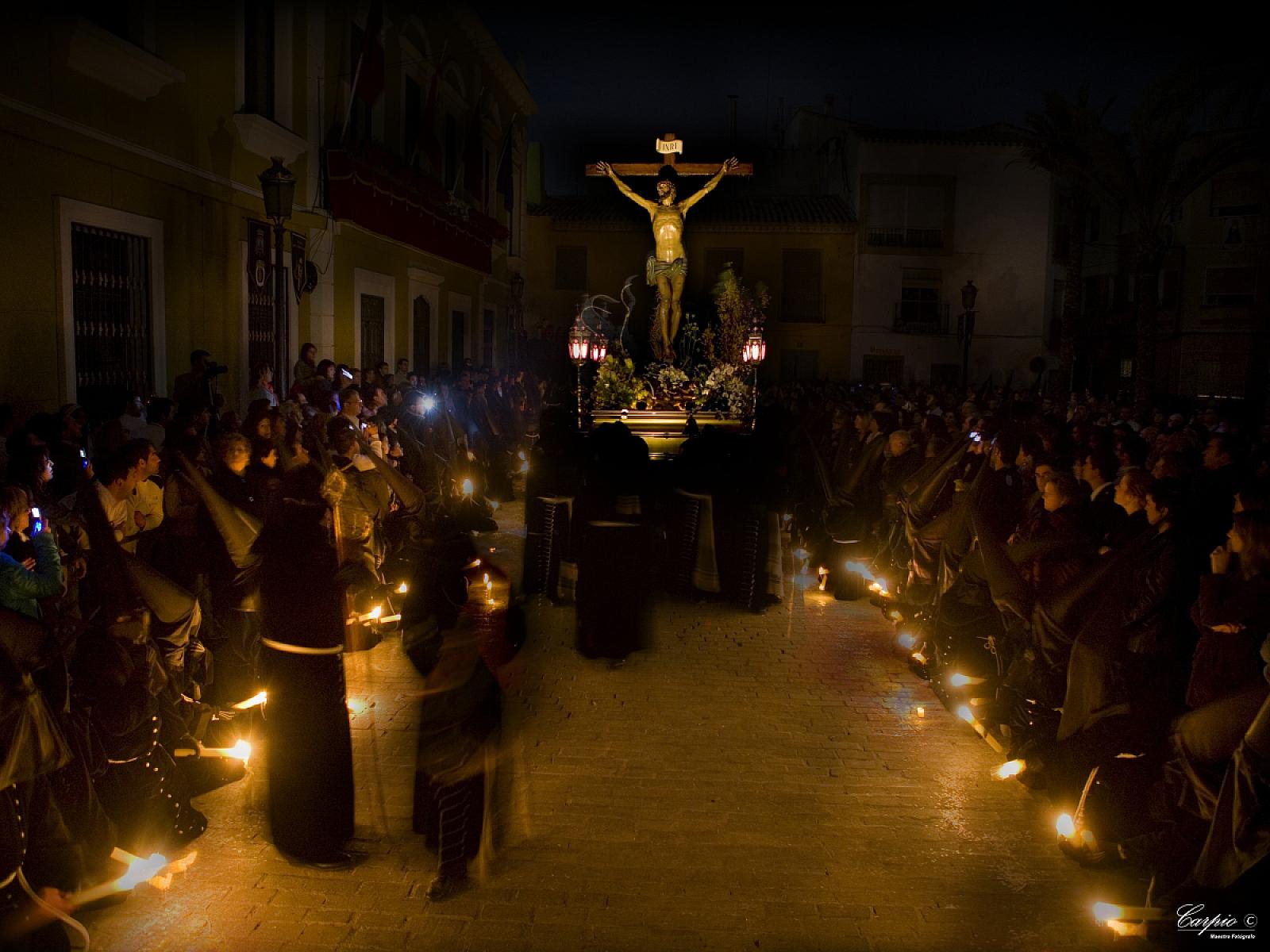
An intimate, austere, and undeniably moving procession, in which all the lights are extinguished as the procession passes, while the everyday noises and conversations of the city cease entirely. Preceded by two very long lines of penitents dressed in black, carrying lit candles, the Holy Christ of the Agony parades on its throne, accompanied by a muffled drum and a small violin orchestra, which plays pieces of music such as "El Cristo de la Agonía" March Number 1 by José Gómez Villa and "El Rey Duerme" by Javier Cano. Upon reaching the square, the float advances between the two lines of penitents, who kneel, until the Christ come back in the Basilica of Our Lady of the Assumption while many murmur... "until next year".
Departure time: 12:00 am (Basilica of Our Lady of the Assumption).
Arrival time: approximately 2:30 am (Basilica of Our Lady of the Assumption).
Route: Chapel of the Holy Christ of the Agony, "Plaza Mayor", "Cid", "La Parra", "Rincón de los Pinos", "Pinos", "Larga", "Buitragos", "San Sebastián", Corner of the Convent, "Mesones", "Cadenas", "Barco", "La Hoz", "Plaza Mayor" and Chapel of the Holy Christ of the Agony.
Order of Procession: banner of the Board of Passionate Brotherhoods, Brotherhood of the Holy Christ of the Agony, Holy Christ of the Agony, clergy, violin orchestra and the general public.
Arrival time: approximately 2:30 am (Basilica of Our Lady of the Assumption).
Route: Chapel of the Holy Christ of the Agony, "Plaza Mayor", "Cid", "La Parra", "Rincón de los Pinos", "Pinos", "Larga", "Buitragos", "San Sebastián", Corner of the Convent, "Mesones", "Cadenas", "Barco", "La Hoz", "Plaza Mayor" and Chapel of the Holy Christ of the Agony.
Order of Procession: banner of the Board of Passionate Brotherhoods, Brotherhood of the Holy Christ of the Agony, Holy Christ of the Agony, clergy, violin orchestra and the general public.
Unique features and suggestions: An aesthetic proposal with its own profiles, intensely romantic, characterizes the Procession of Silence of Cieza, deservedly considered one of the highlights of Holy Week.
The peculiar staging, with that absolute darkness and that silence broken only by the sweet violin music that accompanies Christ, is so extraordinarily seductive to the public that it rightly captivated Mr. Ramón Sánchez Parra to the point that, in 1943, he reproduced it in Murcia almost verbatim, with the Brotherhood of the Holy Christ of Refuge.
Although the entire procession is intimate and edifying, for any visitor, attending two key moments is essential for very different reasons. The departure of the Christ figure will be preceded by the gradual arrival of countless people in the "Plaza Mayor", which will completely fill it. It's worth noting that to see the procession from the very edge of the cortege at its starting point, you must reserve a spot an hour in advance. However, it is also possible to view it, though certainly not from the front row, from the central area of the "Plaza" by arriving a little later.
Minutes before midnight, everything goes dark until the first chime of the bell opens the church gates, allowing the penitents of the brotherhood to make their way through the crowd. As soon as the Holy Christ of the Agony appears in the doorway, one of the masterpieces of the great sculptor González Moreno, the shadow of the Cross begins to climb the façade of the Basilica of Our Lady of the Assumption.
On the other hand, the entrance is also breathtaking, because even though it takes place well into the early hours of the morning, hundreds of people don't want to miss the brotherhood's arrival at the square and the moving moment when the penitents kneel to allow Christ to pass between them, always accompanied by the music of violins, until it returns to the basilica. It's possible that some spectators may have wanted to arrange a more intimate encounter with Christ beforehand, for which they should go to "Cadenas" Street, a point in the procession with an undeniably traditional and authentic character. Because of its narrowness, few residents appear (as they are already waiting for the procession to return to the square), which is why the 'sidewalk observer' will have the opportunity for a unique and deeply personal experience of the procession that they will hardly forget.
That this procession is possible and maintains its spirit intact is due not only to the efforts of the brotherhood, but to those of the entire town, firstly because of the spectacular silence that presides over the parade and, secondly and almost more importantly, because although the municipal authorities collaborate by turning off the public lighting, there is not a single home with the light on, not a single business that has forgotten, at closing time, that the Lord of Agony passes by that night and everything must be turned off to honor him with darkness and silence.
Photographs by Manuel Carpio and Enrique Centeno.
© Board of Passionate Brotherhoods of Cieza
© Board of Passionate Brotherhoods of Cieza
Gallery
Outstanding news

 Popular news
Rules of the XXXIX Poster Competition 'Holy Week in Cieza'
Pablo Espinosa will be in charge of creating the poster for "The Arrest" 2027
Official statement: Postponement of the 20th Children's Section Gathering
ACTIVITY FOR HOLY WEEK 2020
The Guide to Acts and Activities of Holy Week 2019 is presented at the Casa Museo de Cieza
The brotherhoods of Cieza visit the brotherhood houses of the Holy Week in Lorca.
Upcoming events
24 October - 10:00
XIII National Gathering of Youth from Brotherhoods and Confraternities
24 October - 20:00
Holy Mass
25 October - 07:00
Rosary of Dawn
25 October - 10:00
XIII National Gathering of Youth from Brotherhoods and Confraternities
30 October - 19:00
Triduum
30 October - 19:00
Food collection
Calendar