




News
|
Agenda
|
Guide of events
|
Processions
|
Pasos
|
Brotherhoods
|
History
|
Cieza
|
|
Music
|
Contact
News
|
Agenda
|
Guide of events
|
Processions
|
Pasos
|
Brotherhoods
|
History
|
Cieza
|
|
Music
|
Contact
Procession of the Holy Burial (16th century)
Good Friday night
Good Friday night
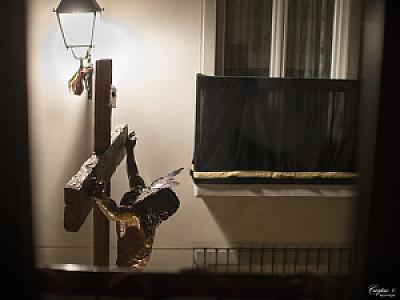
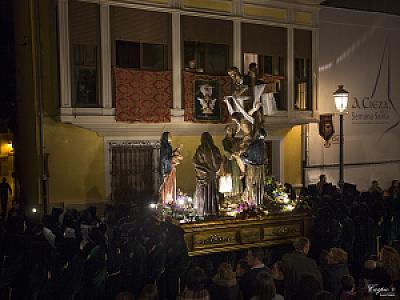
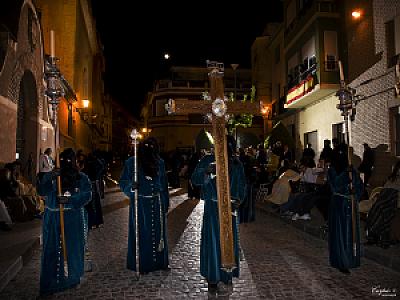
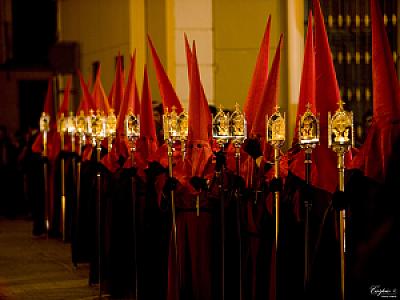
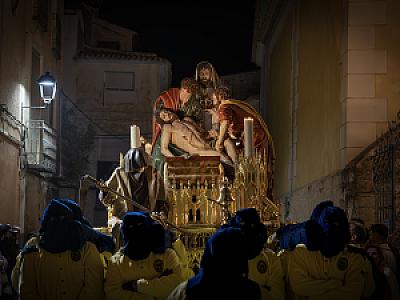
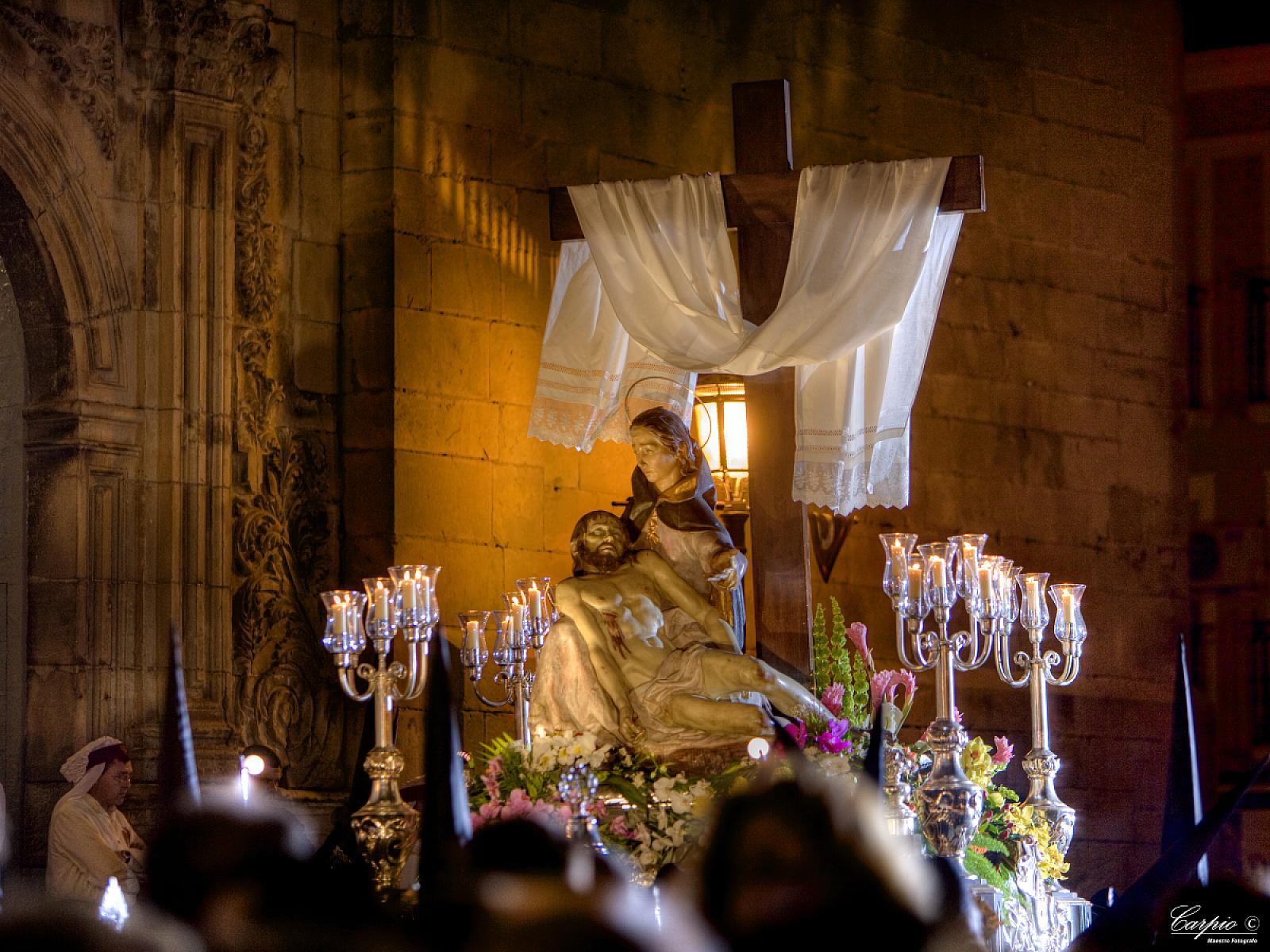
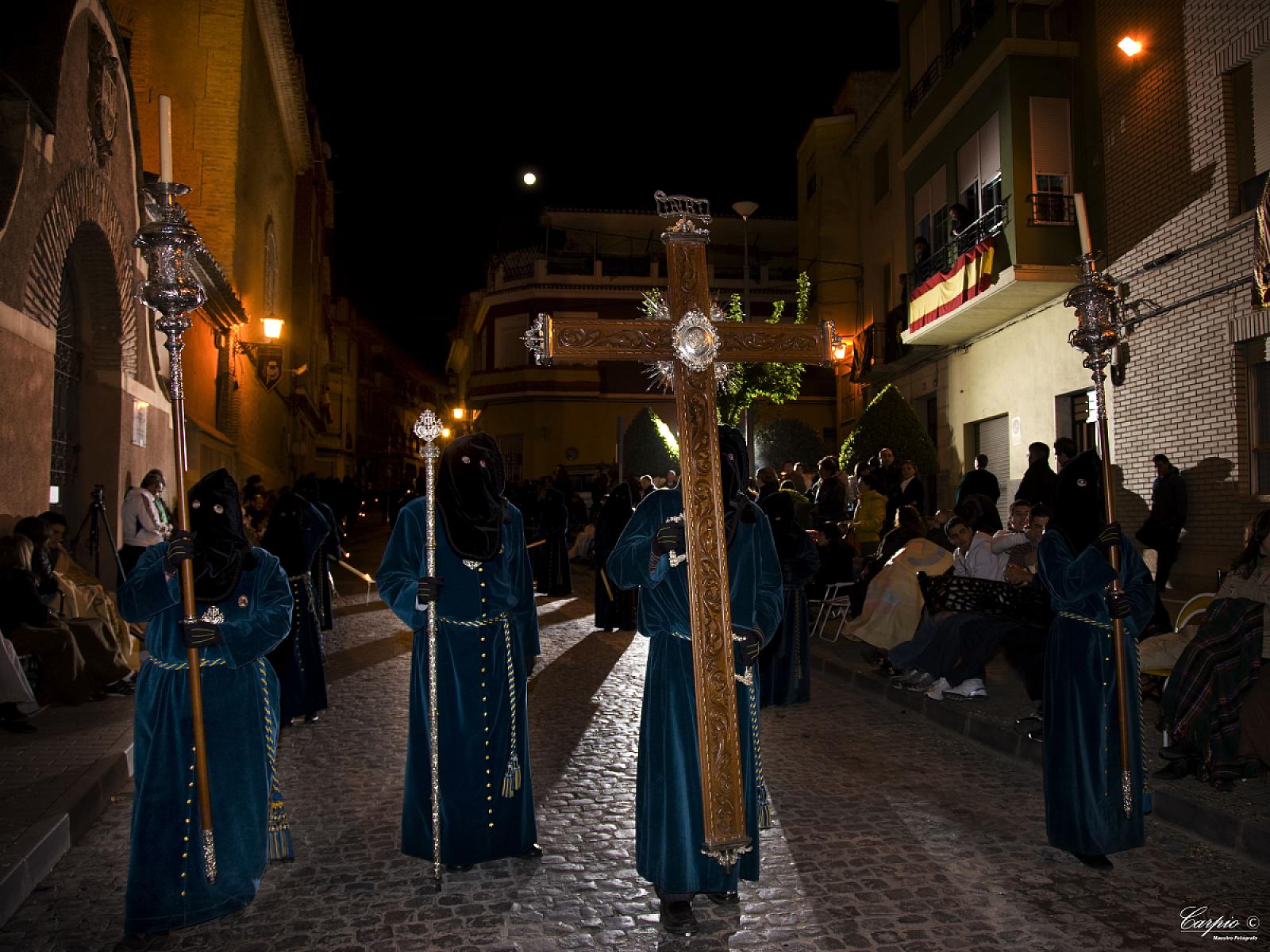
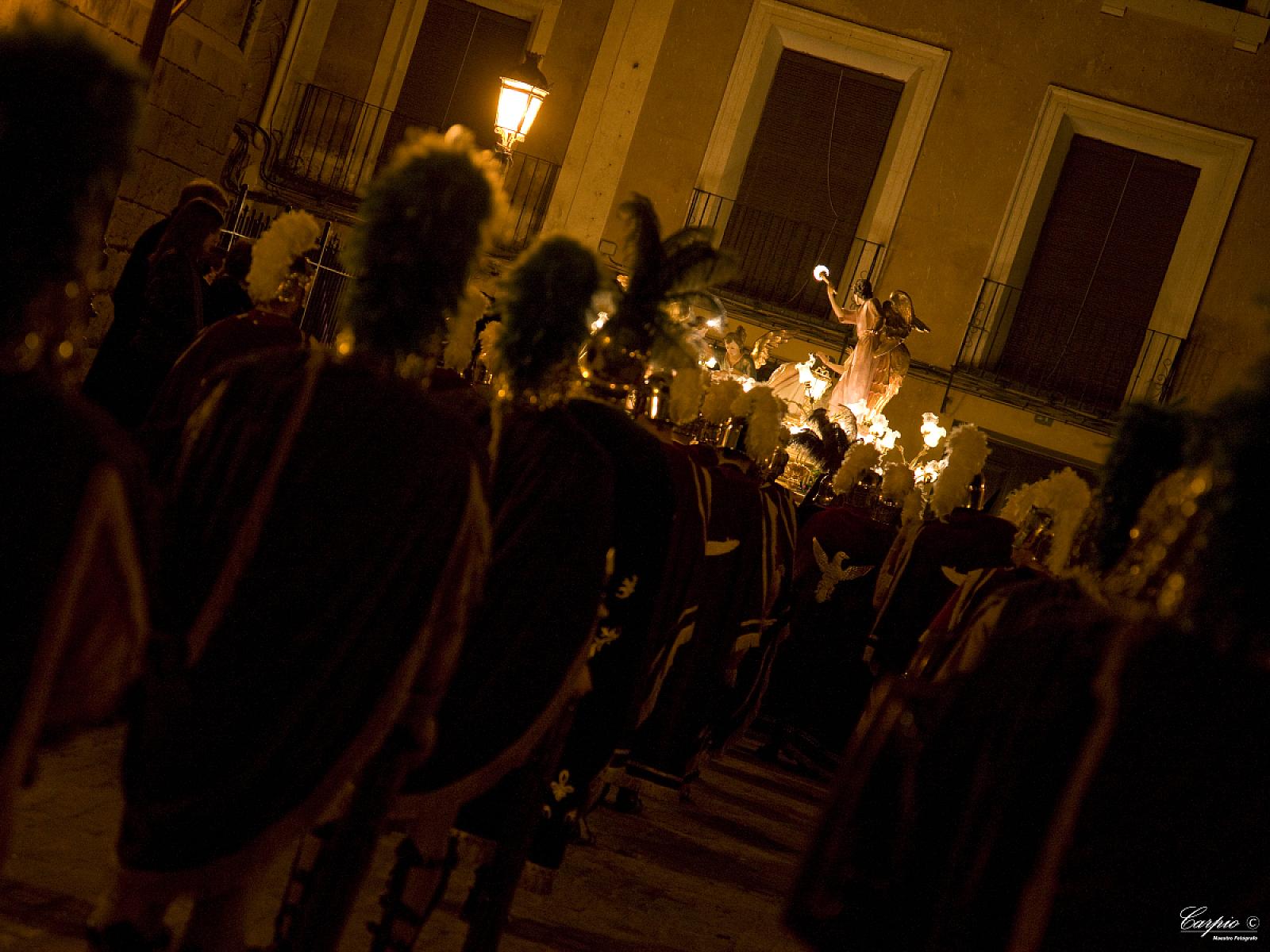
The most solemn procession of Holy Week in Cieza (a solemnity that emphasizes the presence of the Clergy, the Municipal Corporation and other authorities) dresses the longest night of the year in mourning to attend the great story of the Burial of Christ.
The imagery, the music, the thrones, the floral arrangements: the excellence of Cieza's heritage is on full display and seems to shine with a different light in this procession, which focuses its entire discourse on solemnity and a funereal atmosphere. Since time immemorial, the members of Cieza's brotherhoods have been committed to making everything in this procession absolutely perfect, an effort that contributes to the dissipation of the festive atmosphere that has characterized the day, without losing the large crowds: the anticipation on the massively crowded sidewalks becomes somber and respectful; people speak in hushed tones, their gestures are restrained, and they adopt a self-consciously grave demeanor, because they truly know they are witnessing the Burial of the Redeemer.
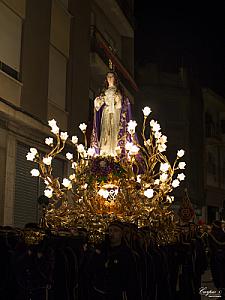
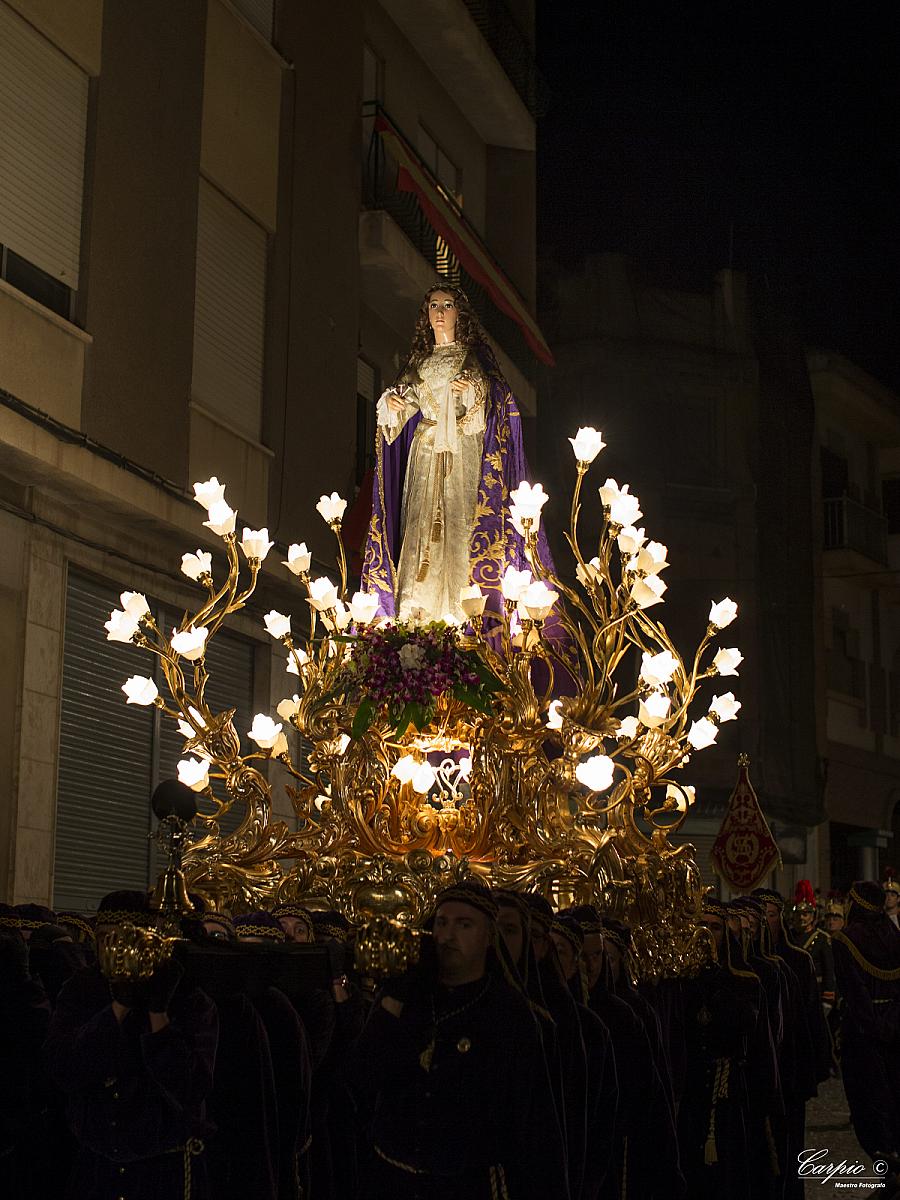
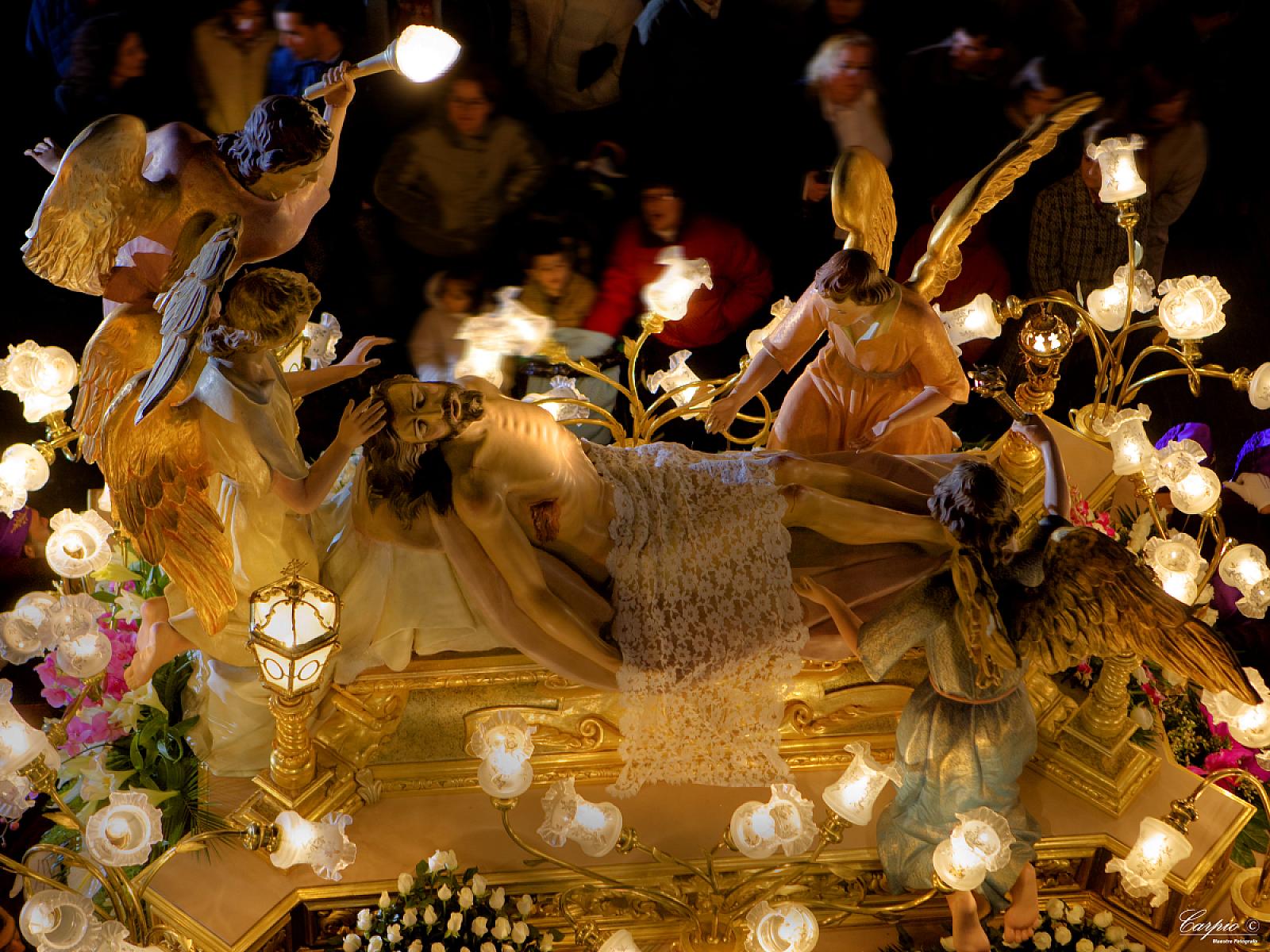
At the end of this magnificent processional spectacle, a paradigm of what Cieza is capable of building over the years and with the fraternal spirit that is proven in the Centenary already celebrated by the Board of Passionate Brotherhoods, truly exciting scenes occur: the entrance of the float The Holy Sepulchre into its house-museum, which very emotionally reproduces the very moment of leaving the Dead Christ in his tomb, and the arrival of the last float, Mary Most Holy of Solitude, to the "Plaza Mayor", where she receives the condolences of the entire town, represented by its highest authorities.
Departure time: 8:30 pm (Holy Week Museum, Dormis Museum or Basilica of Our Lady of the Assumption, depending on the Brotherhood).
Arrival time: approximately 2:30 am (Holy Week Museum, Dormis Museum or Basilica of Our Lady of the Assumption, depending on the Brotherhood).
Route: "Plaza Mayor", "Cid", "La Parra", "Rincón de los Pinos", "Pinos", "Larga", "Buitragos", "San Sebastián", Corner of the Convent, "Mesones", "Cadenas", "Barco" and "Cánovas del Castillo" or "Diego Tortosa", "San Pedro" and "Plaza Mayor" (or "La Hoz" and "Plaza Mayor").
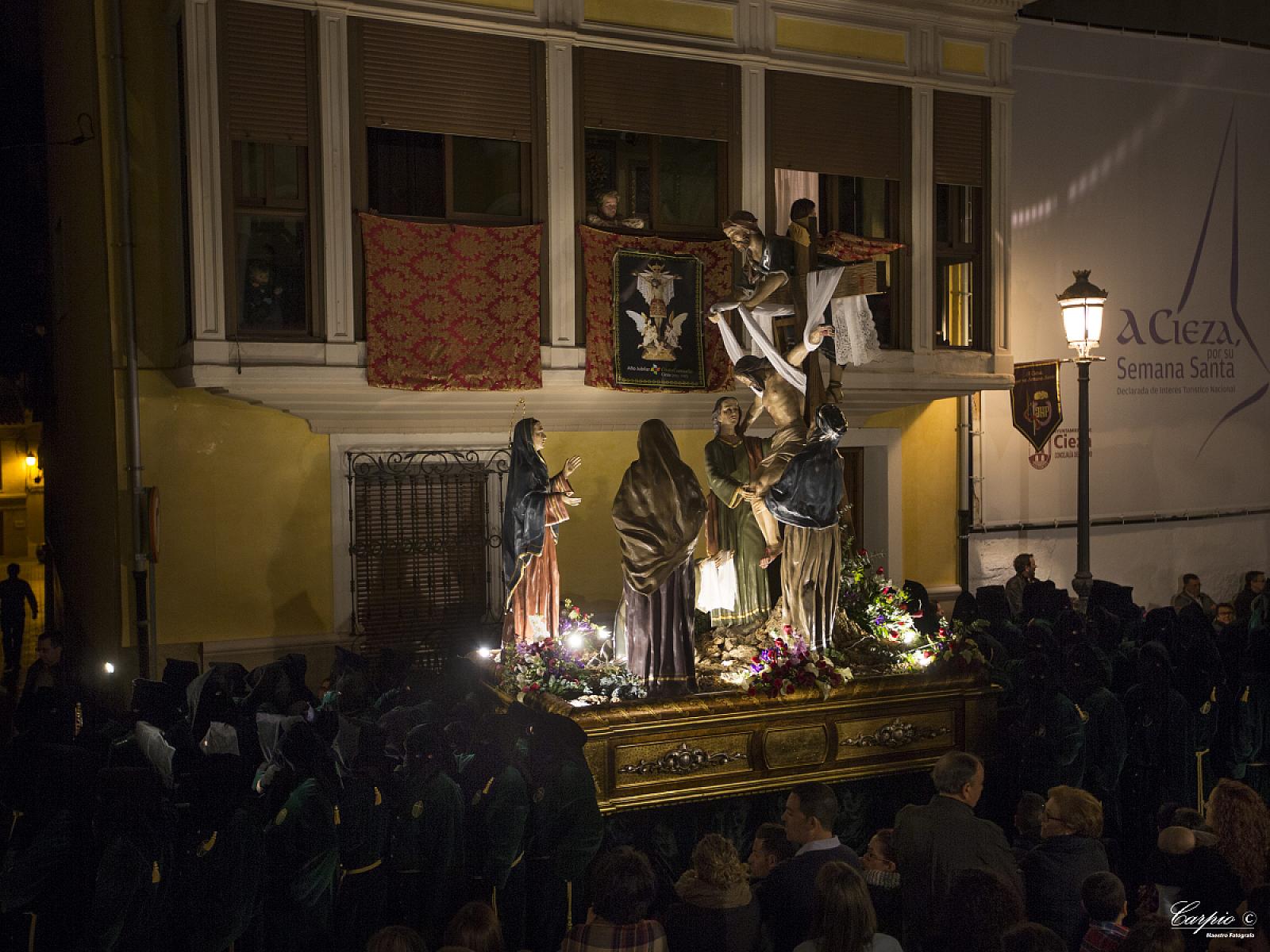
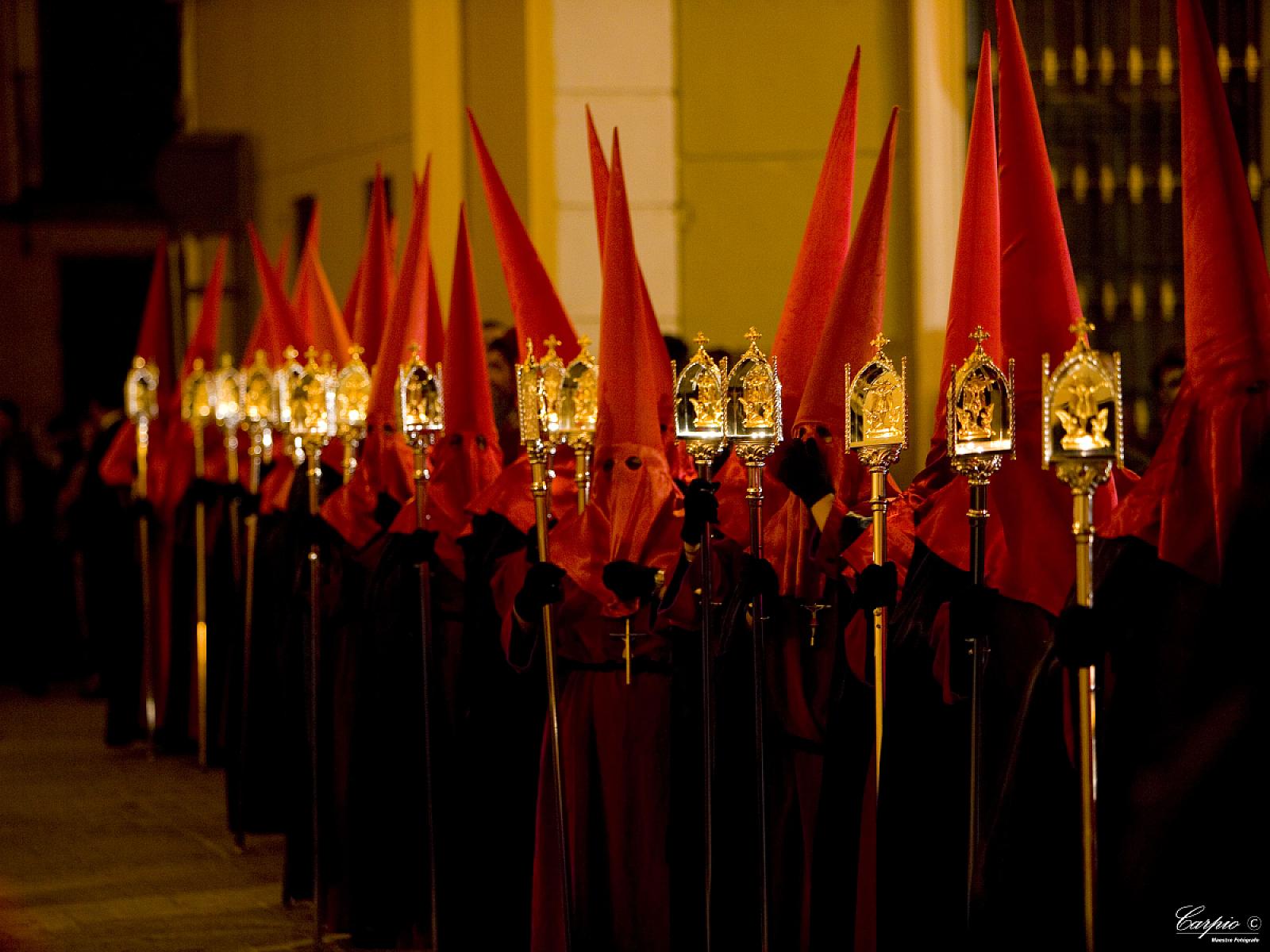
Order of Procession: banner of the Board of Passionate Brotherhoods and the following floats: Most Holy Christ of Forgiveness (Brotherhood of the Most Holy Christ of Forgiveness and Most Holy Virgin of Beautiful Love), Descent from the Cross (Brotherhood of the Descent from the Cross and Kiss of Judas), Most Holy Virgin of Piety (Brotherhood of the Most Holy Christ of Agony), Most Holy Christ Lying in State and Our Lady of Sorrows (Brotherhood of the Most Holy Christ Lying in State and Most Holy Virgin of Sorrows), Our Lady of Bitterness (Brotherhood of Saint Veronica), The Holy Women on the Way to the Sepulchre (Brotherhood of Saint Peter the Apostle), Saint Mary Salome (Royal Brotherhood of Jesus -Nazarene-), Holy Cross (Brotherhood of the Most Holy Christ of Consolation), Holy Burial (Brotherhood of The Samaritan Woman), Holy Sepulchre (Brotherhood of The Prayer in the Garden and The Holy Sepulchre), Roman Third of the Holy Sepulchre, Saint John (Brotherhood of Saint John Evangelist), Mary Most Holy of Solitude (Royal, Illustrious, Venerable and Primitive Confraternity of Mary Most Holy of Solitude), all parading with their respective Brotherhoods -with their usual structure- and marching bands or musical groups. The procession is brought to a close by the clergy and local civil and military authorities, escorted by the Municipal Police Force.
Arrival time: approximately 2:30 am (Holy Week Museum, Dormis Museum or Basilica of Our Lady of the Assumption, depending on the Brotherhood).
Route: "Plaza Mayor", "Cid", "La Parra", "Rincón de los Pinos", "Pinos", "Larga", "Buitragos", "San Sebastián", Corner of the Convent, "Mesones", "Cadenas", "Barco" and "Cánovas del Castillo" or "Diego Tortosa", "San Pedro" and "Plaza Mayor" (or "La Hoz" and "Plaza Mayor").
Order of Procession: banner of the Board of Passionate Brotherhoods and the following floats: Most Holy Christ of Forgiveness (Brotherhood of the Most Holy Christ of Forgiveness and Most Holy Virgin of Beautiful Love), Descent from the Cross (Brotherhood of the Descent from the Cross and Kiss of Judas), Most Holy Virgin of Piety (Brotherhood of the Most Holy Christ of Agony), Most Holy Christ Lying in State and Our Lady of Sorrows (Brotherhood of the Most Holy Christ Lying in State and Most Holy Virgin of Sorrows), Our Lady of Bitterness (Brotherhood of Saint Veronica), The Holy Women on the Way to the Sepulchre (Brotherhood of Saint Peter the Apostle), Saint Mary Salome (Royal Brotherhood of Jesus -Nazarene-), Holy Cross (Brotherhood of the Most Holy Christ of Consolation), Holy Burial (Brotherhood of The Samaritan Woman), Holy Sepulchre (Brotherhood of The Prayer in the Garden and The Holy Sepulchre), Roman Third of the Holy Sepulchre, Saint John (Brotherhood of Saint John Evangelist), Mary Most Holy of Solitude (Royal, Illustrious, Venerable and Primitive Confraternity of Mary Most Holy of Solitude), all parading with their respective Brotherhoods -with their usual structure- and marching bands or musical groups. The procession is brought to a close by the clergy and local civil and military authorities, escorted by the Municipal Police Force.
Unique features and suggestions: If one has to give an adjective to this procession, a true moving museum, it is undoubtedly that of most solemn, as it traditionally appeared in the Holy Week magazine of Cieza.
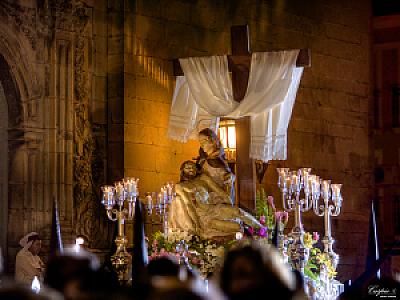
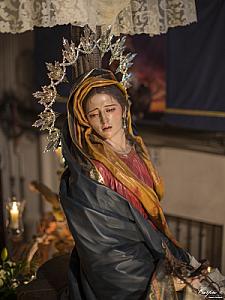
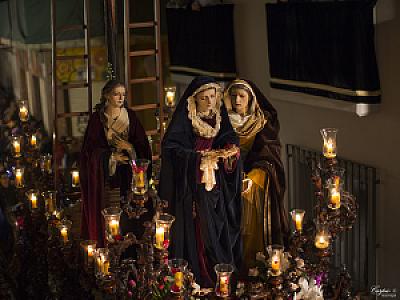
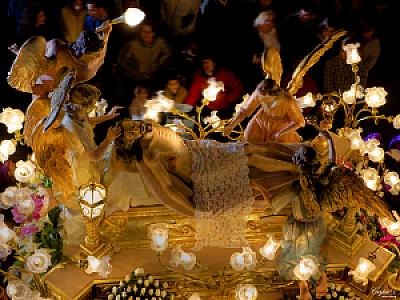
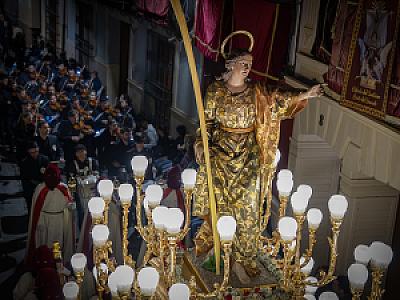
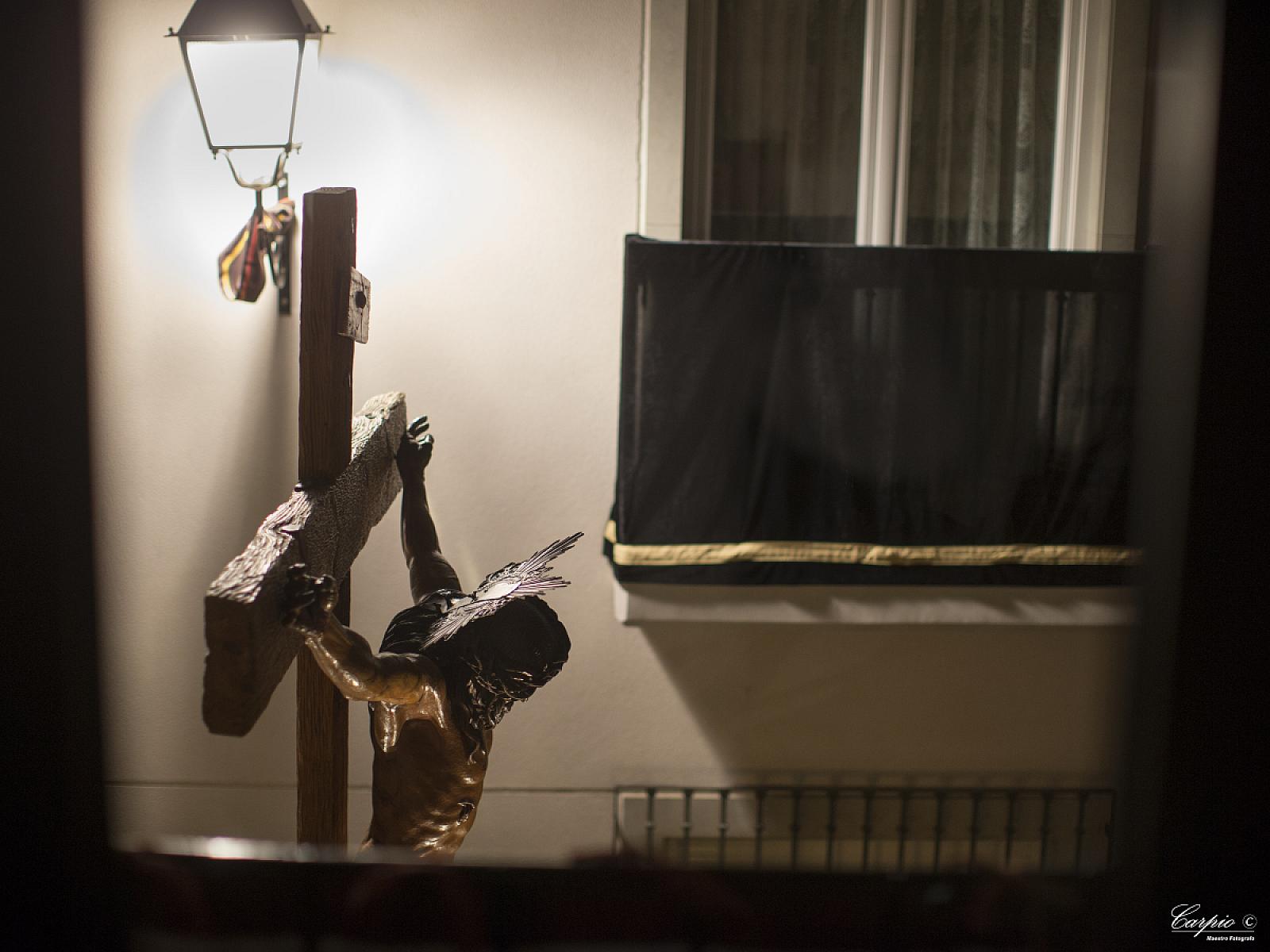
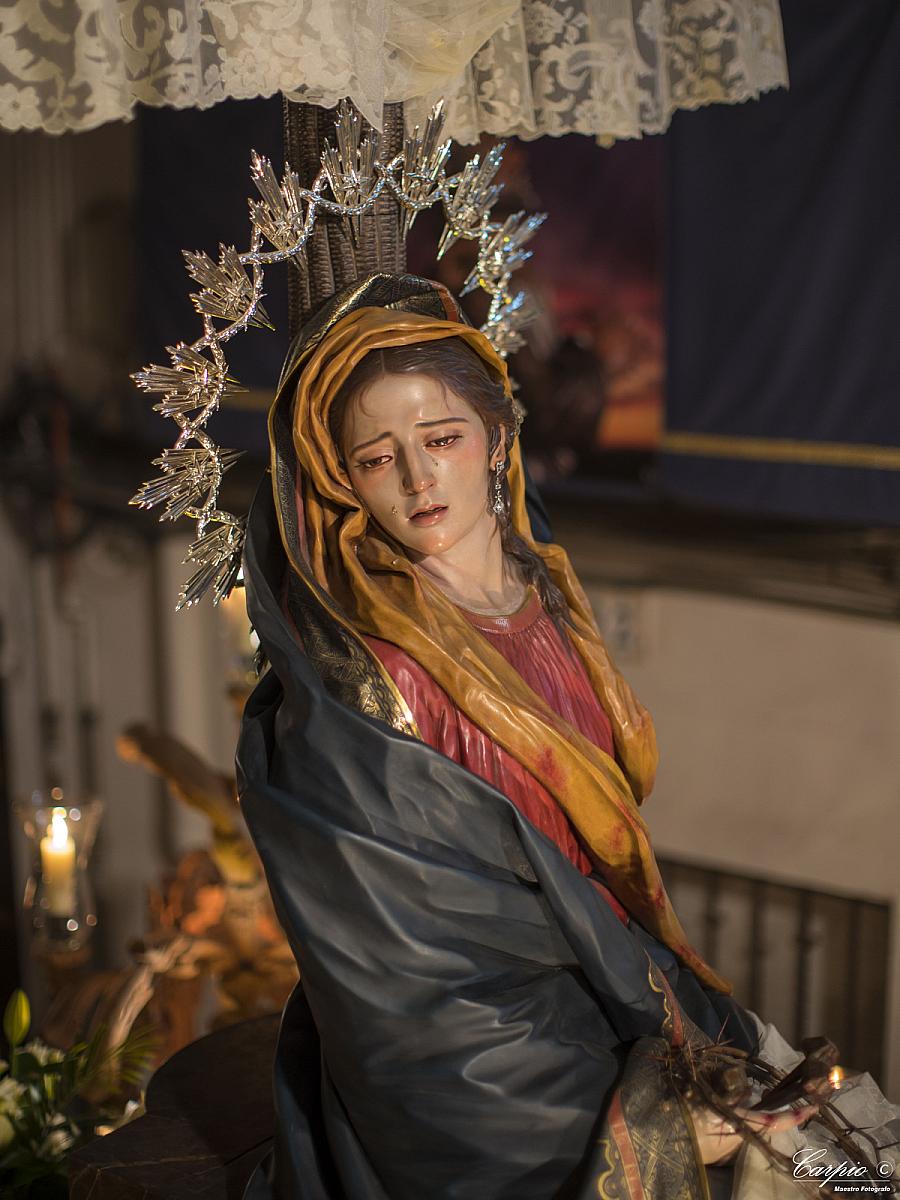
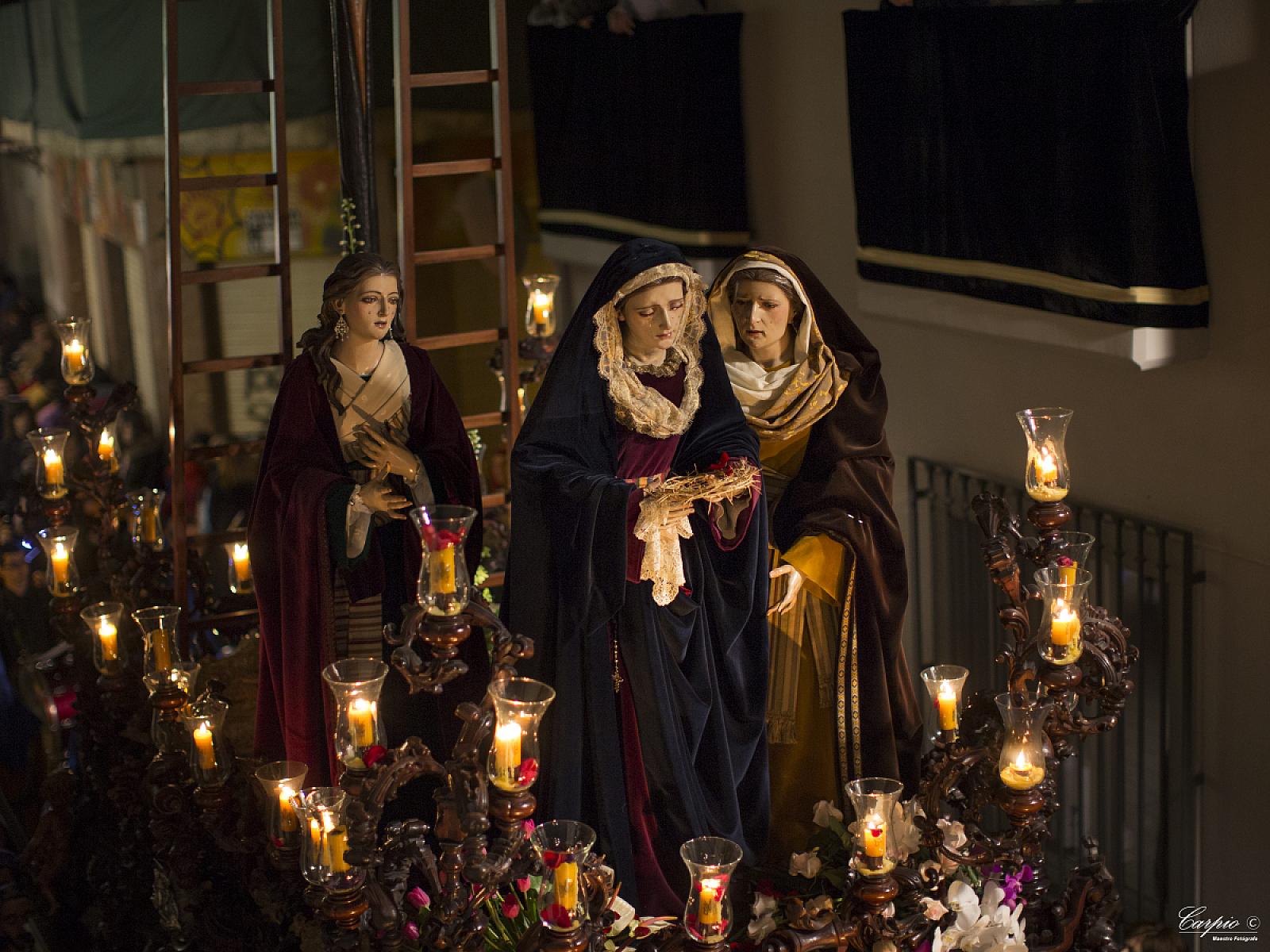
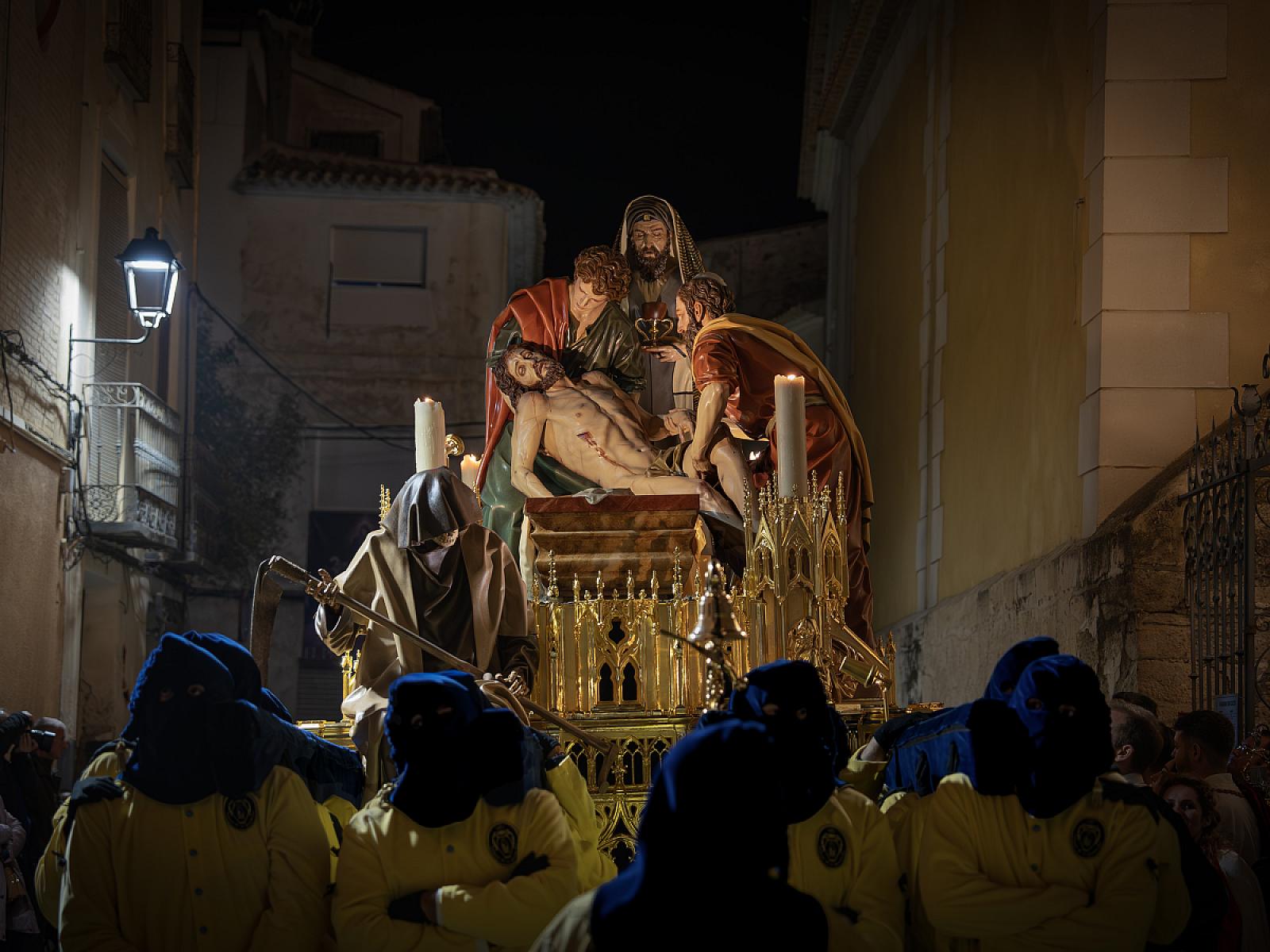
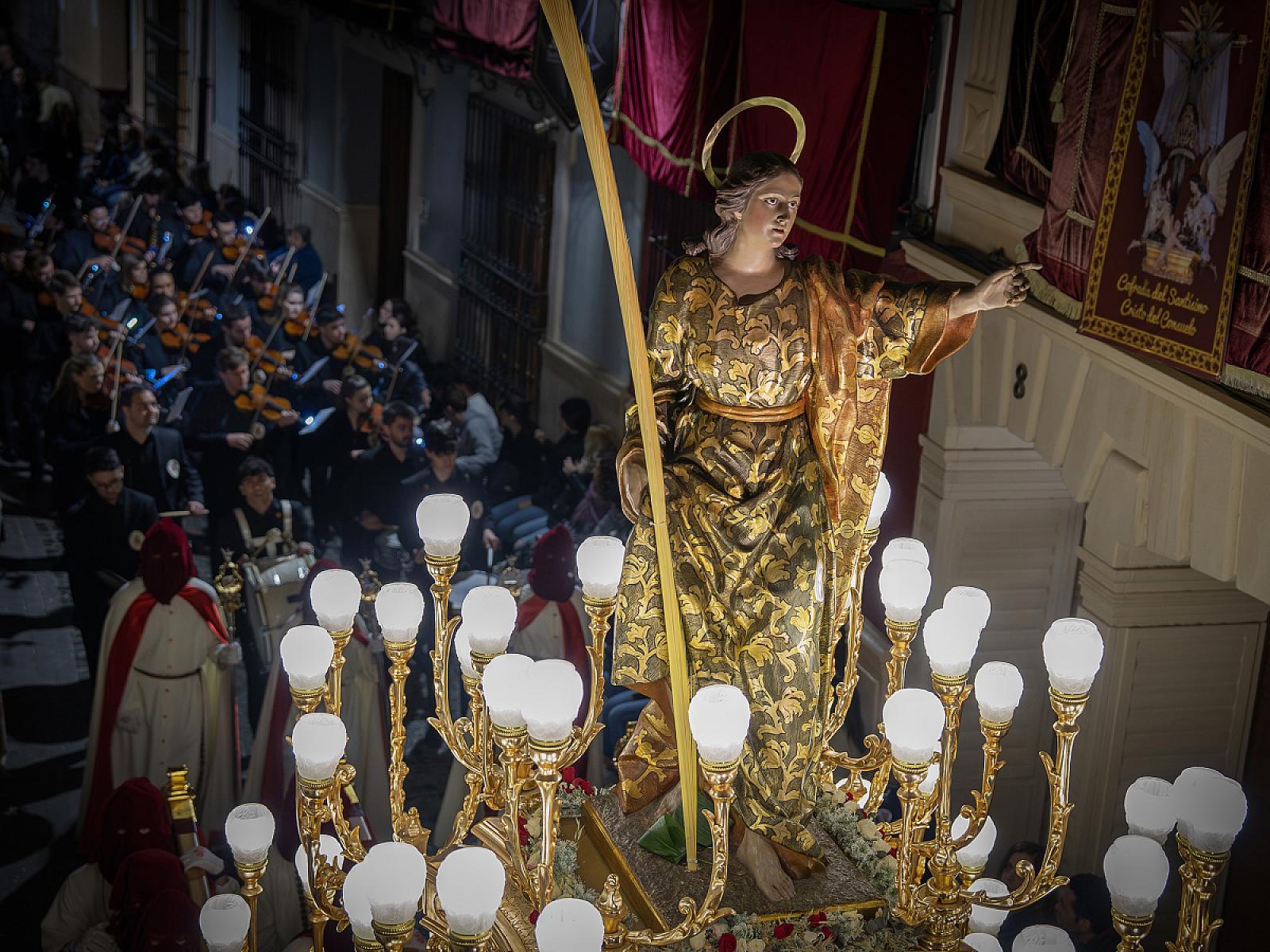
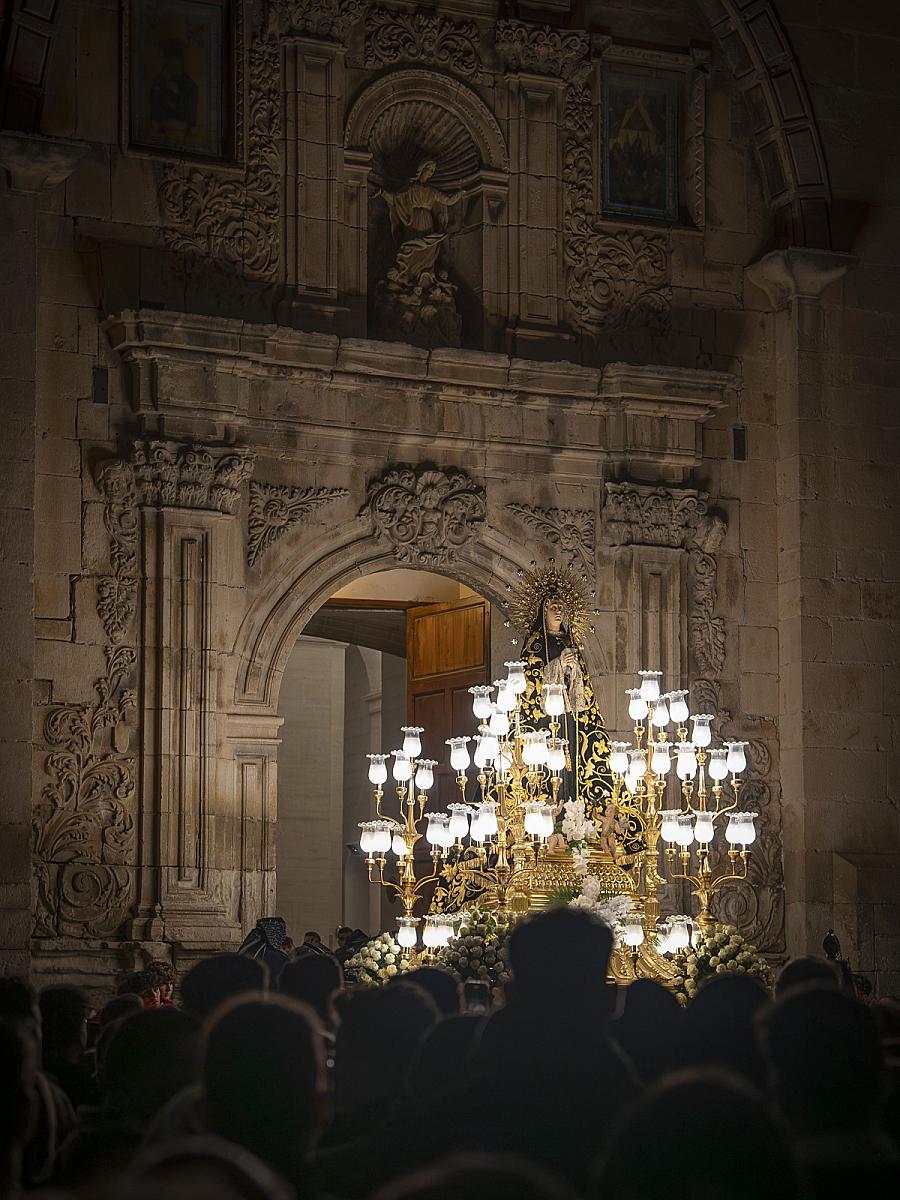
Solemn, to begin with, for the quality of its impressive sculptural carvings, among which special mention must be made of the Blessed Virgin of Piety (Capuz), the Holy Christ Lying in State (Planes), Our Lady of the Greatest Sorrow (Álvarez Duarte), Our Lady of Bitterness (Romero Zafra) or Mary Most Holy of Solitude (González Moreno), as well as the extraordinary carving, already mentioned, of the Holy Christ of Forgiveness and the long-awaited processional debut of the beautiful effigy of Saint John (head by Manuel López Guillén, body carved by Planes); to which must be added the artisanal excellence of the thrones of the Christ Lying in State (Ibáñez Valles), of the Holy Women on the Way to the Sepulchre (Rubio Valverde, which carries the emotional sculptural group by Antonio Bernal) and of Saint Mary Salome (Carrillo Marco). And highlighting the recent addition, the Holy Burial by Yuste Navarro, a work of sublime quality. Each of these pieces alone is worth a visit to Cieza. It is no exaggeration to say, in short, that together they constitute a veritable open-air museum of the finest Spanish religious art of the 20th and early 21st centuries.
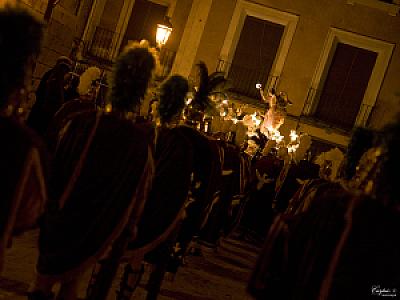
The procession is solemn, also, because of the martial bearing and the solemnity that the various Nazarenes and bearers bring to their procession, and, naturally, also solemn because of the participation of women dressed in the classic Spanish "mantilla" or the mourning veil of the genuine mourners and men dressed in "Manolo" suits or formal attire who accompany, respectively, the Holy Christ Lying in State and Mary Most Holy of Solitude.
A good place to watch the Procession of the Burial of Christ without losing its episodic character would be, for example, "Larga" Street, whose narrow streets offer a breathtaking view of the beautiful floats of the procession. This location, besides allowing us to enjoy the perfect symbiosis between street and procession, will give us the opportunity to witness, at the end of the procession, the entrance to the Holy Sepulchre, which represents Cieza's version of the moment of placing Jesus' body behind the stone of the Sepulchre. This reenactment includes the recitation of a moving text by the brotherhood itself, perfectly interwoven with the piece composed with superb intuition by Salmerón Morote, who perfectly captures the essence of a simple melody that is both passionate and distinctly funereal. In short, a scene of profound emotion not only for the members of the brotherhood but for any of the many spectators who crowd, tentatively, into "Cartas" Street.
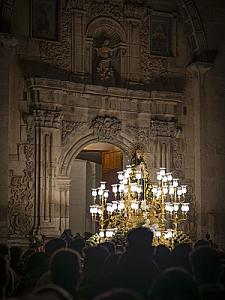
The final gathering will, of course, take place at the entrance of Our Lady of Solitude, accompanied by the religious, civil, and judicial authorities of the city, condolences will be offered with the prayer proclaimed from the tower of the Basilica of Our Lady of the Assumption and repeated in a murmur throughout the square before the Virgin rests permanently in her chapel, a clear sense of finality then begins to take hold of so many members of the brotherhood who are beginning to see Holy Week slipping through their fingers irretrievably.
Photographs by Manuel Carpio and Enrique Centeno.
© Board of Passionate Brotherhoods of Cieza
© Board of Passionate Brotherhoods of Cieza
Gallery
Outstanding news

 Popular news
Rules of the XXXIX Poster Competition 'Holy Week in Cieza'
Pablo Espinosa will be in charge of creating the poster for "The Arrest" 2027
Official statement: Postponement of the 20th Children's Section Gathering
ACTIVITY FOR HOLY WEEK 2020
The Guide to Acts and Activities of Holy Week 2019 is presented at the Casa Museo de Cieza
The brotherhoods of Cieza visit the brotherhood houses of the Holy Week in Lorca.
Upcoming events
24 October - 10:00
XIII National Gathering of Youth from Brotherhoods and Confraternities
24 October - 20:00
Holy Mass
25 October - 07:00
Rosary of Dawn
25 October - 10:00
XIII National Gathering of Youth from Brotherhoods and Confraternities
30 October - 19:00
Triduum
30 October - 19:00
Food collection
Calendar