





News
|
Agenda
|
Guide of events
|
Processions
|
Pasos
|
Brotherhoods
|
History
|
Cieza
|
|
Music
|
Contact
News
|
Agenda
|
Guide of events
|
Processions
|
Pasos
|
Brotherhoods
|
History
|
Cieza
|
|
Music
|
Contact
Procession of the Penitent (16th century)
Good Friday morning
Good Friday morning
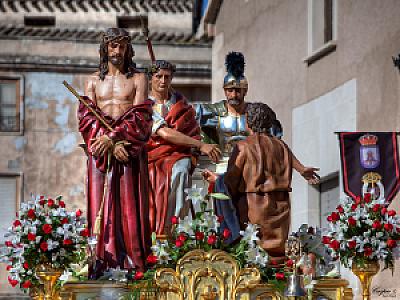
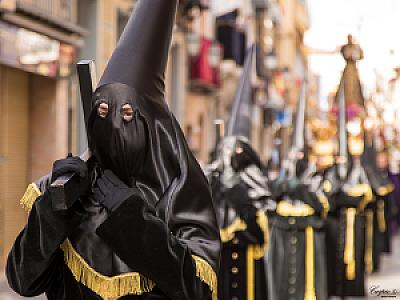
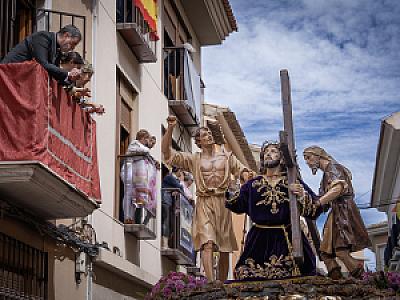
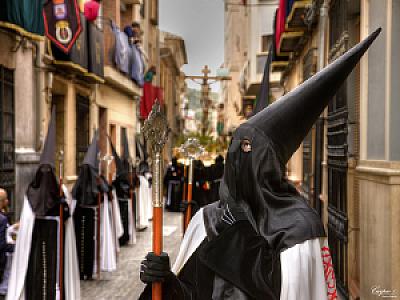
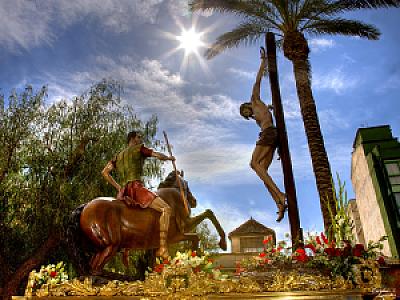
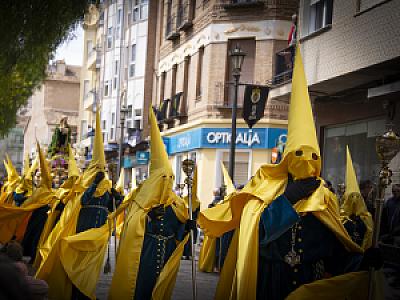
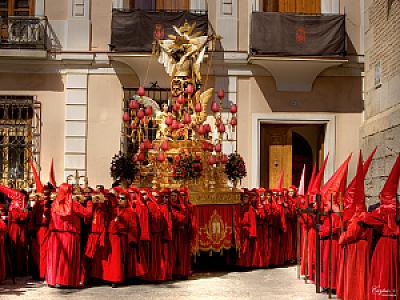
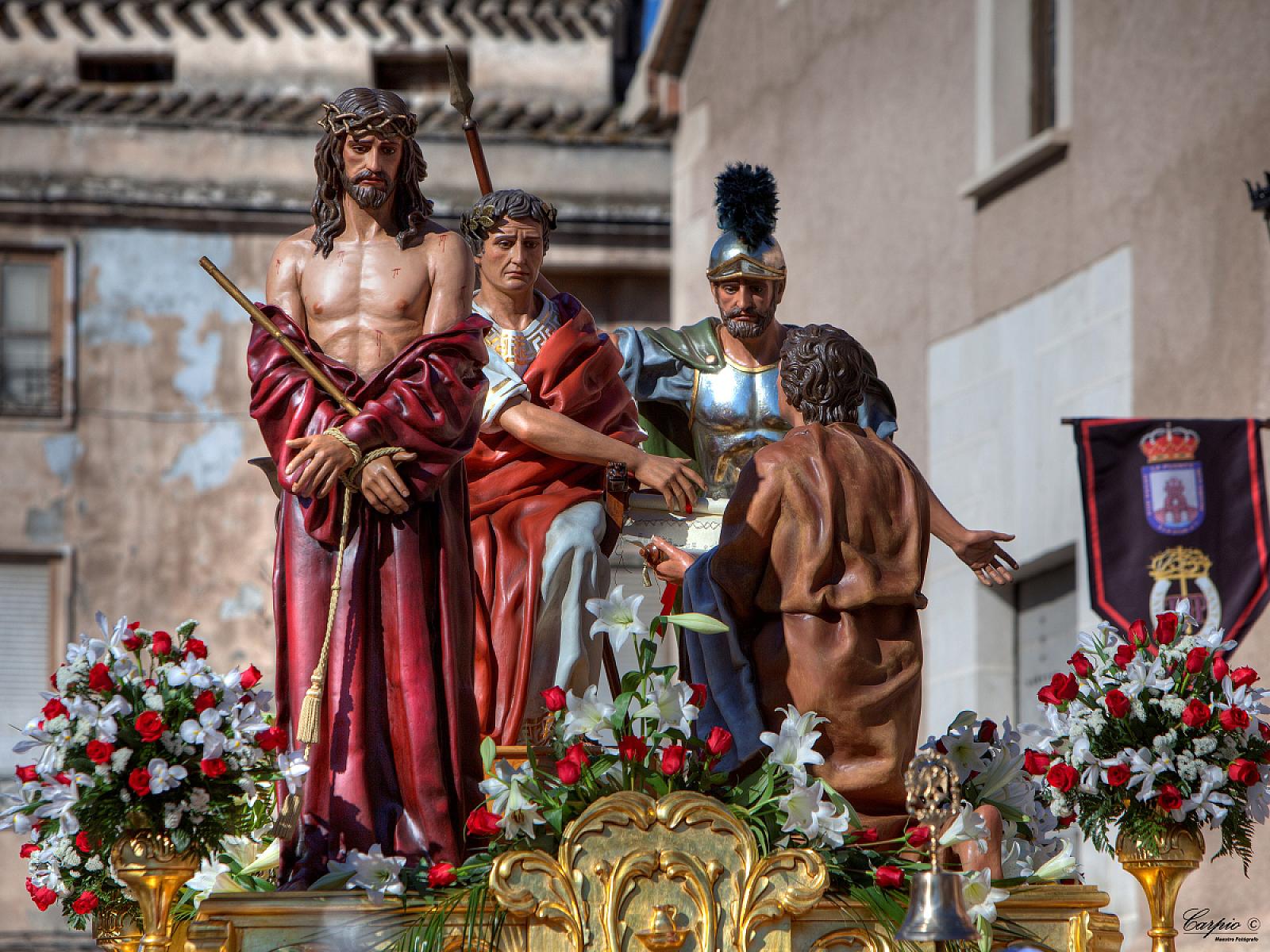
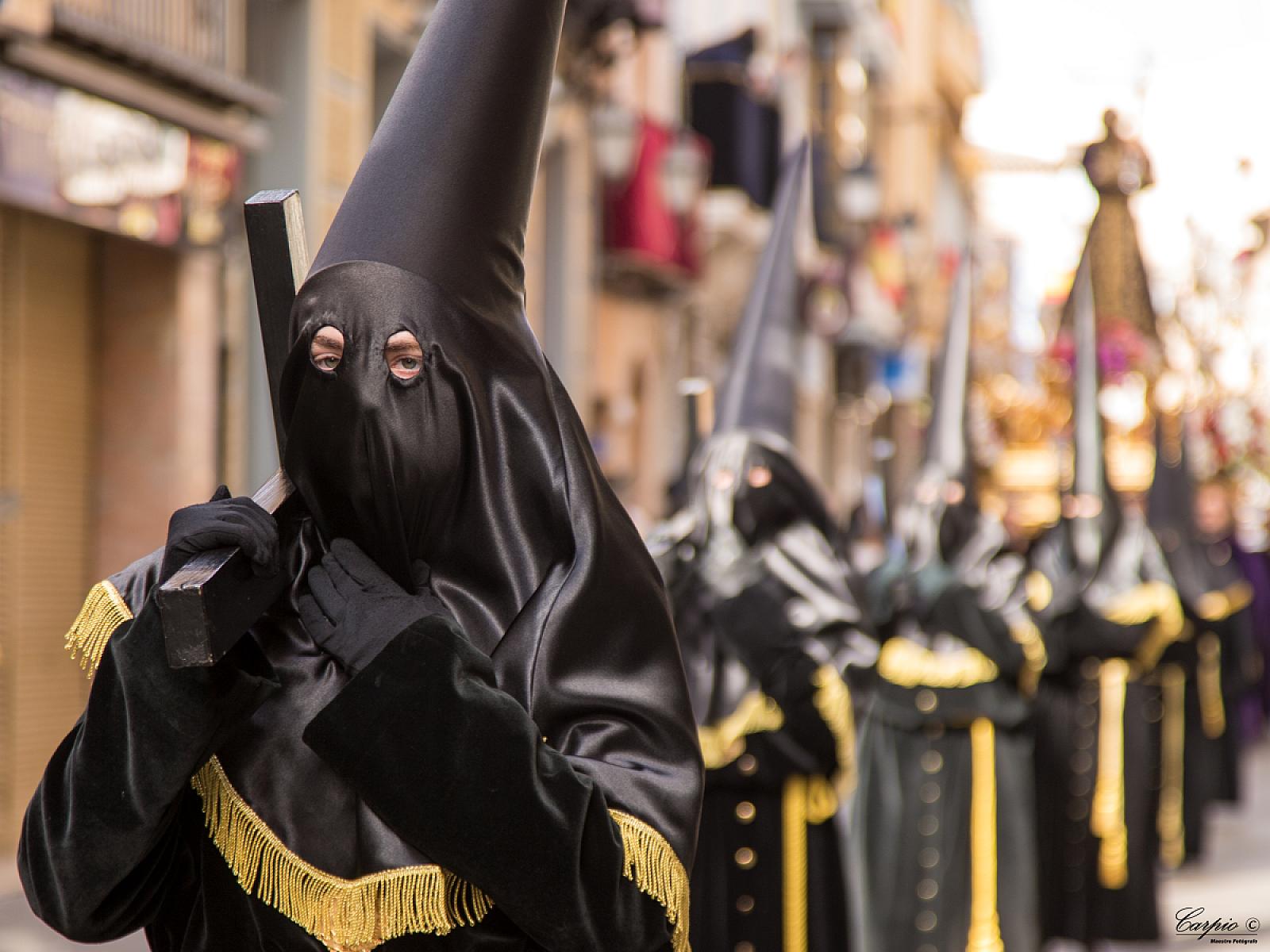
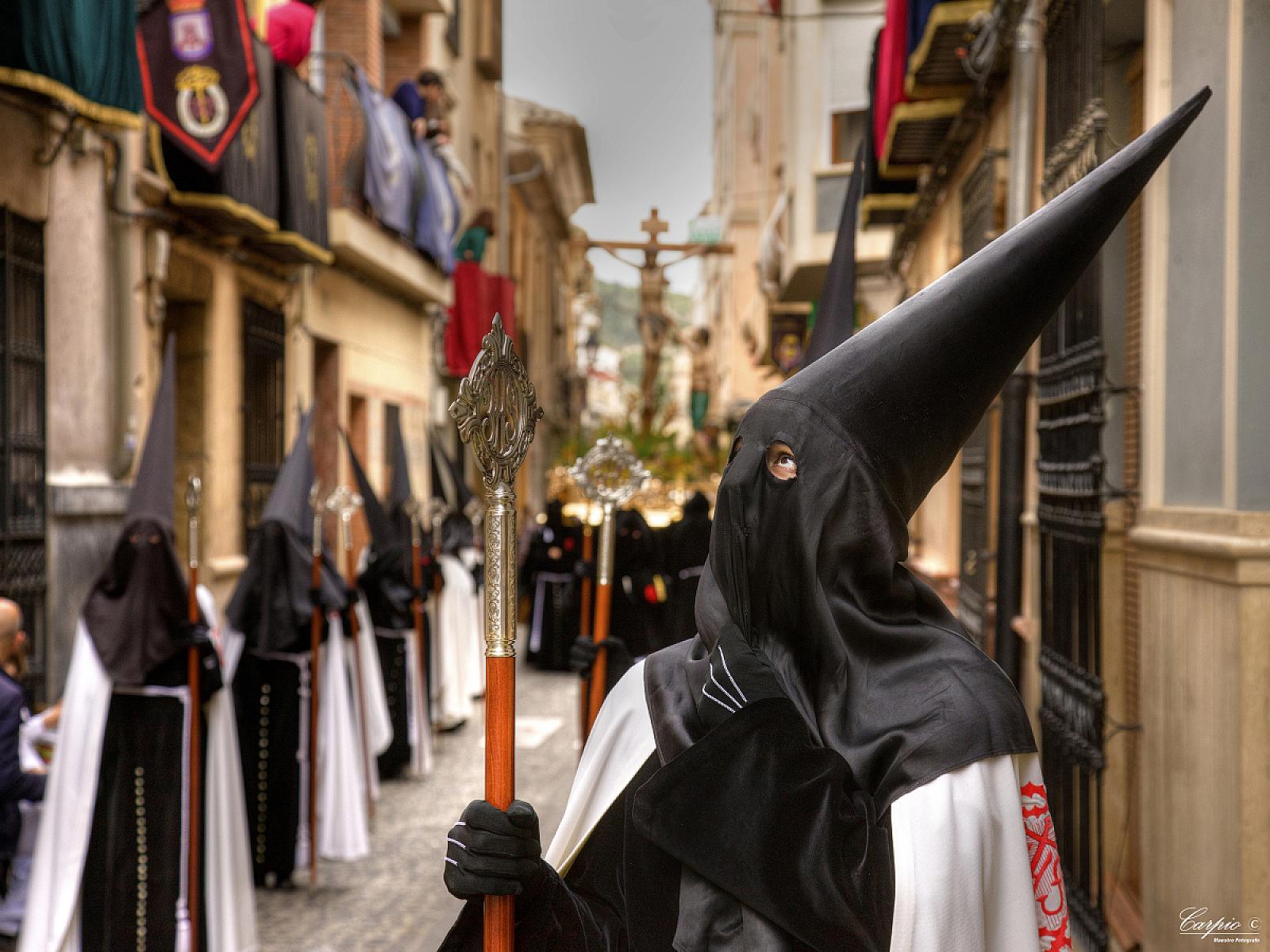
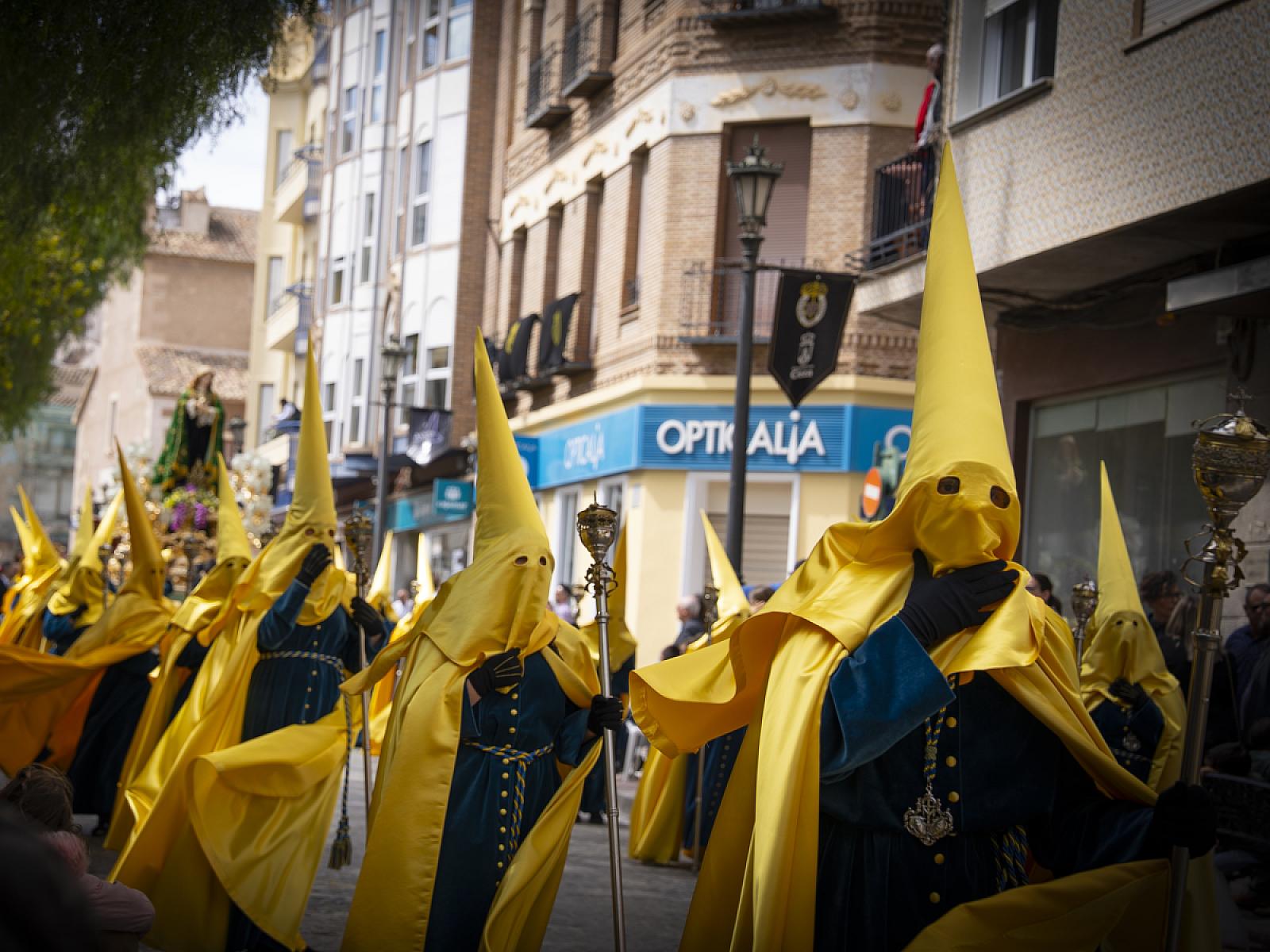
Today, transformed into a magnificent, colorful, and massive procession, the Procession of the Penitent is one of the oldest recorded in ancient times (under a different name), perhaps the founding procession of Holy Week in Cieza. Thirteen brotherhoods come together to recount in detail Christ's journey to Calvary and his Crucifixion, with the penitents of some of them carrying penitential crosses and even walking barefoot, in remembrance of the original penitential nature of this procession. Despite its antiquity, it is undoubtedly the procession whose composition has changed most significantly in the last twenty years, evolving from what could be considered, in a certain sense, a daytime version of the General Procession to the substantiality and singularity it currently has as a beautifully represented episodic narrative, in which the chronology of the Gospel passages represented corresponds exactly to what happened on the morning of that first Good Friday when the Redeemer dragged the Cross to Calvary on the outskirts of Jerusalem.
Departure time: 9:30 am (Holy Week Museum, Dormis Museum or Basilica of Our Lady of the Assumption, depending on the Brotherhood).
Arrival time: approximately 3:00 pm (Holy Week Museum, Dormis Museum or Basilica of Our Lady of the Assumption, depending on the Brotherhood).
Arrival time: approximately 3:00 pm (Holy Week Museum, Dormis Museum or Basilica of Our Lady of the Assumption, depending on the Brotherhood).
Route: "Cánovas del Castillo", "Buitragos", "San Sebastián", Corner of the Convent, "Paseo" (left side), "Salvador Seguí", "Buen Suceso", "Angostos", "Tercia", "Santo Cristo" and/or "Cánovas del Castillo", "San Pedro" and "Plaza Mayor".
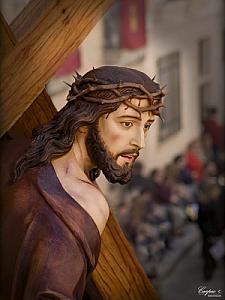
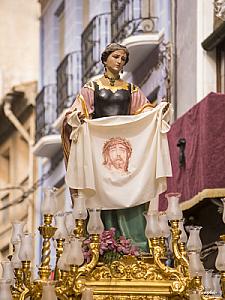
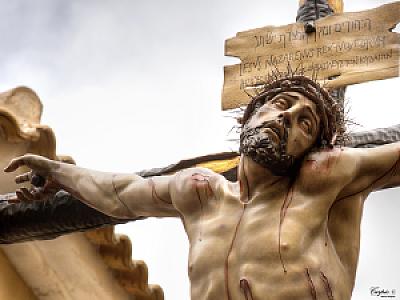
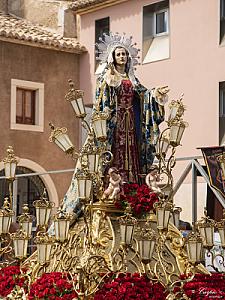
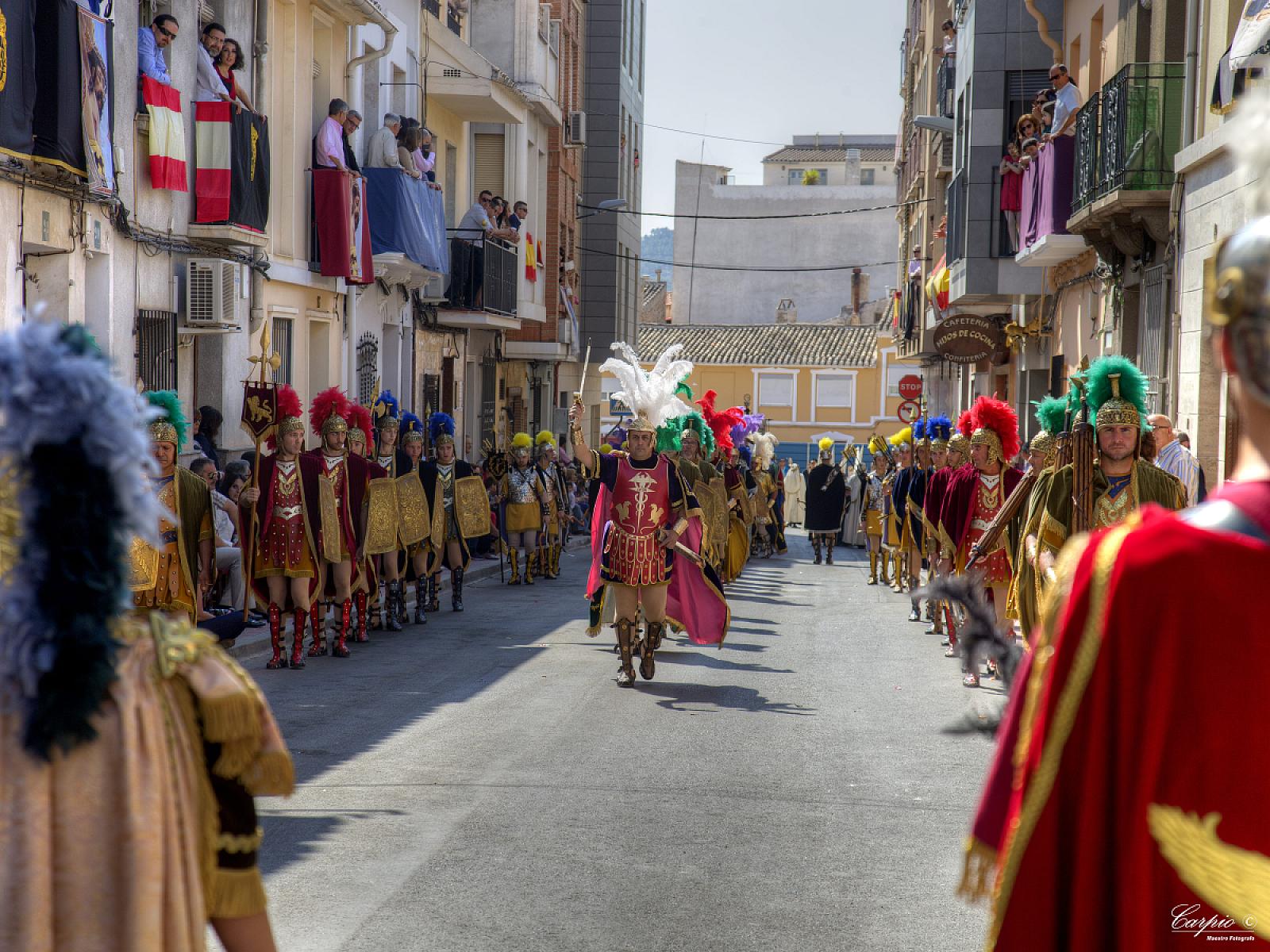
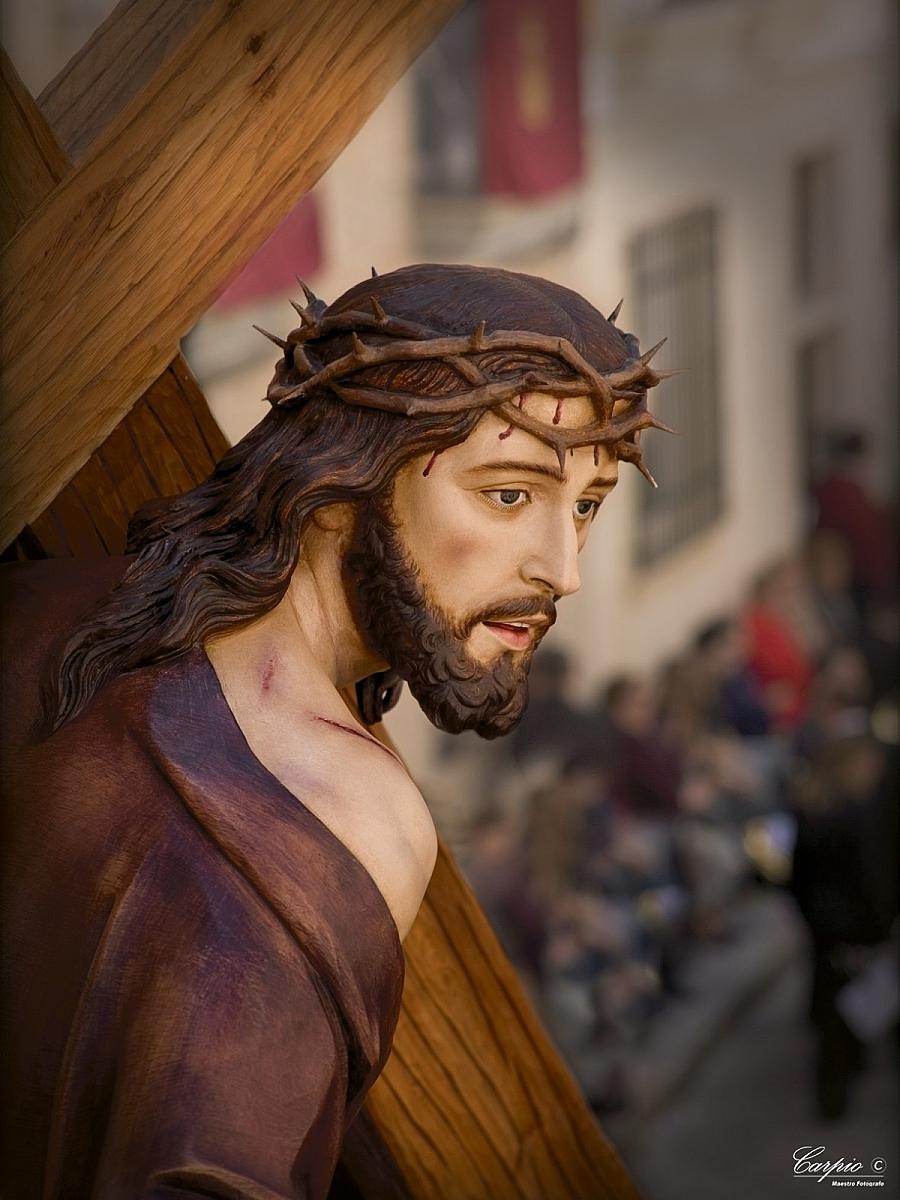
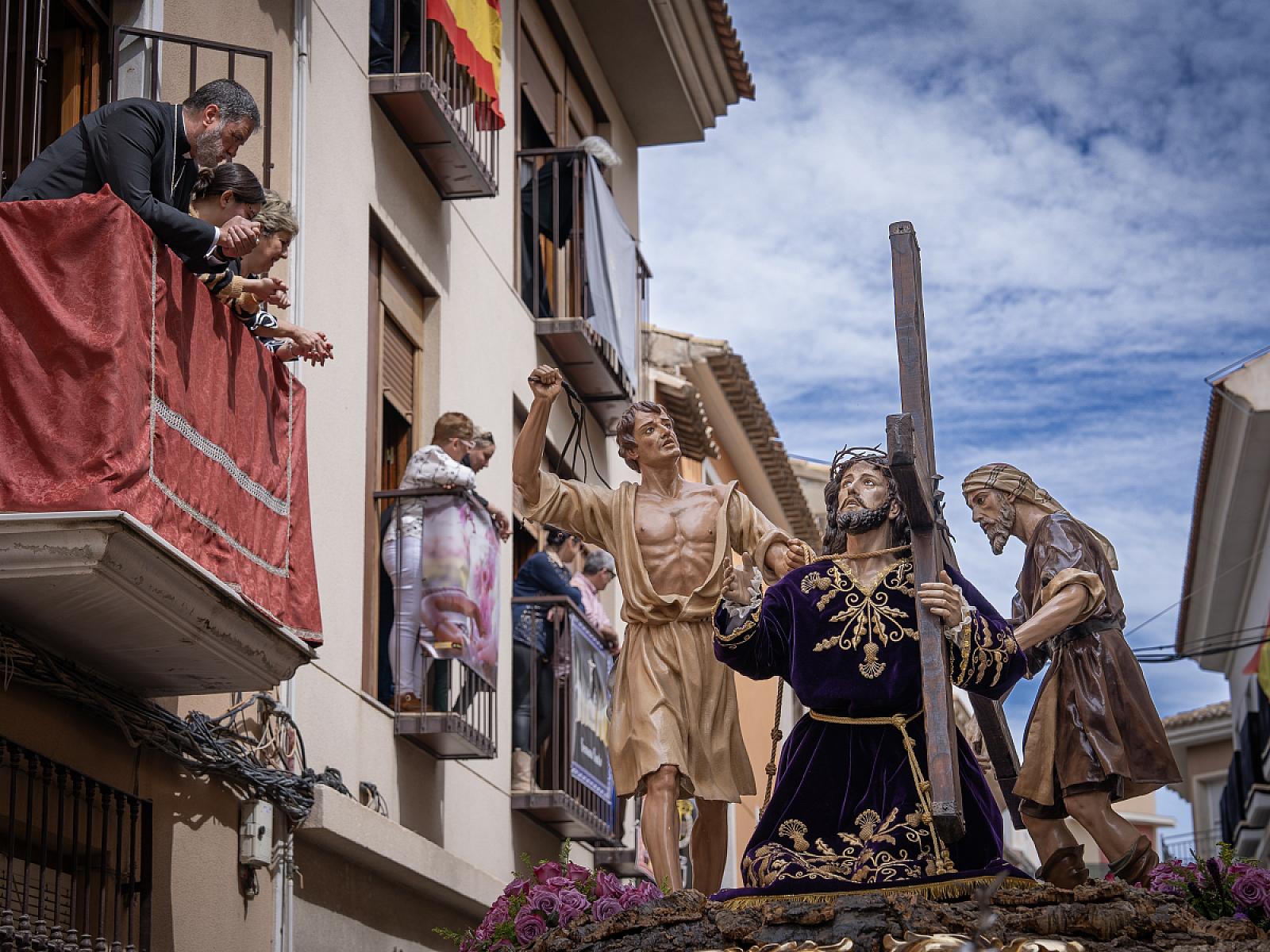
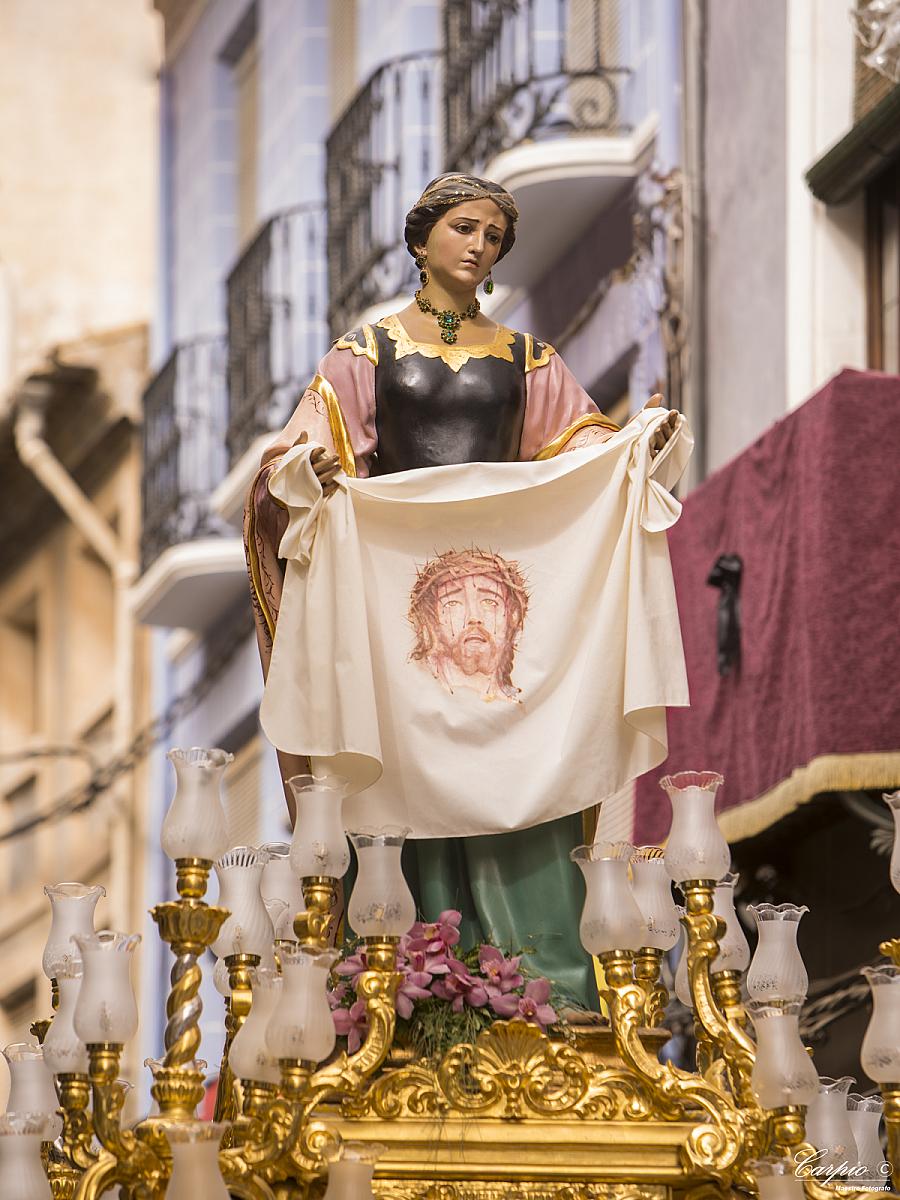
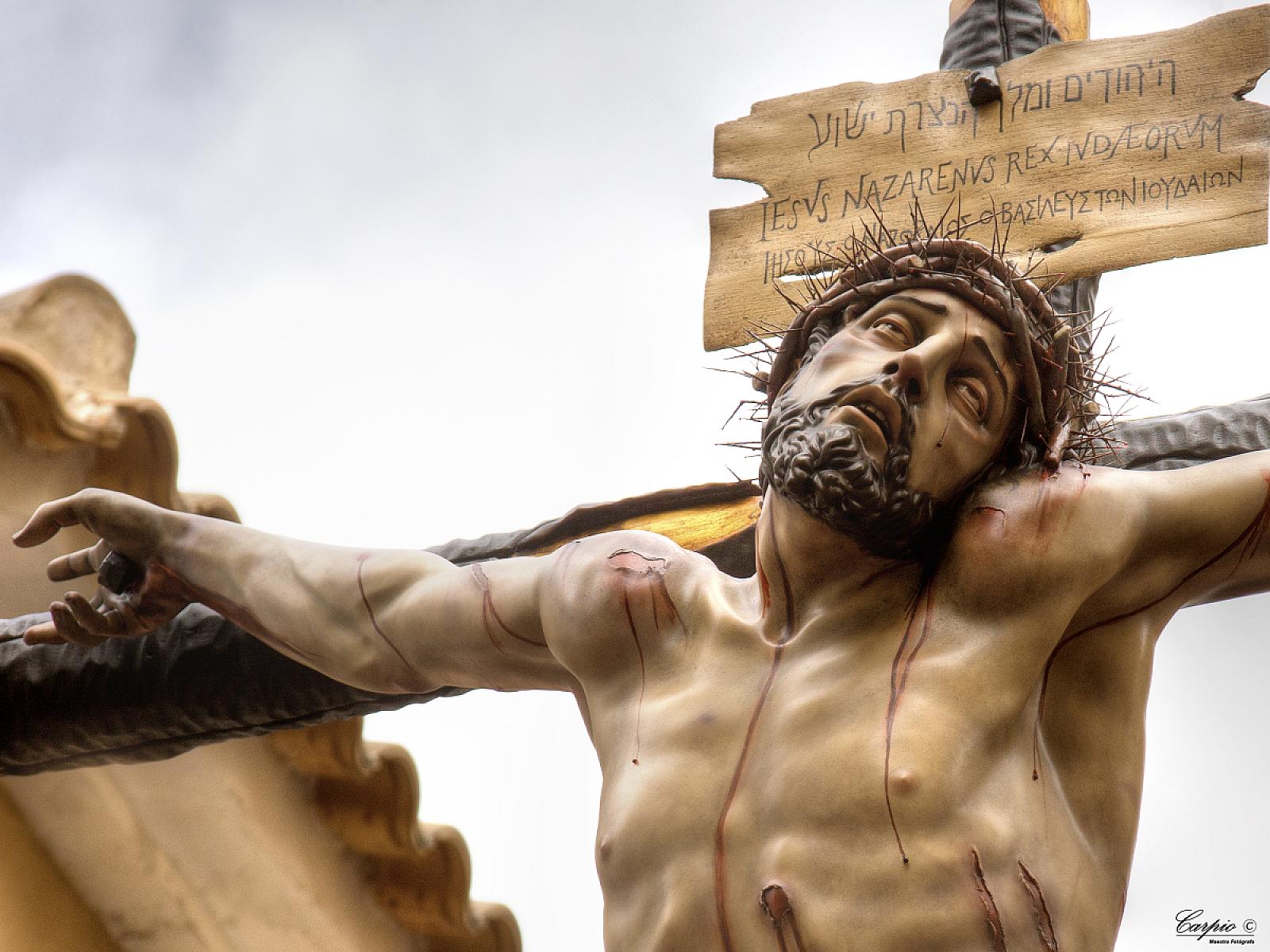
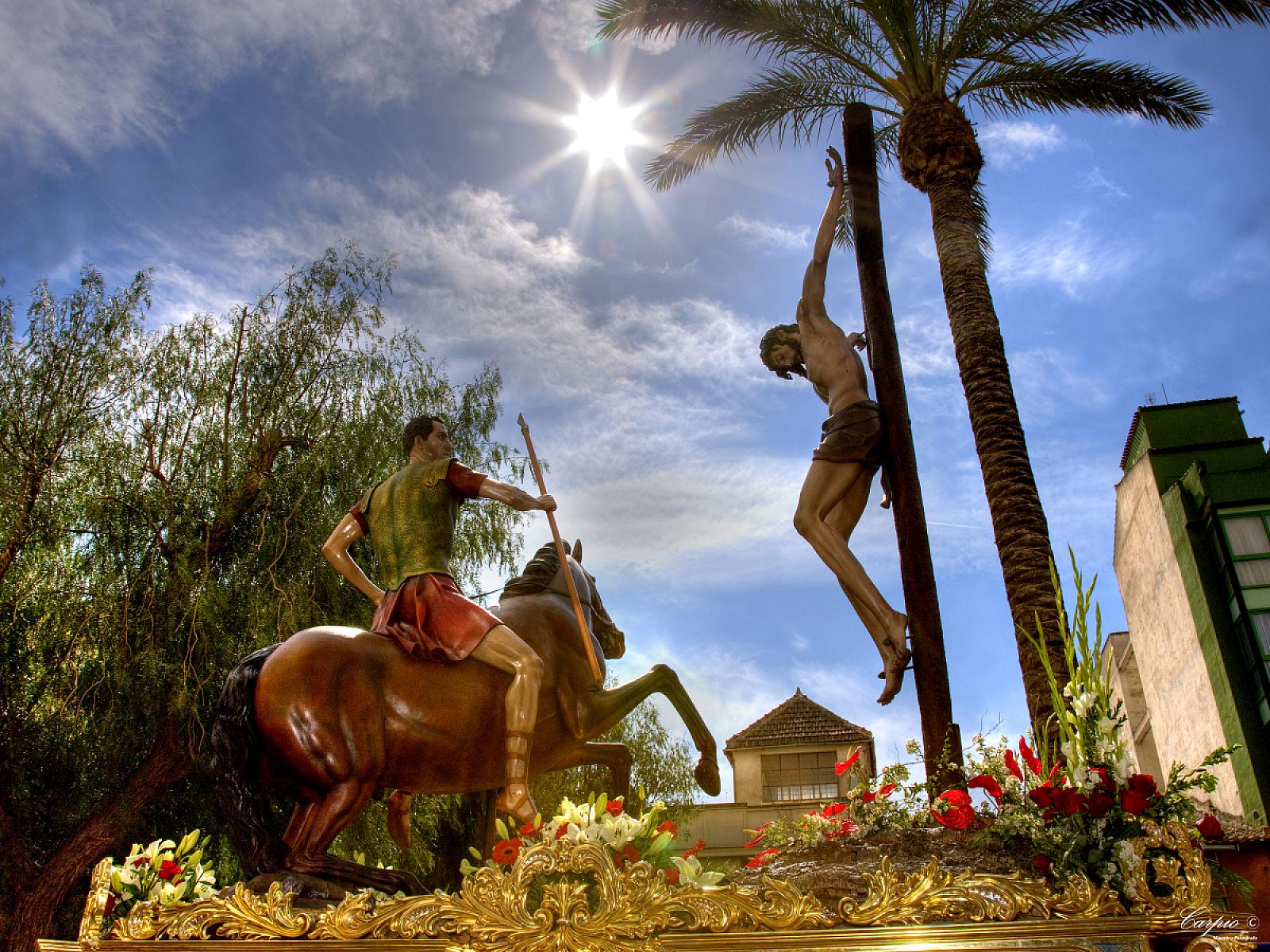
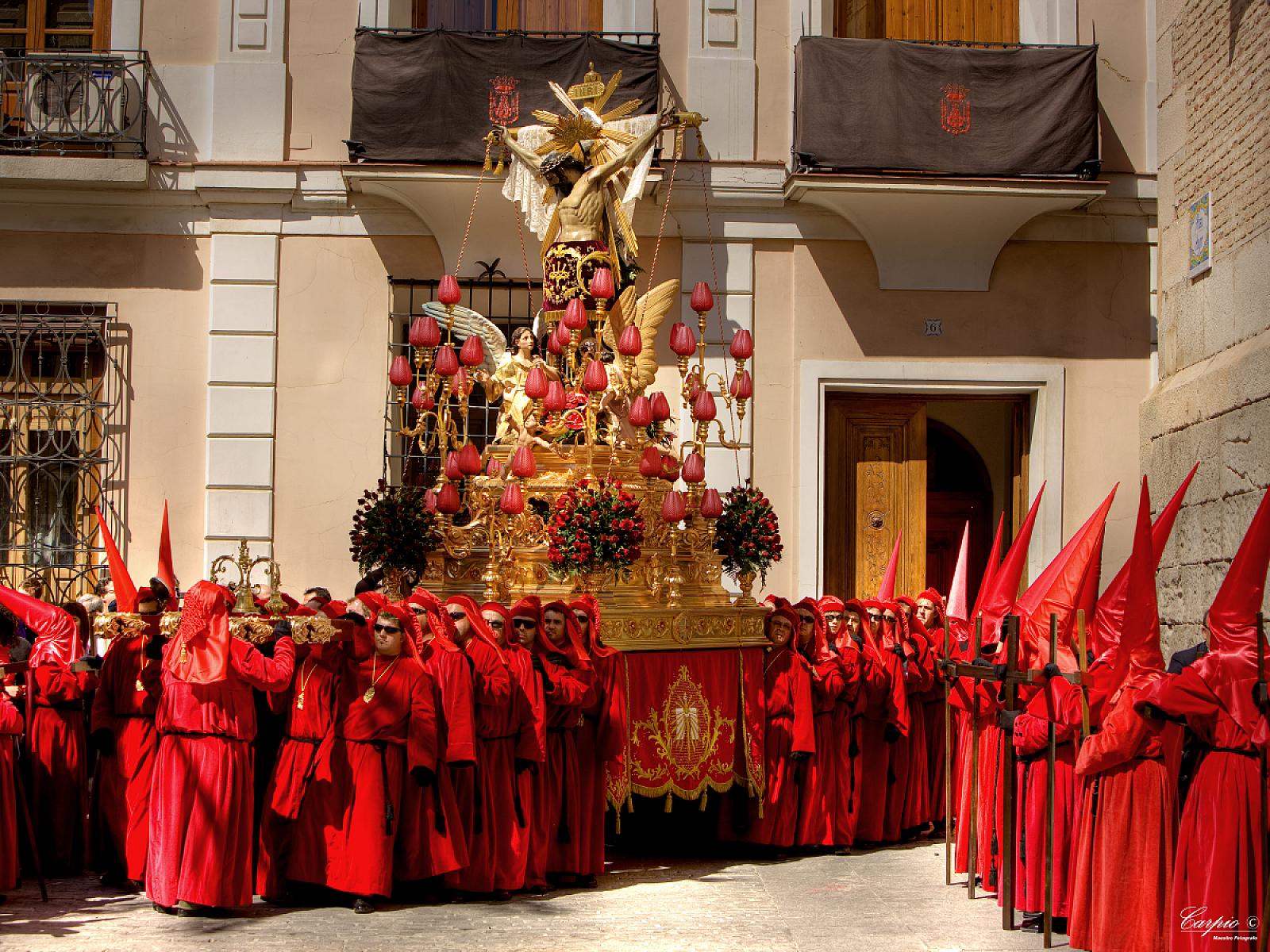
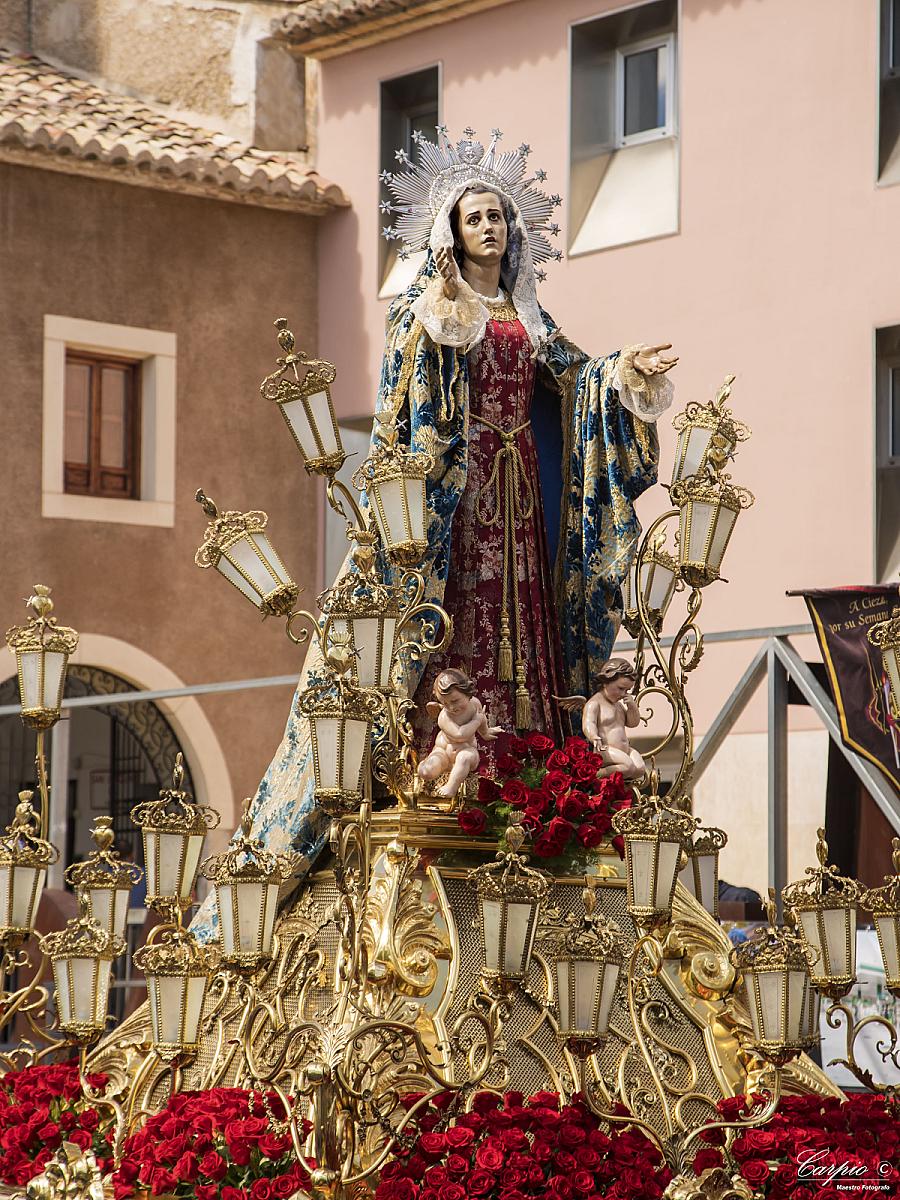
Order of Procession: banner of the Board of Passionate Brotherhoods and the following floats: The Sentence (Brotherhood of Saint John the Evangelist), Our Father Jesus of Nazareth -carrying the Cross- (Royal Brotherhood of Jesus -Nazarene-), Roman Third of the Holy Sepulchre, The Meeting of Jesus and Mary on the Street of Bitterness (Brotherhood of the Most Holy Christ of Forgiveness and the Most Holy Virgin of Beautiful Love), The Fall (Brotherhood of The Prayer in the Garden and The Holy Sepulchre), Saint Veronica (Brotherhood of Saint Veronica), Jesus on Calvary (Brotherhood of the Most Holy Christ of the Agony), Most Holy Christ of the Expiration (Brotherhood of Saint Peter the Apostle), The Lance (Brotherhood of The Samaritan Woman), Saint Mary Magdalene (Brotherhood of Saint Mary Magdalene), Most Holy Christ of Consolation (Brotherhood of the Most Holy Christ of Consolation, the only brotherhood where penitents march from countryman) and Most Holy Virgin of Sorrows (Brotherhood of the Most Holy Virgin of Sorrows), all parading with their respective Brotherhoods -with their usual structure- and marching bands or musical groups.
Order of Procession: banner of the Board of Passionate Brotherhoods and the following floats: The Sentence (Brotherhood of Saint John the Evangelist), Our Father Jesus of Nazareth -carrying the Cross- (Royal Brotherhood of Jesus -Nazarene-), Roman Third of the Holy Sepulchre, The Meeting of Jesus and Mary on the Street of Bitterness (Brotherhood of the Most Holy Christ of Forgiveness and the Most Holy Virgin of Beautiful Love), The Fall (Brotherhood of The Prayer in the Garden and The Holy Sepulchre), Saint Veronica (Brotherhood of Saint Veronica), Jesus on Calvary (Brotherhood of the Most Holy Christ of the Agony), Most Holy Christ of the Expiration (Brotherhood of Saint Peter the Apostle), The Lance (Brotherhood of The Samaritan Woman), Saint Mary Magdalene (Brotherhood of Saint Mary Magdalene), Most Holy Christ of Consolation (Brotherhood of the Most Holy Christ of Consolation, the only brotherhood where penitents march from countryman) and Most Holy Virgin of Sorrows (Brotherhood of the Most Holy Virgin of Sorrows), all parading with their respective Brotherhoods -with their usual structure- and marching bands or musical groups.
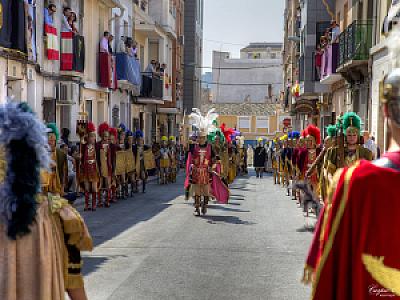
Unique features and suggestions: This procession marks the beginning of Cieza's big day. From the early hours, a continuous flow of penitents, bearers, and musicians announces that this is no ordinary day. They are heading towards the 'House of the Saints' from where this participatory procession will depart, with a unique language in which light and color contrast with the drama depicted in the floats that tell the story of Jesus' journey to Calvary and his death on the Cross. Undoubtedly, the immense brightness of the Cieza spring sky (weather permitting), combined with the myriad scents and fragrances rising from the Segura River valley and the gentle spring morning breeze, create a perfect symbiosis, the ideal balm to soothe the suffering conveyed by the processional images to the viewer. It is recommended that spectators position themselves to watch the procession in the city's most central and popular streets, such as the "Paseo" or the "Plaza de España", where everyone shares this unique morning with friends and visitors. The name 'penitent' comes from the fact that those who wish to do so walk behind the image of the Holy Christ of Consolation, the principal devotion among the people of Cieza and a deeply traditional image of Good Friday, as a sign of supplication or thanksgiving. Similarly, and to further emphasize the penitential nature of this morning, some groups of penitents carry crosses on their shoulders, mirroring Jesus Christ's journey to Golgotha. It is essential to witness, along any section of the 'route', one of the numerous "caracolas" performed by the Roman Third that morning, which always draw a crowd of onlookers.
Among the spectacular collection of religious art displayed that morning, the three works by José Hernández Navarro stand out for their extraordinary artistic quality: The Encounter of Jesus and Mary on the Street of Bitterness, Jesus on Calvary, and The Lance, also noteworthy, in the purest Salzillo style, is the group depicting The Fall, perhaps Sánchez Lozano's finest work from Cieza. Furthermore, the morning light powerfully enhances the beauty of three images parading for the second and final time during Holy Week: Saint Veronica, Our Father Jesus of Nazareth and the Blessed Virgin of Sorrows, who raises her desolate gaze in the procession to an intensely blue sky framed by the unmistakable silhouette of the "Atalaya" mountain.
The most dramatic point of the story is reached, however, with the most recently added procession, the Holy Christ of the Expiration, by Yuste Navarro, of sublime sculptural quality, which draws a final and heartbreaking gasp before dying at noon on Good Friday in Cieza.
Photographs by Manuel Carpio and Enrique Centeno.
© Board of Passionate Brotherhoods of Cieza
© Board of Passionate Brotherhoods of Cieza
Gallery
Outstanding news

 Popular news
Rules of the XXXIX Poster Competition 'Holy Week in Cieza'
Pablo Espinosa will be in charge of creating the poster for "The Arrest" 2027
Official statement: Postponement of the 20th Children's Section Gathering
ACTIVITY FOR HOLY WEEK 2020
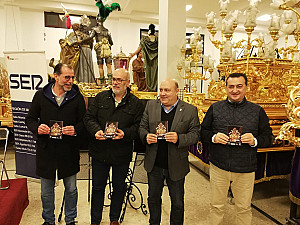
The Guide to Acts and Activities of Holy Week 2019 is presented at the Casa Museo de Cieza
The brotherhoods of Cieza visit the brotherhood houses of the Holy Week in Lorca.
Upcoming events
24 October - 10:00
XIII National Gathering of Youth from Brotherhoods and Confraternities
24 October - 20:00
Holy Mass
25 October - 07:00
Rosary of Dawn
25 October - 10:00
XIII National Gathering of Youth from Brotherhoods and Confraternities
30 October - 19:00
Triduum
30 October - 19:00
Food collection
Calendar